
News
Bayer proposes $7.25 billion plan for all Roundup cancer cases - Business Insurance
Bayer said on Tuesday its Monsanto unit had filed a proposed U.S. class settlement totaling as much as $7.25 billion aimed at resolving all current and future claims that its Roundup weedkiller caused cancer.
The German company said the proposed nationwide settlement, expected to be filed on Tuesday in state court in St. Louis, Missouri, would establish a long-term claims program funded by capped annual payments over up to 21 years.
The company, which acquired Roundup as part of its $63 billion purchase of agrochemical company Monsanto in 2018, is facing claims over Roundup from approximately 65,000 plaintiffs in U.S. state and federal courts.
The plaintiffs say they developed non-Hodgkin lymphoma and other forms of cancer due to using the weedkiller, either at home or on the job.
The proposed settlement covers the bulk of the lawsuits, but will need a judge’s approval.
It is also designed to head off future lawsuits, and includes a provision that allows people who can prove they have been diagnosed with non-Hodgkin lymphoma and were exposed to Roundup prior to Tuesday to file claims to receive a portion of the settlement for up to 21 years.
Bayer CEO Bill Anderson said on a call with investors and reporters that he is confident the proposed class action settlement will resolve the vast majority of the claims, although he declined to say how many people currently support the deal.

World’s Growing Civil Unrest Has an Insurance Sting
A category of insurance risk that hardly existed a little over a decade ago has morphed into a meaningful source of losses for the industry.
Claims tied to SRCC — strikes, riots and civil commotion — are emerging as a growing headache for insurers as episodes of unrest increasingly lead to the destruction of property in Western democracies. Howden Re estimates that insured losses related to SRCC soared from negligible levels in 2013 to more than $8 billion between 2020 and 2024. CONTINUES
Climate/Resilience/Sustainability

A Different Winter Is Coming—Why Record-Breaking Snowfall Is Occurring Under Climate Change and How We Should Prepare
This article was originally published in “SENSOR” by the Tokio Marine Research Institute.
Common sense might lead us to believe that if the planet is warming, we should experience less snowfall. Yet, in recent years, we have seen one report after another about record snowfall in certain areas. How can snowfall be intensifying if average global temperatures continue to hit new highs?
The answer lies in how global warming produces new snowfall patterns. In this piece, we will analyze how winters in Japan have been changing, and what residents can do to deal with this new reality.
Financial Results
Mercury General Corporation Announces Fourth Quarter and Fiscal 2025 Results and Declares Quarterly Dividend
Gabe Tirador, the Company's CEO, commented on the 2025 results: "We are proud of our team's accomplishments in 2025. The Palisades and Eaton wildfires were the most significant catastrophes in
Mercury's history, driving our first quarter combined ratio to 119.2%, but our business in subsequent quarters performed strongly ending with an 88.6% combined ratio in the fourth quarter and 96.3% for the full year. And our team demonstrated exceptional resilience and commitment to our policyholders, managing more than 2,900 wildfire claims and paying over $1.4 billion to date."
The California Department of Insurance ("DOI") approved a 6.9% rate increase on the Company's California homeowners line of insurance business in December 2025. This rate increase is expected to become effective in July 2026. The California homeowners line of insurance business represented approximately 15% of the Company's total net premiums earned in 2025.
The Board of Directors declared a quarterly dividend of $0.3175 per share. The dividend will be paid on March 26, 2026 to shareholders of record on March 12, 2026.
Research
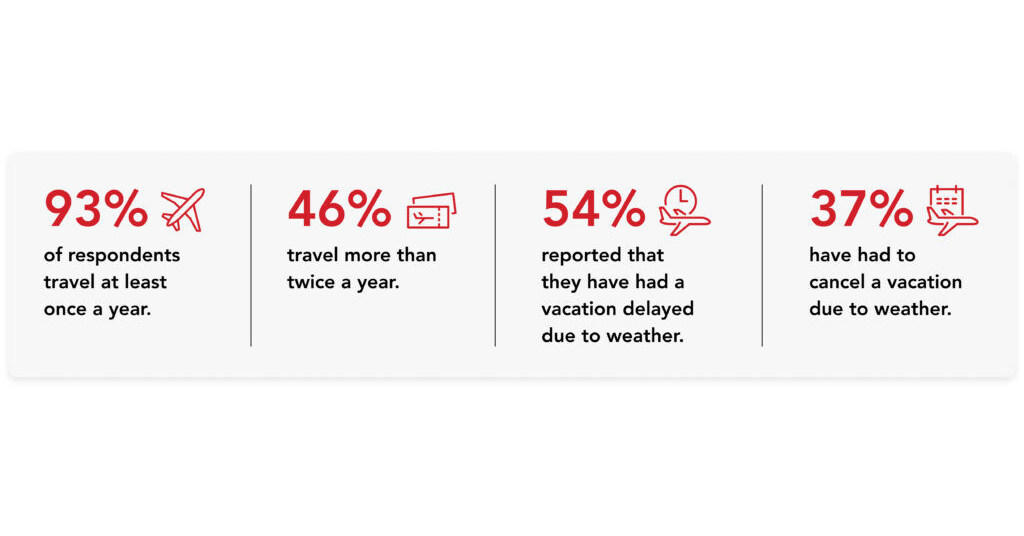
Extreme Weather Is Now a Top Travel Concern for Americans
Extreme weather is no longer a rare disruption—it has become a defining factor in how Americans book and experience trips. According to Redpoint Travel Protection's 2026 Traveler Risk Report, a majority of U.S. travelers now expect weather-related disruption and are actively adjusting their behavior.
Based on a national survey of 1,500 active U.S. leisure travelers, more than half have already altered travel plans due to extreme weather; nearly 70% expect to do so regularly in the future. High winds, wildfires, flooding, and severe storms were cited as growing concerns when selecting destinations and booking trips.
"Extreme weather is no longer an outside possibility—it's an expectation," said Ted Muhlner, Cofounder of Redpoint Travel Protection. "Travelers are planning around disruption rather than reacting to it."
The World Meteorological Organization has labeled extreme weather the "new norm." High-profile disasters—from the Los Angeles wildfires in winter 2025 to severe Texas flooding—have reinforced the perception that disruption is increasingly unavoidable.
Legal System Abuse/Social Inflation

Litigation Finance Guide Publications | Westfleet Advisors |
Westfleet’s publications are designed to provide transparency for potential users of litigation financing.
2026 CONFIDENTIALITY WHITE PAPER
Litigation Funding and Confidentiality: A Comprehensive Analysis of Current Case Law is an essential resource for any lawyer or client considering litigation financing.
AI in Insurance
Insurance giant AIG deploys agentic AI with orchestration layer - AI News
The use of AI at AIG relies on an orchestration layer, human intervention, and a melding of ontologies with an eye on risk.
American International Group (AIG) has reported faster than expected gains from its use of generative AI, with implications for underwriting capacity, operating cost, and portfolio integration. The company’s recent disclosures at an Investor Day merit attention from AI decision-makers as they contain assertions about measurable throughput and workflow redesign.
AIG has outlined potential benefits from generative AI.** Chief executive Peter Zaffino** later described the company’s early projections as “aspirational,” yet in a fourth quarter earnings call, he stated that “we see the abilities are much greater.” The change in tone is indicative of positive internal results, and according to Zaffino, “We’re seeing a massive change in our ability to process a submission flow way […] without additional human capital resources. That has been the biggest surprise.”
The company’s claims that generative AI has increased submission processing capacity, the economic impact is direct. AIG reports that in 2025 it “made progress embedding generative AI in our core underwriting and claims processes, and expanding it.” The company’s internal tool, AIG Assist, is implemented in most commercial lines of businesses.

Artificial Labs introduces AgLabs to advance agentic AI in specialty insurance - Reinsurance News
Artificial Labs (Artificial) a provider of digital broking and underwriting technology for specialty and commercial insurers, has launched AgLabs, a new division dedicated to research and product innovation.
AgLabs will concentrate on the future of specialty insurance, examining how agentic artificial intelligence (AI) can transform interactions across the market. The unit brings together long-horizon research with practical tools that can be deployed immediately, giving brokers and underwriters the ability to streamline workflows now while building toward agent-to-agent (A2A) coordination over time.
A2A capabilities allow broker and underwriter agents to autonomously share, check, and refine information within tightly defined parameters, while preserving human authority over final decisions. The initiative focuses on the stage where risk data is transferred, interpreted, standardised, and negotiated.
Claims
New Research Details How Communication Behaviors Impact Insurance Carrier Claim Cycle Time and Customer Outcomes
Hi Marley analysis of more than 380,000 claims messages reveals what specific interactions in claim conversations reduce friction, accelerate resolution, and improve customer satisfaction
Hi Marley, creators of the only intelligent conversational platform built for the P&C insurance industry, today released original research revealing key moments in claims conversations that directly impact efficiency, cycle time, and customer satisfaction.
Every message between an adjuster and a policyholder either moves a claim forward or introduces friction. Specific interactions have a measurable impact on claim duration, escalation risk, and customer experience. These inflection points, or "moments that matter," consistently influence claim outcomes.
InsurTech/M&A/Finance💰/Collaboration

Enstar to acquire comp, specialty insurer AF Group - Business Insurance
Enstar Group said Friday it has agreed to acquire Accident Fund Holdings, known as AF Group, from Blue Cross Blue Shield of Michigan.
Lansing, Michigan-based AF Group recorded about $3.3 billion in gross written premium in 2025, according to Bermuda-based Enstar. According to its most recent financial report, AF Group reported net income of $184.8 million in 2024, a 67% increase from 2023.
The company’s operating divisions include Accident Fund, United Heartland, CompWest Insurance, Third Coast Underwriters and AF Specialty. It has about 2,300 staff.
Webinars/Podcasts/Interviews

Legislative outlook for containing third-party litigation funding in 2026
Funding occurs when outside companies, which are often foreign entities or venture capital firms, secretly fund litigation against insurance companies.
Outside investors are flocking to the insurance industry as third-party litigation funding (TPLF) enables them to receive portions of the settlement from plaintiffs and law firms. At the same time, litigation funding can lead to a rise in fraudulent claims and a subsequent spike in insurance premiums.
Recently, PropertyCasualty360.com spoke to legislative experts Brian Allen, VP, government affairs at Enlyte, and Michele Hibbert, SVP, regulatory compliance management at Enlyte, to better understanding on the issue and how state and Federal legislation is emerging to protect insurers and consumers.
What is third-party litigation funding and why has it become such a pressing issue for the insurance industry?
Hibbert: Third-party litigation funding (TPLF) occurs when outside companies, which are often foreign entities or venture capital firms, secretly fund litigation against insurance companies.
These funders pay for lawyers and all ancillary expenses needed to build a case: medical experts, financial experts, loss-of-work consultants. In exchange, they take a substantial portion of any settlement or verdict, often capping what the actual plaintiff receives while reaping millions of dollars themselves. INTERVIEW CONTINUES
People
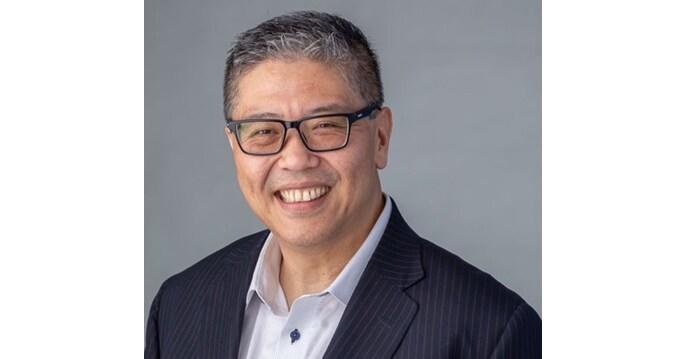
Will Chen joins Westfield Specialty as U.S. Chief Financial Officer
Westfield, a U.S.-based property and casualty insurance company, today announces that Will Chen will be joining the company as Westfield Specialty U.S. Chief Financial Officer reporting to Westfield Specialty President Jack Kuhn.
As a 30-plus year veteran of specialty insurance, Chen will oversee U.S. financial strategy, FP&A and related operational processes and controls. Will has previously held senior financial roles at Argo, AIG, AJG and Zurich. Most recently, Will served as U.S. CFO at Ascot, overseeing the finance department within their domestic U.S. specialty business. Will holds an MBA in finance and accounting from New York University.
Kuhn says, "I am excited to add Will to our leadership team. He is a high-impact finance executive who brings a compelling blend of strategic finance and insurance experience, well-honed operating skills, and leadership abilities. He will be a strong partner as we continue to grow our platform to position Westfield Specialty for sustainable, long-term growth and profitability."