
Financial Results

Q4 Insights: Earnings Strength and Emerging Risks for U.S. P&C Insurers
Q4 earnings for U.S. P&C insurers show strong performance, but emerging risks in casualty and commercial auto lines highlight the need for strategic adjustments.
The recent Q4 earnings season for U.S. property and casualty (P&C) insurers revealed a generally positive financial outlook, supported by lighter-than-expected catastrophe losses and disciplined underwriting practices. This environment has contributed to robust earnings across many carriers, reinforcing the resilience of the sector amid ongoing economic and operational challenges. However, despite this favorable backdrop, certain segments, particularly casualty-exposed lines and commercial auto insurance, are experiencing notable underwriting pressures that warrant close attention from industry professionals.
For insurance executives, underwriters, and agents, these mixed signals underscore the importance of balancing prudent risk selection with strategic pricing adjustments. The ability to adapt to evolving claim patterns and emerging risk exposures, especially in high-frequency loss areas, will be critical to sustaining profitability. The detailed analysis provided by The Insurer highlights these dynamics and offers a valuable framework for insurers to recalibrate their approaches in key business lines. DETAILS
Legal System Abuse/Social Inflation

Swiss Re: More consumers now comfortable suing insurers
A growing body of evidence points to the way legal system abuse — or the misuse or exploitation of the legal system in ways that drive excessive litigation, inflated damages, or unfair outcomes — inflates insurance rates by exaggerating claim payouts, increasing extreme verdicts, and ultimately forcing insurers to raise premiums, limit coverage or exit difficult markets.
These urgent issues facing the insurance sector inform the agenda and peer-to-peer networking that happens at** PropertyCasualty360's Complex Claims & Litigation Forum happening March 9-11, 2026 at the Red Rock Resort & Spa in Las Vegas**.
Consider the September 2025 report from Swiss Re that outlines how "skyrocketing legal payouts" in the U.S. trickle down to everyday consumers. The report pointed to a fundamental shift in public sentiment as more people get comfortable with idea of pursuing legal action instead of other settlement avenues: Fifty-six percent of survey respondents in 2025 believed there were too many lawsuits in the U.S. compared to 90% in 2016.
Some of the report's other findings include:
- Injury severity, not company size, is the main factor driving juror sympathy and high compensation expectations.
- Americans increasingly support litigation and nuclear verdicts regardless of whether corporations are at fault.
- Approximately 25% of respondents would support these verdicts even against small and mid-sized businesses.
- The growing litigiousness is supported not just by facts but also psychology. Plaintiff anchoring and setting high initial demands greatly skews judgments upward, especially when unchallenged. And, Younger, lower-income jurors are significantly more supportive of litigation and larger awards. Increased litigation risks raise costs for everyone and can hurt families and small businesses by driving up the costs and accessibility of protection.

Triple-I launches campaign on legal system abuse in California and Illinois
The institute links litigation trends to higher auto, home and business premiums in these states
The Insurance Information Institute (Triple-I) has launched public awareness campaigns in Los Angeles, California, and Cook County, Illinois, highlighting what it describes as the impact of legal system abuse on insurance costs and local economies.
The initiative comes as insurers across the US continue to contend with elevated loss costs in several lines, which industry groups have partly attributed to “social inflation” and a rise in large jury awards and settlements.
Triple-I argued that abuse of the legal system increases the frequency and severity of claims, with associated costs ultimately borne by consumers and businesses through higher premiums and, in some cases, reduced availability of coverage.
The campaign is also supported by an updated microsite, StopLegalSystemAbuse.org, which Triple-I described as an educational resource explaining how it believes legal system abuse contributes to higher insurance costs and broader economic impacts. Targeted social media advertising, including Facebook ads, directs consumers to the site and encourages them to contact state lawmakers.

Insurers tout Florida tort reforms while lobbying Congress on auto tech agenda
The American Property Casualty Insurance Association (APCIA) is pushing its policy agenda on two fronts, citing a new economic study on Florida’s tort reforms while calling on lawmakers to advance a package of auto safety and technology bills in the US House of Representatives.
APCIA highlighted an analysis by The Perryman Group that examined the economic effects of recent changes to Florida’s civil justice system on property and casualty (P&C) insurance.
The report,*** “The Economic Benefits of Effects of Tort Reform on Property and Casualty Insurance Rates in the State of Florida,”*** focused on major laws including SB 2‑A and HB 837. It concluded that the reforms reduced what the authors described as excessive litigation costs and contributed to greater stability in the state’s insurance market.
According to the study, Florida’s tort reforms led to an average 14.5% reduction in P&C insurance costs relative to a scenario in which no reforms were enacted. The figure was a modeled comparison rather than a direct measure of current rate cuts.
The Perryman Group estimated that the associated cost savings generated more than $4.2 billion in annual gross state product and supported about 29,370 jobs, including multiplier effects. The report also projected roughly $206.6 million a year in additional state tax revenue and $155.3 million for local governments.
“Florida’s tort reforms are achieving exactly what policymakers intended – bringing balance to the civil justice system, reducing excessive costs, and strengthening the state’s economic foundation,” said Stef Zielezienski, APCIA’s executive vice president and chief legal officer. He said the analysis indicated that reforms were “driving down insurance costs for consumers and businesses” and “encouraging insurers to return to the market.”

Legal System Abuse Drives Up Premiums
With inflation, a higher cost of living, strained budgets, and job market instability, today's consumers are more price-sensitive than ever. One of the key drivers of rising costs in consumer service industries, such as insurance, is abuse of the legal system.
When the judicial process is unfairly manipulated to generate profit through excessive or unwarranted litigation, the financial fallout extends well beyond the courtroom. With insurance companies forced to spend more defending against these claims, losses are driven up and, therefore, premiums. The result is an inequitable system that places consumers, businesses and the broader U.S. economy at the forefront of absorbing these escalating costs, often out of the public eye but deeply felt in monthly insurance costs.
WHAT IS LEGAL SYSTEM ABUSE AND THIRD-PARTY FUNDING?
Legal system abuse is the misuse of laws and judicial processes to increase litigation for profit, often through harassment, control or financial exhaustion and for purposes other than justice. When left unregulated, these practices can drive up costs for consumer services, such as insurance. Defending against these claims increases insurer losses, which in turn drives up premiums for policyholders.
Nathan Riedel is senior vice president at IIABA
Commentary/Opinion
Fitch warns of structural shift as AV liability moves toward manufacturers - Reinsurance News
While autonomous vehicles (AVs) are expected to fundamentally reshape auto insurance markets over the long term, a new report from Fitch Ratings says their credit impact on auto insurers is likely to remain modest over the next decade.
According to the rating agency, personal auto insurance is the single largest line of insurance, representing approximately 37% of the U.S. property/casualty net written premiums, and, when combined with commercial auto insurance, represents approximately 44% of industry net written premiums.
With this scale in mind, Fitch said that even modest shifts in performance, pricing, or risk dynamics can reverberate across the industry.
Thus, AVs reportedly present conflicting dynamics for insurers, as advanced safety features reduce accident frequency and severity while repair costs rise significantly due to sophisticated sensors and electronics that require specialised labour.
The liability landscape is also shifting from driver fault toward product liability, potentially displacing traditional auto insurance premiums to manufacturers, software providers and sensor suppliers.
“Depending on the level of autonomy, claims that were traditionally fully covered by auto insurance can now impact product liability and potentially involve car manufacturers, designers, parts suppliers, as well as owners or operators of the vehicle. The absence of established legal precedent heightens risk, leaving liability and coverage decisions vulnerable to volatility.” Fitch explained.
InsurTech/M&A/Finance💰/Collaboration
CrashBay Announces Strategic Partnership and Investment from Insurance and InsurTech Leader Alan Demers
CrashBay, the platform modernizing collision repair and auto insurance claims management, today announced a strategic partnership and investment from Alan Demers, a veteran insurance executive and widely recognized InsurTech leader.
The partnership combines financial investment with strategic advisory support as CrashBay expands its carrier partnerships and deepens integrations across the property and casualty insurance ecosystem.
Demers brings a total of four decades of insurance industry experience, with over 20 years at Nationwide Insurance, where he held senior leadership roles across personal, commercial and specialty claims operations, catastrophe response, and claims innovation and technology. During his tenure at Nationwide, he led large-scale claims modernization initiatives, including enterprise platform deployments, digital workflow transformation, and operational improvements across both personal and commercial insurance lines.
Following his time at Nationwide, Demers founded InsurTech Consulting, where he supports investors, advises insurance carriers and insurance technology companies on claims innovation, go-to-market strategy, and operational performance.
He is also co-curator and editor of Connected, a widely read InsurTech newsletter produced with Stephen Applebaum that is followed closely by insurance executives and technology leaders across the property and casualty insurance sector.
"For years, collision repair has remained one of the most operationally constrained parts of the auto insurance claims process," said Demers. "CrashBay is taking a platform-first approach to collision repair management, connecting repair shop capacity directly into claims workflows in a way that can scale. That focus on insurance technology infrastructure and service delivery is what made this partnership compelling—I'm invested both financially and strategically in their success."
As part of the strategic partnership, Demers will work closely with CrashBay's leadership team on carrier engagement strategy, product development priorities, and industry positioning as the company scales its collision repair platform across the insurance industry.
CrashBay's collision repair platform connects insurance carriers, fleet management companies, OEM warranty programs, and third-party administrators (TPAs) with a nationwide network of vetted collision repair shops. The auto claims platform unlocks unused repair capacity and reduces claims cycle time through real-time shop matching, claims workflow visibility, and API-first integrations designed to embed directly within existing insurance technology stacks and claims management systems.
InsurTech funding up to $5.08bn in 2025 as re/insurers make more investments: Gallagher Re
At $1.68 billion, global InsurTech funding in the fourth quarter of 2025 increased by an impressive 66.8% over the prior quarter, the highest level of quarterly funding since Q3 2022, as investments in insurtech for the full year 2025 rose by almost 20% year-on-year to $5.08 billion, according to Gallagher Re.
The reinsurance broker’s latest global InsurTech report highlights a resurgence of sector funding in the final quarter of last year, driven by P&C insurtech investments rebounding, over 100 InsurTechs fundraising for the first time since Q1 2024, and the return of so-called mega rounds – which is when more than $100 million is raised in a single round.

How insurers transform through technology and partnerships
Insurers experiment with new technologies and partnerships to transform their businesses, yet meaningful change rarely follows a simple path. Matteo Carbone (pictured), founder and director of the IoT Insurance Observatory, said the most transformative innovations emerge not from technologies alone, but from coordinated efforts across the complex insurance value chain.
Innovation only works when the value chain is aligned
“The insurance value chain is pretty complex and fragmented, but interconnected by many interdependencies,” Carbone said. “Because of this, it’s difficult to see technologies that can be defined as killer applications. You might have something generating significant value in one step, but if all the interconnections are not optimized, it’s difficult for that single innovation to become truly transformative.”
Carbone highlights personal auto telematics as a case in point. Usage-based insurance (UBI) in North America initially focuses on pricing sophistication, but the broader potential of telematics can influence distribution, compliance, and claims. “If you keep this new technology limited only to pricing, the impact is pretty limited. The agents need to be on board, compliance must review, and the product must effectively leverage the data,” he said. “Progressive, for example, built an organizational transformation around telematics. Others with the same technology struggled because they didn’t address the interdependencies.”
InsurTech platform Equal Parts bags $23m Series A funding
Equal Parts, an InsurTech platform focused on transforming independent insurance agencies through acquisition and technology, has raised $23m in fresh funding as it looks to scale rapidly across the US market.
The Series A round was led by Inspired Capital, with participation from Equal Ventures, Max Ventures, Genius Ventures and a group of lending partners.
The funding will support the company’s efforts to expand its footprint among independent agencies and strengthen its technology-driven operating model.
Founded in March 2025, Equal Parts acquires independent insurance agencies and integrates them into a shared operating platform designed to support growth while preserving agency culture and client relationships. The company positions itself as both an acquisition partner and an operational backbone for agency owners navigating succession and scale.
The business operates through a proprietary operating system built to ingest acquisitions, standardise workflows and automate back-office processes. By combining traditional relationship-based insurance practices with AI-powered tools, the platform aims to give agency owners more time to focus on clients, sales and expansion.
Equal Parts was founded by Mike Witte, Mike Meller and Graham Yennie, a team with experience in scaling service-based businesses through acquisition and building AI platforms for digital transformation. The company argues its model offers a third option for agency owners who have traditionally faced a choice between selling to large corporate buyers or remaining independent with limited access to capital and technology.
Collision Repair
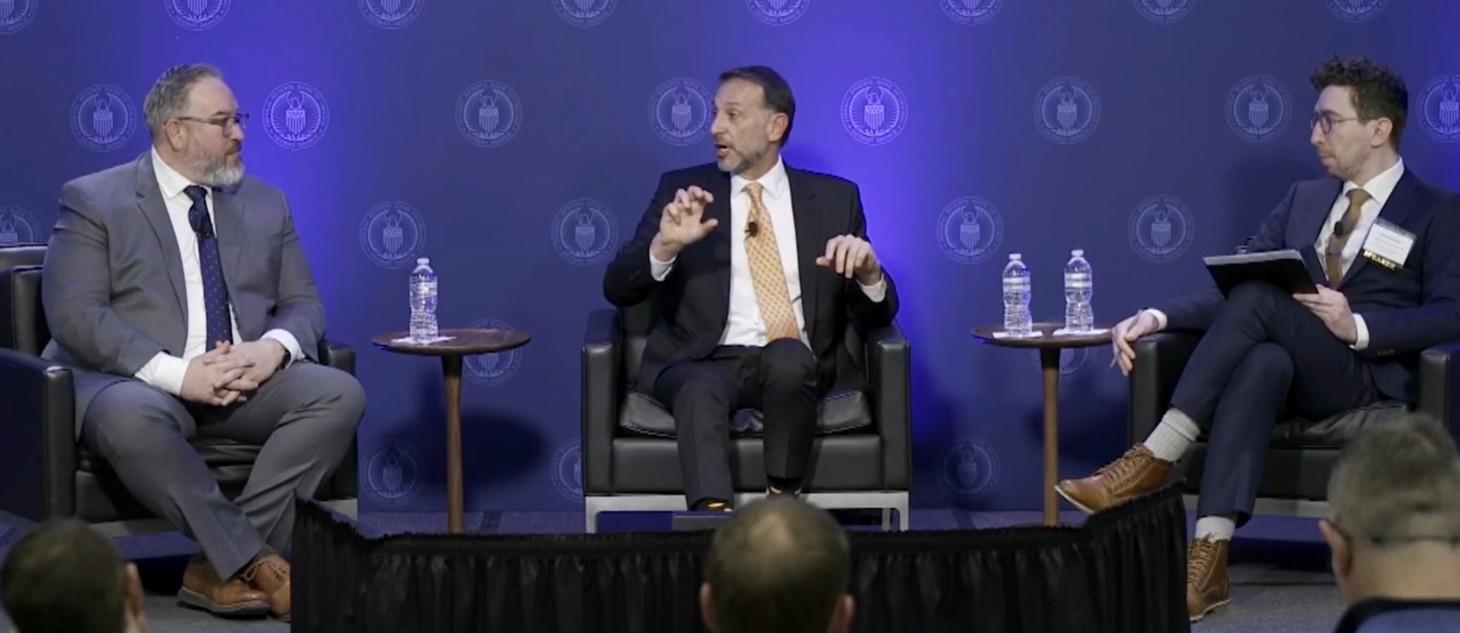
Consumer experience in claims, repairs process evaluated at Federal Reserve auto symposium
A panel discussed the drivers behind soaring auto insurance inflation, including the rising complexity of repair, consumer pressures, and changing insurance practices, during the Automotive Insights Symposium held by the Federal Reserve Bank of Chicago on Wednesday.
A full recording of the conversation can be found online.
Aaron Schulenburg, Society of Collision Repair Specialists’ executive director, said vehicle complexity is probably at the top of the list.
“We are working on very sophisticated vehicles, and that is going to drive a lot of the cost,” Schulenburg said.
It’s the complexity more than inflationary pressure at this moment, he added, while acknowledging there is still inflation on things such as products used.
“You have heard a lot of talk this morning about consumer preference for safety,” Schulenburg said. “I think everybody in this room prefers a safe vehicle. That safety requires additional tasks, and additional technologies and additional repairs.”
ADAS systems require vehicle scanning, diagnostics, and calibration steps, he said.
“All of those things are probably one of the fastest growing cost drivers that we are seeing, just because they are new,” Schulenburg added.
He pointed to recent data from CCC’s Crash report that found 87% of direct repair program appraisals included a diagnostic scan in Q1 2025 and 32% included a calibration.