
News
Allstate outpaces Progressive as it doubles Q4 net income to $3.8 billion
The Allstate Corp. more than doubled its fourth-quarter net income to $3.8 billion, up from $1.9 billion a year earlier, as underwriting gains and affordability initiatives drove results that outpaced key rivals in the personal lines market.
Full-year net income reached $10.17 billion, or $38.06 per diluted share, on total revenues of $67.69 billion. Fourth-quarter revenues came in at $17.35 billion.
The Q4 results continue a trend from earlier in the year. In Q3 2025, Allstate's property-liability combined ratio stood at 80.1, an improvement of 16.3 points from the prior year, driven by lower catastrophe losses and reserve releases.
Homeowners' insurance produced $2.39 billion in underwriting income, with its combined ratio dropping to 84.4 from 90.1. Auto premiums earned rose 4.4% while policies in force increased 2.3%. Homeowners' premiums grew 15%, with policies in force up 2.5%.
Outpacing rivals
The results place Allstate ahead of Progressive, its closest personal lines competitor, which posted a combined ratio of about 88.0 for the fourth quarter. Allstate's auto insurance combined ratio came in at 85.0, a 10-point improvement from 95.0 in 2024.
Financial Results

US casualty pricing expected to diverge amid softening P&C landscape: Morningstar DBRS - Reinsurance News
As the US commercial property and casualty (P&C) insurance market is experiencing significant softening across most sectors, as of Q3 2025, US casualty lines remain an exception, with rates continuing to rise, Morningstar DBRS highlights in a recent report.
The decline in rates had been driven by competition, strong market capacity on the back of prior profitable years, and declining reinsurance rates.
However, while property rates may be dipping, US casualty lines – which protects businesses and individuals for injury or property damage – remain an exception to the trend, mainly due to the fact that they are expensive and difficult to underwrite.
Casualty insurance underwriting is challenged by two primary factors: the inherently long-tail nature of claims and the accelerating impact of social inflation, the report notes.
The extended timeline of long-tail claims makes accurate final cost prediction difficult. This complexity is significantly worsened by high social inflation, which encompasses evolving societal attitudes, shifts in the legal landscape, and increased litigation, all of which elevate claim costs substantially beyond initial projections.
AI in Insurance

State Farm Advances AI Vision Through OpenAI Collaboration
State Farm is at a pivotal moment in reimagining how technology supports and drives our business. As part of our commitment to building a culture centered on speed, agility, and innovation, we are participating in OpenAI’s Frontier platform.
Our goal: strengthen the capabilities of State Farm agents and employees so they can provide best-in-class service to our customers.
As a launch partner, State Farm is among the first organizations exploring the use of OpenAI to power some of our most complex and valuable AI work; enabling us to explore new ways to accelerate our technology strategy.
With over 96 million policies and accounts, our responsibility to provide timely, clear, and compassionate support during life’s unexpected moments is our primary focus—all while preserving the personal human touch that defines our service.
Looking Ahead Using AI tools provides a powerful approach to accelerate our ability to solve business challenges and put customers first while safeguarding customer data.
While we are just beginning to explore this relationship, our intention is to implement capabilities over time with rigorous security and oversight. Our standards for privacy, security, and accountability remain unchanged.

Only 30% of insurer AI projects make it past pilot stage, report finds
The insurance industry's push toward artificial intelligence is hitting familiar roadblocks, with only 30% of AI initiatives progressing beyond proof-of-concept into full deployment, according to a new report examining adoption patterns across P&C distribution channels.
The report, published by insurance services provider Patra, found that organizations which successfully scale AI outperform peers by 3-5x across productivity and efficiency metrics. It draws on customer interviews and third-party research sources.
Five factors are driving AI adoption across the distribution channel: margin compression with projected combined ratios near 99.5%, E&S market growth exceeding 19% annually, insured catastrophe losses surpassing $100 billion, talent shortages across distribution segments, and rising customer expectations for digital responsiveness.
Patra's findings align with broader industry challenges around AI returns. Research from MIT suggests that as many as 95% of firms have yet to realize measurable ROI from AI initiatives.
Experts Say It’s Difficult to Tie AI to Layoffs
Amazon last week, is that it wasn’t a failure to get on board with the company’s artificial intelligence plans.
Plumb, his team’s head of “AI enablement,” says he was so prolific in his use of Amazon’s new AI coding tool that the company flagged him as one of its top users.
Many assumed Amazon’s 16,000 corporate layoffs announced last week reflected CEO Andy Jassy’s push to “reduce our total corporate workforce as we get efficiency gains from using AI extensively across the company.”
But like other companies that have tied workforce changes to AI — including Expedia, Pinterest, and Dow last week — it can be hard for economists, or individual employees like Plumb, to know if AI is the real reason behind the layoffs or if it’s the message a company wants to tell Wall Street. CONTINUES
Announcements
CIECA announces 2026 board of trustees officers
TOP: Kim DeVallance Caron, Enterprise Mobility; Ken Eagleson, OEC Insurance Solutions. BOTTOM: Ed Mondragon, State Farm; and Creighton Warren, Boyd Group.
“I’m genuinely excited about the opportunity to help accelerate the industry’s digital transformation,” says CIECA Executive Committee Chair DeVallance Caron
The Collision Industry Electronic Commerce Association (CIECA) has announced that the following 2026 officers were named during the January Board of Trustees meeting, held in Palm Springs, Calif.
- Chair: Kim DeVallance Caron, Business Development Director, Enterprise Mobility
- Vice Chair: Ken Eagleson, Vice President of Business Development, OEC Insurance Solutions
- Treasurer: Ed Mondragon, Property and Casualty Claims Director, State Farm
- Secretary: Creighton Warren, Chief Information Officer of the Boyd Group
InsurTech/M&A/Finance💰/Collaboration
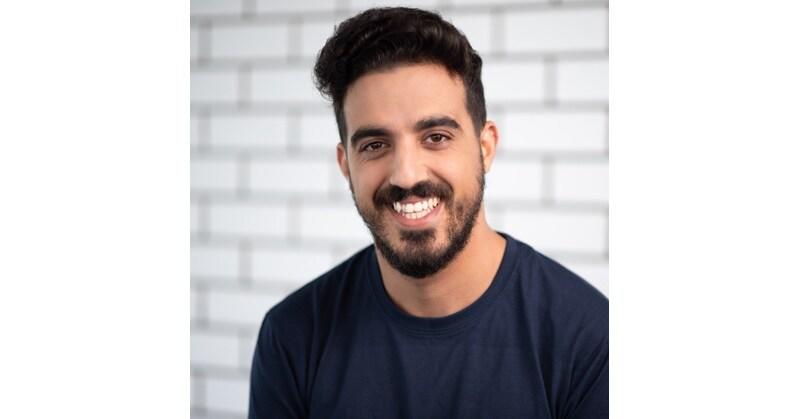
FinTech, Advance, Raises $8.55M to Turn Insurance Payments into Revenue
Advance, a financial platform built for insurance that reduces operational friction while ensuring premium dollars are controlled and earning, today **announced it has raised $8.55 million in seed funding to modernize how insurance intermediaries manage and move money.*
The round was led by nvp Capital, with participation from Crystal Ventures, Vesey Ventures, and Mensch Capital, alongside strategic angels including Assaf Wand, former CEO and founder of Hippo Insurance. The seed round follows Advance's pre-seed financing and includes participation from insurance-aligned strategic investors.
Insurance intermediaries—including managing general agents (MGAs), wholesalers, and scaled agencies—handle some of the most complex money movement in financial services. Premium dollars must be collected, segregated, reconciled, and remitted across multiple parties, all while maintaining strict compliance and auditability in support of their fiduciary responsibilities Yet most firms still rely on legacy banks, generic payment tools, and manual spreadsheet workflows with no common language to manage these processes.
"Advance is the GPS for insurance payments." said Omer Rimoch, founder and CEO of Advance. "By combining purpose-built financial infrastructure with AI, we make sure every dollar is tracked, contextualized, and optimized in real time. When finance is fully automated, money doesn't get lost — it generates value.
Podcast Sponsor

Audio Version - 'Connected: The Podcast' --- Sponsored by Pulse Podcasts
** The ‘Connected’ Podcast by Alan Demers and Stephen Applebaum, is a condensed audio version of the day's ‘Connected' newsletter, a daily scan of all the happenings in the world of Insurance & InsurTech News**.
Pulse Podcasts: Introduce a new way for your audience to hear your voice! We are a podcast creation service that helps businesses turn their written content, like blog posts and news articles, into beautiful podcasts. Our platform writes the script, records the voices, and mixes the audio to create engaging content for your audience. It's affordable and has super-fast turnaround!
LISTEN AND SUBSCRIBE BELOW
SUPER BOWL LX

What ads do insurance companies have on tap for Super Bowl LX?
Insurance companies have long been a staple in the Super Bowl commercial lineup.
More than 120 million people tune in to the Super Bowl each year, making it consistently the most-watched annual televised event in the U.S. For some, it's the love of the game that draws them in. For others, it's the promise of high-energy halftime talent, but for many, it's the notoriously extravagant, star-studded advertisements that have their attention. Insurance companies have long been a staple in the Super Bowl commercial lineup, but Super Bowl LX won't see the industry heavily represented.
So far, State Farm is the only insurance company to have claimed an ad spot for Sunday's big game. The insurer is returning to the Super Bowl after taking the year off in 2025, following the Los Angeles area wildfires in January of that year.
Leading up to this year's Super Bowl, State Farm has released a series of teasers featuring comedian Keegan-Michael Key and actor Danny McBride. In these spots, they play a pair of questionably competent insurance agents for fictional carrier Halfway There Insurance. The teasers debuted during the NFC and AFC Championship games on January 25.
One of the teasers features singer and actress Hailee Steinfeld alongside Key and McBride. As the spot opens, Steinfeld sits across from the agents and lays a stack of claim paperwork on their desk as she asks, "You guys are just like State Farm, right?" In response, the men break out into a parody of Bon Jovi's classic "Livin' on a Prayer" that explains Halfway There Insurance's lengthy list of coverage exclusions. It ends with Steinfeld declaring she, "Shoulda gone with State Farm," before cutting to a screen reading "2.8.26," the date of the Super Bowl.
Why Super Bowl LX’s $10m Ad Boom Matters to Sport, Media and Fans
Every year, the Super Bowl’s commercials get talked about, but for Super Bowl LX on Sunday, the conversation isn’t just about creative buzz. It’s about the cost of entry. NBCUniversal has sold multiple 30-second advertising slots for more than $10 million each, the first time that price tier has been reached, and the event’s advertising inventory sold out very quickly with extraordinary demand.
That price tag that equates to over $300,000 per second for national airtime isn’t about simple commercial vanity. It reflects live sport’s shrinking real estate for genuine mass exposure, where more fragmented audiences elsewhere have made sporting spectacles among the few remaining global stages capable of drawing huge synchronised attention.
Sporting bodies, leagues and broadcasters have long leaned on the Super Bowl as an advertising tentpole, but this iteration is notable for how deep that integration has become with the rest of the sports calendar. NBCUniversal cross-bundled Super Bowl LX with the Milan–Cortina 2026 Winter Olympics and the NBA All-Star Game under a programming strategy it called “Legendary February”, selling commercial inventory across all three events and driving brands to allocate budgets not just for a single spot but for sustained visibility around several high-engagement moments.
Last year’s Super Bowl drew an audience of roughly 127.7 million, the largest ever.
David Skilling
Insurance Ad During Super Bowl Aims to Win Over Frustrated New York Fans
New York football fans may not be happy that neither the Giants nor Bills nor Jets made it to Super Bowl 2026 but there is a reason for them to tune in on Sunday anyway.
During the New England Patriots and Seattle Seahawks battle, there will be a. television ad titled BILLS that addresses New Yorkers’ frustrations.
The ad is from the Uber-quarterbacked Citizens for Affordable Rates (CAR), which is going on the offense with a “seven-figure statewide television and digital ad campaign” that cheerleads for New York Gov. Kathy Hochul’s re-election and her recent proposals to deflate New Yorkers’ auto insurance bills.
Super Bowl risk exposure is so big that insurance coverage must be layered
Getting insurance for the big game is a master class in large-scale risk management.
Super Bowl insurance isn't one giant policy—it's a stack of coverage layers designed to handle massive, real-world risks, according to InsuranceQuotes.com.
Organizers typically combine commercial policies like general liability, workers' comp, event cancellation and media liability, the data showed, which often spread across multiple insurers because the exposure is so large.
"From layered general liability and event cancellation coverage to workers' comp and media liability, insuring the Super Bowl is a master class in large-scale risk management," said Michael Giusti, analyst at InsuranceQuotes.com.
"No single carrier carries the load. Rather, the various forms of coverage rely on a web of interconnected liabilities and years of coordination between underwriters, risk managers, and event organizers to anticipate everything from weather disruptions to reputational and terrorism exposures," he added. "For P&C professionals, the Super Bowl is a powerful reminder that the industry's real value lies not just in paying claims, but in preventing losses long before kickoff."