
News
Weekend winter storm caused estimated $100B in losses
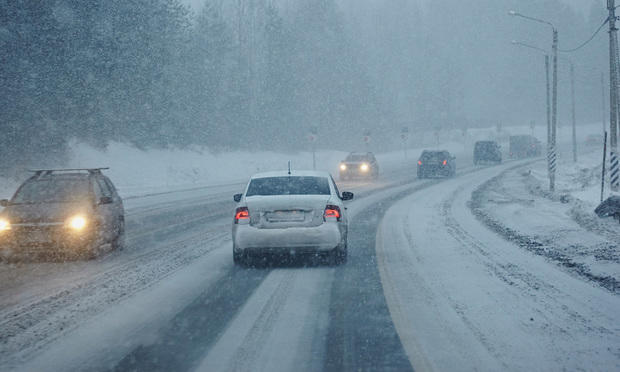
A winter storm stretching across much of the United States over the weekend likely caused billions of dollars in damages and economic losses, according to AccuWeather.
Winter Storm Fern dropped more than a foot of snow in 14 states, from New Mexico to Massachusetts. Some areas in New York, Pennsylvania and New Hampshire saw closer to two feet.
As of Monday morning, 56% of the contiguous U.S. was covered in snow, up from 26% the week before. That's the second-highest coverage of snow in the U.S. in 20 years.
The storm also brought freezing temperatures that will linger in most areas for the rest of the week.
"Despite the forecast of sunshine most days, many areas will get little natural melting of snow and ice this week," said Alex Sosnowski, AccuWeather senior meteorologist, in a statement. "Freezing temperatures for multiple nights are forecast as far to the southeast as the north-central part of the Florida Peninsula."
AccuWeather estimates that the storm will result in total damage and economic loss of $105 billion to $115 billion.

Major State Farm Announcement
State Farm is teasing a major announcement scheduled for February 8, 2026, likely aligning with Super Bowl LX, which takes place on that same date at Levi's Stadium in Santa Clara, California.
The company is building anticipation for this event via social media, following their previous marketing, including potential ties to the NFL.
Property cat reinsurance softening to continue into April, June and July renewals, says Fitch
With property catastrophe reinsurance rates significantly softening at the January 2026 renewals, rating agency Fitch forecasts that further softening will continue into the April, June, and July renewals later this year.
At the same time, the agency confirmed that it is maintaining its ‘deteriorating’ sector outlook for global reinsurance in 2026, citing moderately weaker operating and business conditions expected over the year.
Fitch adjusted its outlook for the global reinsurance industry to “deteriorating” from “neutral” back in September, with the agency saying at the time that “Softer pricing conditions and rising claims costs will pressure underwriting margins, though profitability remains strong by historical standards.”
Analysts at Fitch recently highlighted how record amounts of reinsurance capital supply from both traditional and alternative sources exceeded the slight demand increase from buyers during the January 1, 2026 renewals, which drove a softening market, but one that analysts feel can still deliver profits.
“Property catastrophe pricing significantly softened at the January 2026 reinsurance renewals following rate reductions at the mid-year 2025 renewals, with reductions in risk-adjusted prices across most lines,” Fitch said.
Rate reductions of up to 5% were observed for US and European catastrophe-exposed portfolios, while for loss-free US property business, pricing declines reached as much as 20%, compared with a range of down 10% to up 10% from the previous year.
Commentary/Opinion
Disaster Insurance for All: Our Proposal for Reforming Property Insurance
Insurance industry profit motives conflict with our need for protection. Public insurance, coupled with proactive risk reduction, can help.
This article is part of The Rooftop, a blog and multimedia series from New America’s Future of Land and Housing program. Featuring insights from experts across diverse fields, the series is a home for bold ideas to improve housing in the United States and globally.
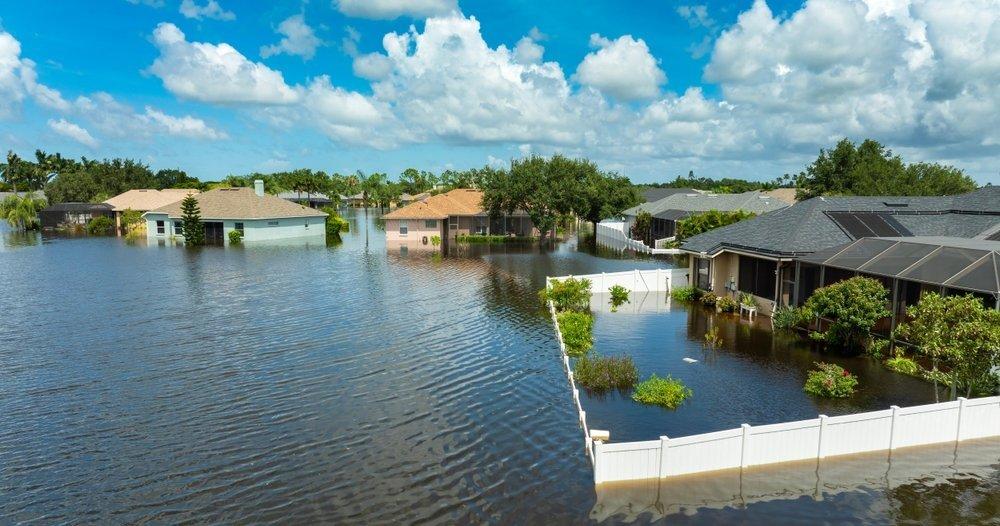
Insurance has long been a silent bedrock of housing in the US. It has protected many of us from financial ruin when disasters strike, but otherwise we have rarely thought about it. Today, however, insurance has become a front-of-mind expense and headache for many households and a deal-breaker cost for many multifamily building managers as premium prices skyrocket, coverage options shrink, and claims require months-long fights for payouts.
Insurance, in other words, is now one of the primary manifestations of the climate crisis in people’s daily lives, and the crisis in insurance markets is driving up the cost of living across the country. This reality is both a consequence of insufficient climate change mitigation policy (getting worse under the current president) and a consequence of the increasing—though not entirely new—financialization of the insurance industry.
"Insurance is now one of the primary manifestations of the climate crisis in people’s daily lives." While property insurance emerged from mutual aid societies, the profit-seeking structure of the private insurance companies of today conflicts with our expectation that they will provide financial protection for policyholders. Instead of ensuring protection, insurers seek to decrease their liabilities while increasing the amount of money they have to invest in—and profit from—financial markets.
January Sales Forecasts Signal Continued Pressure on Collision Repair Volume
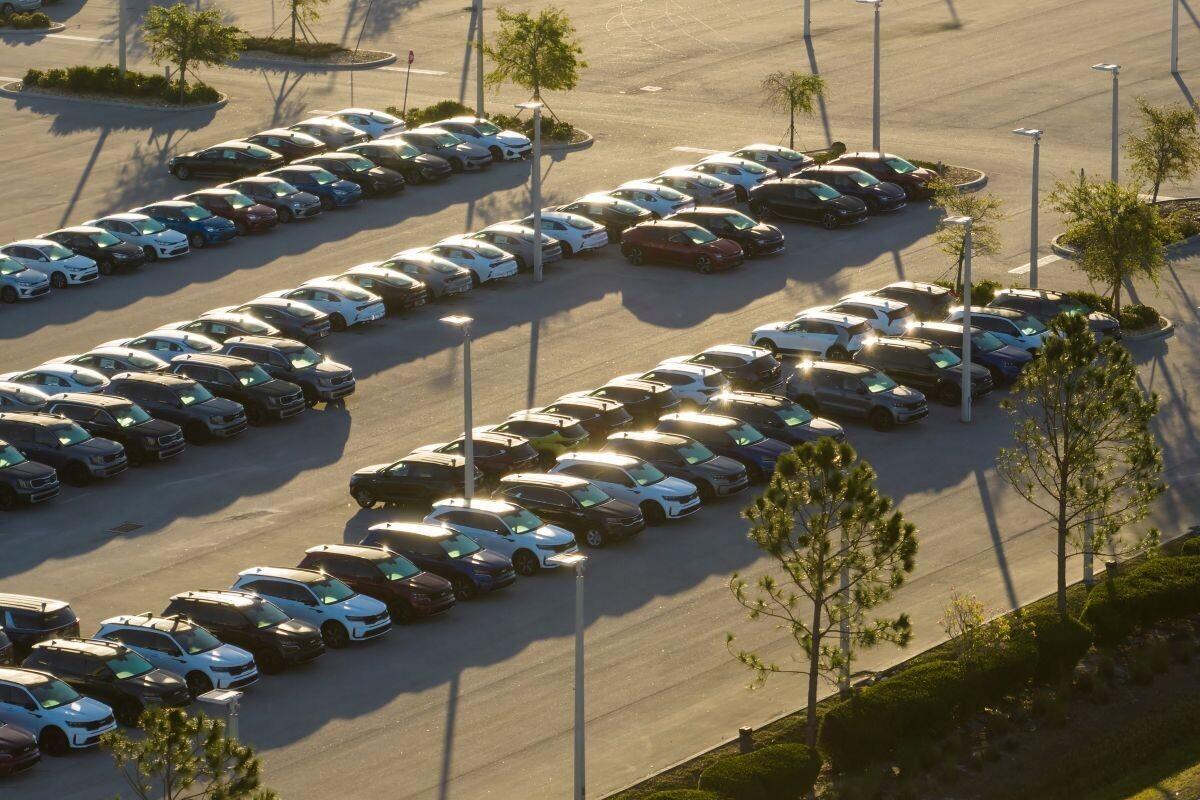
New-vehicle sales forecasts for January point to a continued slowdown that will extend pressures collision repair shops have been navigating since mid-2025.
Cox Automotive projects January's seasonally adjusted annual rate will finish near 15.3 million units, down from December's 16.1 million and slightly below last January's 15.5 million pace. J.D. Power's forecast is more conservative, projecting a 15.0 million SAAR, down 0.4 million units from January 2025.
Both forecasters cite the same underlying factors: the September 2025 expiration of federal EV tax credits continues to drag on overall volume, consumers remain cautious about the economy, and new-vehicle prices stay elevated. Winter Storm Fern, which disrupted much of the country during the final weekend of January, likely slowed sales further.
For collision repair operators, slowing new-vehicle sales compound an already difficult volume picture. As Autobody News reported in December, industry data shows total claim counts fell 8.5% year over year through July 2025, with collision and comprehensive claims accounting for nearly 90% of that decline. Fewer new vehicles entering the market means the existing fleet continues to age, and older vehicles are far more likely to be written off after a collision.
Announcements
Kin launches auto insurance
Kin Insurance announced the launch of auto insurance for Kin customers in Florida and Texas.
We first covered Kin’s intention to expand beyond home insurance in March 2025.
According to the company, bundled home and auto policies can save customers as much as 20% on auto policy premiums.
“Our customers in Florida and Texas told us they wanted the ability to bundle auto and home insurance, so we made it a priority to bring this product to market. By offering auto insurance alongside our existing home insurance, we are creating access to coverage that protects them from the unique risks in their states — from the high percentage of uninsured drivers in Florida to the significant storm exposure in Texas — while keeping costs manageable, simplifying the insurance experience, and strengthening long-term relationships with our customers.” – Kin Founder and CEO Sean Harper.
Telematics, Driving & Insurance
A New Era of Road Safety
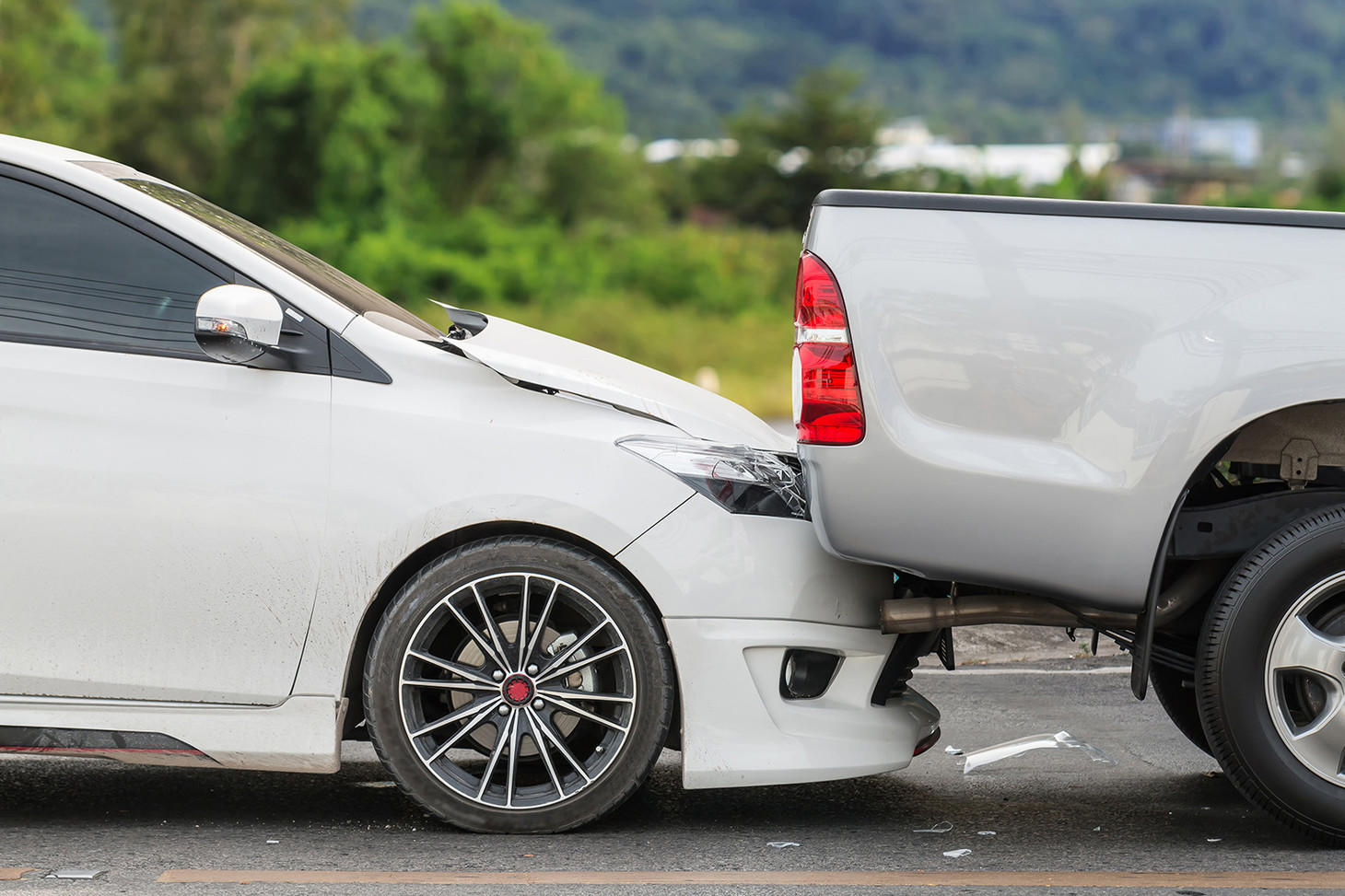
The recent deployment of enhanced mobile accident detection and response technology from State Farm marks one of the most significant initiatives of its kind in the insurance industry. With rising claims resulting from distracted driving and severe weather collisions, insurers like State Farm are redefining how they support drivers in real time, setting new standards for responsiveness and risk management in an increasingly connected digital world.
Accident Assistance is a feature available at no additional cost to any customers enrolled in Drive Safe & Save®. And in Illinois, Florida, and Ohio, it’s also available to eligible auto policy customers through the State Farm app regardless of Drive Safe & Save enrollment. In 2025, State Farm introduced the technology as a pilot program to millions of customers across these states by integrating it into the revamped State Farm mobile app.
The program offers real-time accident detection, expedited emergency service requests, and a streamlined claims filing experience. These features were carefully designed to greatly reduce response times after a detected collision and provide you the support you need during the most critical moments - when every second matters.
How the Technology Works for You The enhanced Accident Assistance program automatically detects when an accident occurs and can:
- Initiate contact with emergency services for detected severe accidents if the driver is unresponsive or the vehicle does not resume driving
- Pinpoint exact accident locations using GPS technology
- Begin claims processing once a service tow is requested; drivers can also file a claim in the app
- Connect drivers with available roadside services for non-emergency situations
Jeff Legner, Vice President of Property & Casualty Claims at State Farm

Customers’ Search for Better Auto Rates Has UBI Heating Up
Customers shopped for auto insurance at a record pace in 2025 as years of insurance rate hikes got buyers looking around. And this time, they are finding better prices elsewhere, according to J.D. Power.
The percentage of customers who shopped for auto insurance in 2025 was 57%, up from 49% in 2024. About 30% of them switched insurers.
Also, nearly half of buyers are making purchases online. And according to the J.D. Power 2025 U.S. Auto Insurance Study, customers who begin their interaction with an insurer through an app are more likely to to say the experience was seamless than buyers using the phone or an agent. FULL ARTICLE
AI in Insurance
SUPERAGENT AI Announces World’s First Insurance "Quoting AI Agent," Solving the Industry's Hardest Challenge
SUPERAGENT AI, Inc. today announced the world’s first Quoting AI Agent, a technological breakthrough that automates the single most critical and labor-intensive workflow in the insurance industry.
"This is the moment the industry has been waiting for; we have solved the hardest problem in insurance. By automating quoting and integrating it with Inbound and Outbound AI Agents, we are giving agencies the power to scale infinitely." - Vlada Lotkina
For decades, the "quoting bottleneck", the manual process of collecting data, navigating multiple carrier portals, and re-keying information, has limited agency growth. Today, SUPERAGENT AI shatters that barrier. The new Quoting AI Agent autonomously gathers customer data, navigates complex carrier rating engines, optimizes rates, and generates accurate quotes for agencies.
The Quoting AI Agent will officially launch on February 11, 2026. Starting today, agencies can sign up for exclusive early access and book live demonstrations.
"This is the moment the industry has been waiting for. We haven't just built an AI Agent; we have solved the hardest problem in insurance," declared Vlada Lotkina, CEO of SUPERAGENT AI. "By automating quoting and integrating it with our Inbound and Outbound AI Agents, we are giving agencies the power to scale infinitely. The era of manual quoting ends on February 11th."
Claims
The hidden drain on casualty claims
Here's why subrogation leakage keeps happening.
Subrogation has always been one of the most reliable ways for casualty carriers to recover dollars, yet leakage continues to chip away at performance in ways that often go unnoticed. Busy claim environments, inconsistent processes, and missed liability signals all contribute to recoveries slipping through the cracks.
Over time, those small misses add up to real financial impact.
The strategic value of subrogation in casualty claims Carriers recovered $51.6 billion through subrogation and salvage in 2021 across auto physical damage, commercial auto liability, and personal auto liability lines, according to the National Association of Insurance Commissioners (NAIC). This number underscores the magnitude of recoverable dollars at stake and the influence subrogation has on combined ratios and premium adequacy.
For casualty insurers, where incidents often involve third-party negligence — motor vehicle accidents, workplace injuries involving contractors, product failures, and premises liability — subrogation is not abstract legal theory. It is fundamental to cost containment.
Where subrogation leakage occurs Research consistently shows that approximately 15% of P&C claims are closed without identifying a valid subrogation opportunity, amounting to an estimated $15 billion to $20 billion in annual missed recoveries industrywide. While the exact number may vary by carrier, the pattern is remarkably consistent: A meaningful percentage of claims with genuine recovery potential never reach the subrogation department.
State News

State Farm challenges Illinois plan to police homeowners insurance rates
State Farm CEO Jon Farney is pressing Illinois Gov. JB Pritzker to block legislation that would give the state power to judge whether homeowners insurance rates run too high. The exchange has turned pointed, and public.
Farney wrote to the governor last week urging him to oppose House Bill 3799. The bill would allow the Illinois Department of Insurance to order rebates when it finds rates unfair to consumers. Pritzker replied two days later, saying State Farm’s objections rested on factual errors.
Farney argued Illinois already operates the most competitive homeowners insurance market in the country. He said average annual premiums sit around $1,143, below the national mean.
In his telling, competition keeps prices down without heavy-handed oversight.
At the same time, he said losses tied to severe weather are climbing fast. Repair and replacement costs rose alongside inflation. Risk moved up. Rates followed. State Farm raised homeowners premiums by an average 27% last summer. Farney pointed out the company also cut auto rates by roughly 10% over the past eight months.
He said the pending bill threatens predictability and market stability, warning it would upend what he called a healthy system.
Pritzker pushed back hard. He said the insurance department lacks real authority under current law. When regulators object to a rate filing, he said, the objection gets logged with the National Association of Insurance Commissioners and stops there.
2026 Outlook/Predictions

Rate pressure, customer churn set stage for auto insurance upheaval in 2026
Skyrocketing premiums and shifting consumer behavior are reshaping the U.S. auto insurance landscape heading into 2026, according to new industry data from J.D. Power that shows record levels of policy shopping, growing dissatisfaction among historically loyal customers and an accelerating pivot toward digital engagement.
After five years of price volatility, insurers are confronting the consequences of steady premium hikes that have pushed customers to re-evaluate their coverage and seek alternatives. The result is a fiercely competitive marketplace where carriers face pressure not only to justify rising rates, but also to prevent high-value customers from walking away.
A new Insurance Intelligence Report from J.D. Power outlines the biggest challenges insurers will face this year, pointing to three critical forces: intensifying rate pressure, erosion of customer loyalty, and a rapidly expanding reliance on digital channels.
Record shopping levels as rates reach flashpoint
The report shows that 57% of auto insurance customers shopped for new policies in 2025, up sharply from 49% the previous year. While shopping rates have been climbing for several years, the latest findings mark a turning point: customers are no longer just browsing — they’re finding better prices and switching.
Fraud

Techficient Introduces AI-Driven Fraud Detection Platform for Insurance Distribution |
Techficient (Boise, Idaho) has launched Forthright, an AI-powered fraud detection solution built to help insurance carriers and distributors identify and mitigate fraud in insurance distribution.
Forthright uses AI to monitor common types of fraudulent behavior and provide early detection and intervention. The tool is designed to support compliance, improve operational efficiency, and reinforce the integrity of distribution channels.
“Forthright represents a critical step forward in protecting the insurance industry from one of its most persistent challenges,” says Todd Ruplinger, CEO, Techficient (pictured). “By leveraging AI to detect fraud early, we’re helping carriers and distributors preserve trust, improve profitability, and strengthen the integrity of their business.”
Techficient says Forthright enables users to reduce fraud-related losses while supporting a more transparent and efficient distribution environment.