
News

Winter storm to bring crippling snow, sleet, ice from Texas to Boston
Forecasters warn the storm could rival a hurricane in damage to power lines and trees, especially in areas with heavy ice.
Bread was flying off the shelves, salt was being loaded into trucks and utility workers were nervously watching forecasts Thursday as a huge winter storm that could bring catastrophic damage, widespread power outages and bitterly cold weather barreled toward the eastern two-thirds of the U.S.
The massive storm system is expected to bring a crippling ice storm from Texas through parts of the South, potentially around a foot of snow from Oklahoma through Washington, D.C., New York and Boston, and then a final punch of bitterly cold air that could drop wind chills to minus-50 degrees Fahrenheit in parts of Minnesota and North Dakota.
Forecasters are warning the damage, especially in areas that get a large amount of ice, could rival a hurricane. About 160 million people were under winter storm or cold weather watches or warnings — and in many places both.
The storm was expected to begin Friday in New Mexico and Texas, with the worst of the weather moving east into the Deep South before heading up the coast and thumping New England with snow.
Cold air streaming down from Canada caused Chicago Public Schools and Des Moines Public Schools in Iowa to cancel classes Friday. Wind chills predicted to be as low as minus-35 degrees Fahrenheit could cause frostbite within 10 minutes, making it too dangerous to walk to school or wait for the bus.
The market is softening but could ‘turn on a knife edge’: Turk, Lloyd's - Reinsurance News
Rachel Turk, Chief of Market Performance at Lloyd’s of London, classifies the current reinsurance market as one that is softening, but not soft, noting that it is on a knife edge and could reverse following a major loss event.
Rachel Turk Lloyd’s of LondonSpeaking at Fitch Ratings’ Insurance Insights 2026 event on 22nd January in London, Turk emphasised that it is not inevitable that the industry will move into a completely soft market.
Although prices softened at the recent January 2026 reinsurance renewals, she said that a major cyber catastrophe, natural catastrophe, or other significant loss could quickly shift market conditions again.
Turk explained, “We had a very, very light, North Atlantic hurricane season from an insured perspective. In terms of the number of storms, it was the same number that there are normally, but they just didn’t happen to make landfall. Therefore, it was a very light insured North Atlantic hurricane season. Had it been a heavy season, those rates would be going up and we’d be back into a period of hardening market. So, that’s why I say it’s on a knife edge.
“I think the return on capital is partly what’s driving the fact that it is not inevitable that we move into a completely soft market.”

Policy Alert: New U.S. Executive Order on Artificial Intelligence – Aon Tips for Better Risk Capital Decisions
On December 11, 2025, U.S. President Donald J. Trump released a new Federal Executive Order — the latest effort towards the aggressive promotion of U.S. AI leadership and away from a fragmented, state-by-state regulatory model.
At its core, the Executive Order, titled “Ensuring a National Policy Framework for Artificial Intelligence,” does three things:
- Declares a national policy: The U.S. will pursue “minimally burdensome” AI regulation to sustain and enhance global AI dominance.
- Targets state-level AI rules: It creates tools and incentives to challenge or constrain state AI laws seen as “onerous,” especially those perceived as forcing “ideological bias” into models, requiring changes to “truthful outputs” of AI, or imposing extensive reporting and disclosure obligations.
- Sets the stage for a uniform federal framework: It directs the Administration to prepare legislation that preempts conflicting state AI laws, while carving out limited areas like child safety and state procurement.
The Administration has framed AI as central to U.S. national security and economic dominance, and explicitly rejects what it sees as over-regulation, particularly at the state level.
AI in Insurance

20,000 AI Users at Travelers Prep for Innovation 2.0; Claims Call Centers Cut
Days after announcing a deal to equip 10,000 engineers and data scientists at Travelers with AI assistants, the insurance company’s leader detailed “differentiating domain expertise” around data and technology, which fuel long-term profit growth for the insurer.
Travelers Chief Executive Officer Alan Schnitzer told investment analysts that more than 20,000 Travelers professionals already “use AI tools on a regular basis” during a fourth-quarter 2025 earnings conference call. He also said that the company’s claims call centers are getting leaner with automation tools providing an efficiency boost.READ ON

Embedding Ethical AI Safeguards in Insurance
AI is rapidly reshaping the insurance industry, from underwriting and claims processing to customer service and fraud detection. What once required manual review and human judgment is now increasingly handled by technology that promises speed, efficiency, and scale.
And with the rapid influx of new and exciting AI tools, it's easy to get swept up in the momentum.
But like any powerful tool, AI also comes with potential risks and challenges, such as algorithmic bias, data privacy, lack of transparency, and overreliance on automated decision-making. Navigating these issues requires careful human oversight. According to a study by McKinsey, 92% of companies plan to invest more in GenAI over the next three years, underscoring both the scale of the opportunity and the potential disruption in the coming years.
For insurers, the stakes are especially high. Decisions made by AI systems in insurance can directly affect an individual or small business's access to essential coverage, affecting everything from whether a claim is approved, to how much a policy costs, to whether the business is deemed insurable at all. That's why one of the most critical and consistently overlooked steps in this transformation is building ethical safeguards into AI systems from the very beginning.
Dana Edwards is group chief technology officer for Simply Business

Commercial Insurance Embraces AI While Preserving Human Oversight - Risk & Insurance : Risk & Insurance
Artificial intelligence is fundamentally transforming how commercial insurers evaluate, price, and manage risk—with decisions that once took weeks now completed in minutes—according to research from Lockton examining AI’s growing impact on the P&C industry.
The shift reflects converging industry pressures. Data availability has exploded through advances in IoT sensors, telematics, and aerial imagery. Computing power has accelerated through cloud infrastructure improvements. Meanwhile, escalating losses, talent shortages, and policyholder expectations for speed and transparency have pushed insurers to seek new operational approaches, according to Lockton.
The market is responding with three distinct adoption models:
- “AI Innovators” are deploying the most automated systems, issuing binding quotes in seconds for high-volume, low-complexity lines like personal auto and homeowners.
- “Measured Adopters” are applying AI to data ingestion and risk scoring in middle-market and specialty segments, enabling underwriters to focus on exceptions and complex accounts.
- “Cautious Followers” are using AI primarily for decision support—flagging anomalies and providing pricing benchmarks while keeping final underwriting decisions in human hands.
Commentary/Opinion
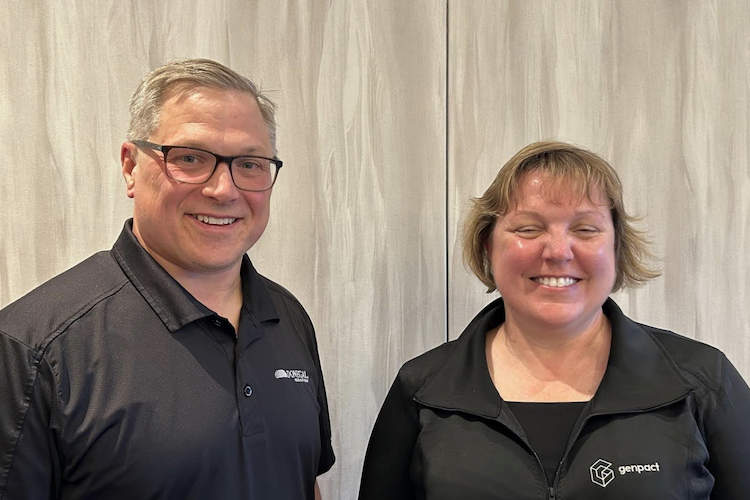
Donegal Unlocks Guidewire ROI Through Process and Change
When Donegal Insurance (Marietta, Pa.) began its Guidewire journey in 2018, the mutual insurer was already thinking long-term. A super-regional property/casualty carrier operating in 22 states, Donegal had committed to modernizing core systems to support future growth.
Several years into that journey, however, leadership reached a candid conclusion: while the technology transformation was largely in place, the business transformation had not fully caught up.
“We realized in late 2023, early 2024, that we needed help in our Commercial Lines Division,” says Ryan Bradley, VP, Commercial Lines, Donegal. “We had made a major investment in Guidewire, but we hadn’t evolved our business processes and culture to really unlock the value.”
That realization led Donegal to engage Genpact (New York) in early 2024—not to replace its Guidewire platform, but to ensure it was being used to its full potential.
Recognizing the Limits of Automation
Donegal’s Guidewire implementation was well underway by the time Bradley arrived at the company three and a half years ago. Commercial Lines—Donegal’s flagship business, spanning commercial property, workers’ compensation, and commercial auto—was already live on the platform.
Predict & Prevent
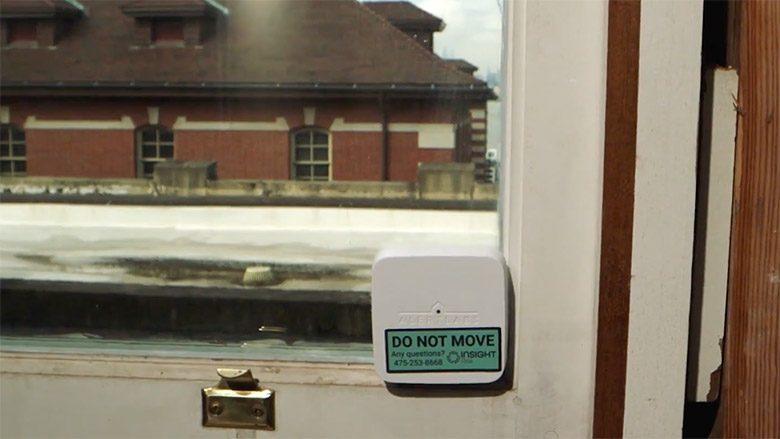
Building Sensors Make Financial Sense in Construction Insurance
How many insurance managing general agencies can say they helped renovate and protect from damage a national landmark? Let me explain the context. You know that spiraling material costs, labor shortages and other challenges make it hard for contractors and developers to stay on track and budget. Any delays or disruptions can devastate profits.
Purchasing builders’ risk insurance is a standard method to provide financial protection and risk transfer for damage and delays arising from covered incidents, including floods, fires or vandalism. Either an owner or a prime contractor purchases it. But when it comes to the losses that most frequently trigger payouts under such policies, the source is not natural catastrophes as many expect.
By dollar amount, natural disasters comprise a relatively small share of builders’ risk losses. Instead, industry data show, non-flood water damage claims account for more than half of all payouts, totaling about $15 billion each year.
Unfortunately for insureds, many costs fall outside policy recoveries, such as uninsured delays and project disruption. Meanwhile, the price tag for these claims is climbing with the median cost of water damage claims in construction rising by more than 20% and losses over $1 million in recent years tripling.
2026 Outlook/Predictions

Top 10 insurance trends for 2026 | Markel
Guenter Kryszon, Chief Underwriting Officer, US & Bermuda, highlights the top 10 insurance trends of 2026 that will help shape the insurance industry's future.
As we begin a new year, new narratives are emerging across the insurance industry. With 2025 trends still spreading their influence, Guenter Kryszon (CUO, US & Bermuda) returns to share his predictions for 2026’s defining trends—and what underwriters can do to stay ahead of the curve.
#1 Underwriting discipline in a softening market After several hard market years, premium growth should decelerate to more modest levels in 2026, requiring underwriters to stay disciplined on risk selection and pricing. Industry growth is forecast around 3 – 4%—but vigilance is still needed as the market gradually tilts toward softer conditions.
#2 Cyber risk and digital threats Cyber insurance has evolved from a niche product into a fast-growing, core segment of the P&C market. The cyber threat landscape is expanding, as well: companies of all sizes are vulnerable to ransomware attacks, data breaches and now-emerging threats like deepfake-enabled fraud and supply-chain cyber incidents, which can impact many victims at once. 2026 will see the space continue to mature, with underwriters facing both opportunities and complex challenges to assess.
#3 Geopolitical and economic uncertainty Tariffs, supply chain disruptions and macroeconomic shifts (such as interest rates and inflation) are influencing claims costs and coverage demand. The impact of broader geographic trends is expected to continue into 2026, with one prominent factor being trade volatility: SEE TOP 10
InsurTech/M&A/Finance💰/Collaboration
XBuild raises $19 million
XBuild has raised a $19 million Series A round led by N47, with participation from Rackhouse Ventures and Andreessen Horowitz. The San Francisco–based company is also rolling out a new product, Roofing Proposals, aimed at speeding up residential roofing estimates.
Founded in 2022, XBuild positions itself as an estimating and proposal system of record for contractors, starting with roofers. The company’s longer-term goal is to extend the same workflow across additional construction verticals, including concrete, landscaping, painting, windows and doors, HVAC, plumbing, and insulation.
XBuild said that in its first year more than 15,000 projects were completed on the platform, representing roughly $250 million in construction value.
The platform focuses on automating estimating and proposal generation, using inputs contractors already rely on, such as measurement reports and site photos, to produce standardized, editable estimates in minutes.
TrueCar taken private in $227 million deal led by founder Scott Painter
TrueCar has completed a $227 million take-private transaction with Fair Holdings, led by TrueCar founder Scott Painter and backed by a group of strategic partners.
The investor group includes PenFed Credit Union, Zurich North America , AutoNation, and Atlantic Coast Automotive, alongside technology and data partners including Impel AI, ID.me, CRIF, and In the Car (ITC)* . With the transaction complete, TrueCar will no longer be publicly traded, and Painter returns as CEO.
Founded in 2005, TrueCar connects consumers with more than 11,500 dealers nationwide and supports auto-buying programs for over 250 affinity and membership organizations, including credit unions and insurers such as Progressive and Allstate. USAA was previously part of that group. PenFed plans to expand its direct auto-lending presence through the TrueCar platform, while the broader group is positioned to support financing, insurance, identity, and dealer services around the transaction.
“Clearly what we are driving is changing, with autonomous, connected, electric vehicles, and this transaction reflects a shared belief that how Americans access mobility is about to enter a similar transformation. TrueCar remains an important and highly relevant platform that touches nearly 10% of all U.S. car buyers. TrueCar’s core value proposition has always been to use technology to help consumers save time and money when getting their next car, and we will be focused on that mission, while also delivering sales to our dealer and industry partners.” – Painter.
As one commenter put it on Glassdoor, ‘let’s let Painter take over from here!‘.
Insurance Agency Mergers and Acquisitions Dip 12% in 2025 | Morningstar
The pace of M&A activity slowed in 2025 as the number of buyers has continued to shrink since 2021 - both signs of the industry's consolidation, according to OPTIS Partners, an investment banking and financial consulting firm specializing in the insurance industry.
Firms announced 695 insurance agency mergers and acquisitions in 2025, down 12% from 2024, the OPTIS Partners database revealed.
"The story of 2025 is more like that of 2019 than any year since then," said Steve Germundson, partner at OPTIS Partners. "Similarities include an annual deal pace between 650 and 700 and a relatively even distribution of deals throughout the year. In fact, 2019 and 2025 are the only years when the Q4 deal volume was lower than the other quarters and December was not the busiest month for closings," he said.
"For the third consecutive year, there was no mad dash to close deals at year-end. The M&A market continues in a steady, albeit slowing state," said Tim Cunningham, managing partner.
Private-equity backed firms lead buyers
OPTIS Partners tracks buyers by four groups: private equity-backed/hybrid buyers, privately held brokers, publicly held brokers, and all others.