
News
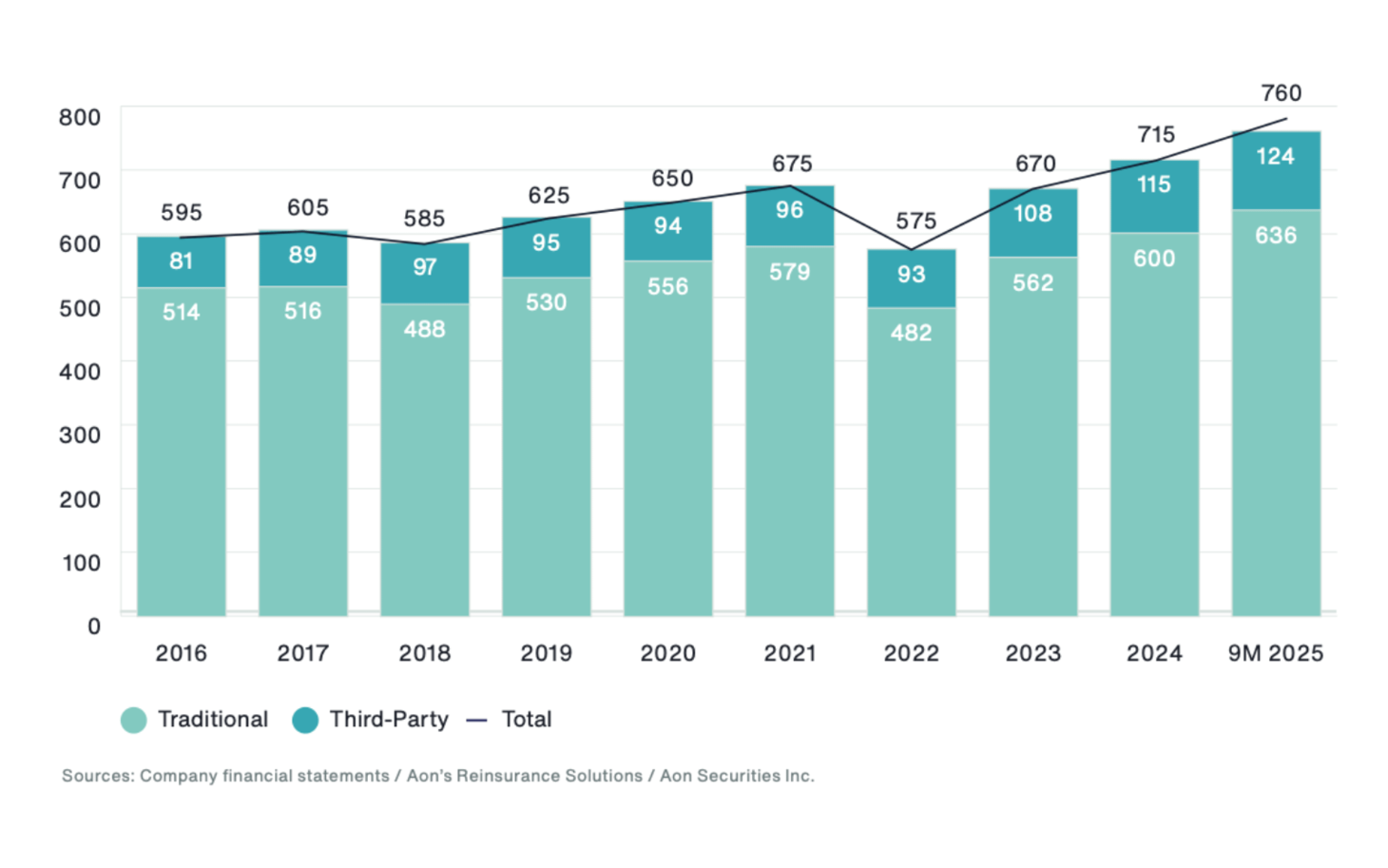
Global reinsurer capital up 6% to $760bn in 9M'25 with average ROE of 16%: Aon
Global reinsurer capital increased by more than 6% from the end of 2024 to $760 billion as at September 30th, 2025, with growth in both traditional and alternative capital, driven by retained earnings, unrealised gains, and new inflows to sidecars and the catastrophe bond market, according to Aon’s January 2026 Reinsurance Market Dynamics report.
Last week, insurance and reinsurance broking group Aon released some headline figures from its January 2026 reinsurance renewal report, which has now been published in full.
One of the data points discussed briefly in last week’s release was that global reinsurer capital reached new heights in the first nine months of 2025, expanding by $45 billion from the end of 2024 to the aforementioned $760 billion.
Of this total, traditional capital accounts for $636 billion, so is up by 6% or $36 billion from $600 billion at year-end 2024, as alternative, or third-party capital increased by almost 8% to $124 billion, compared with $115 billion as at the end of December 2024.
“Growth was driven by retained earnings, unrealized gains on bonds taken directly to equity and new inflows to sidecars and the catastrophe bond market,” says Aon.

Travelers Companies: How a 160-Year-Old Insurer Is Quietly Rebuilding the Insurance Tech Stack
Travelers Companies is turning a staid insurance franchise into a data?driven risk platform, fusing AI, telematics and cyber expertise to compete with born-digital insurtechs and legacy giants alike.
The Quiet Reinvention of a Legacy Insurer
In an era where software is devouring finance one product at a time, property and casualty insurance remains one of the last great analog frontiers. Policies are still too hard to buy, claims are too slow to settle, and risk pricing often feels like an opaque black box. Travelers Companies, better known by its red umbrella logo than by splashy tech launches, is trying to fix that — not by behaving like a hyped-up insurtech startup, but by methodically rebuilding the insurance stack from the inside out.
Travelers Companies today is less a conventional insurer and more an integrated risk platform spanning business, personal, and specialty coverage, all wired together through data, telematics, and increasingly sophisticated AI underwriting. From small-business packages and cyber policies to connected-car auto insurance and digitally streamlined home coverage, the company is turning its massive balance sheet and long claims history into a competitive weapon.
For customers, the promise is deceptively simple: smarter coverage that’s easier to buy, tailored to real-world risk, and supported by one of the strongest balance sheets in the P&C industry. For investors watching Travelers Companies Aktie, the question is whether this tech-heavy evolution can keep underwriting margins strong in a world of climate volatility, AI-driven fraud, and rising reinsurance costs.
Travelers Companies is not a single monolithic product so much as an interlocking ecosystem of offerings built around three major segments: Business Insurance, Bond & Specialty Insurance, and Personal Insurance. The unifying theme is a push to turn rich, proprietary data into real-time risk intelligence across every one of these lines. MORE
Financial Results
Root Stock: Becoming Carvana's Auto Insurance Business
Root (ROOT)s a technology-enabled insurance platform that provides insurance to automotive drivers in the United States, utilizing an advanced tech stack with machine learning capabilities. The Company targets consumers through B2B and B2C channels. It has increasingly utilized its partnerships with businesses, like Carvana, to embed itself in the automotive purchasing process. Net premiums earned in Q3 2025 were $360M, an increase from $279.3M in the previous period.
While the Company incurred massive losses as it ramped up operations, with shares falling ~99%, it has since been able to achieve profitability, reporting $33.2M in net income for the nine months ended September 30, 2025.
Despite massive improvements in policy operations and decreased operating loss ratios from its policies, shares have nearly halved over the past two years as investors are questioning its long-term growth. The Company's current partnership with Carvana will help expand premium growth and fuel growth in the interim period.
Partnerships Driving Revenue Growth
In 2021, Carvana, the used car provider that has transformed the automotive purchasing process, partnered with Root Inc. to offer integrated auto insurance solutions for Carvana’s online car-buying platform. When a customer checks out, they are offered a pre-filled option to purchase insurance on their vehicle. According to Carvana, a customer only needs three clicks to find and purchase a policy provided by Root. Additionally, the policy can be managed through the Carvana app, which offers ease of use for consumers.
Success of Partnership Channel is Directly Tied to Carvana's Success
It is no coincidence that Root and Carvana have similar stock charts. The short-term slowdown in the used car market placed pressure on these two tech-enabled companies, generating large losses for investors. However, both have emerged from potential bankruptcy and are now stronger than ever. Despite proposed cuts by the Federal Reserve, car loan rates remain very elevated from 2020. Additionally, the price for a new vehicle has substantially increased, with the average American car buyer paying $50,080. It is, therefore, no surprise that Carvana and Root have fared well.
Announcements

New president takes over at RIMS - Business Insurance
Manny Padilla, vice president of risk management and insurance for MacAndrews & Forbes, assumed the presidency of the Risk & Insurance Management Society on Jan. 1.
He succeeded Kristin Peed, chief risk officer at Sequoia Benefits & Insurance Services.
Mr. Padilla became involved with the New York-based organization when he was awarded a scholarship to attend its annual convention and exhibition, now known as Riskworld, in 1992.
He joined the RIMS global board of directors in 2022 and has held several leadership roles. He also held senior roles on the organization’s public policy and political action committees.
Mr. Padilla joined MacAndrews & Forbes in 1992. The New York-based diversified holding company has interests in cosmetics, film and digital entertainment, casino gaming and lottery systems, banking, print media, military equipment, mining and biotechnology. Before that, he served in the U.S. Navy.
Outside RIMS, Mr. Padilla is co-chair of the Lloyd’s Counsel of Risk Owners and an adjunct professor at St. John’s University’s Maurice Greenberg School of Risk Management, Insurance and Actuarial Science.
Christy Kaufman, vice president, property/casualty risk and compliance at USAA, was named president-elect of RIMS.
Penni Chambers, senior vice president, risk management at Hillwood, a Perot company, was named treasurer.
Christie Weinstein, senior director, risk management at Solstice Advanced Materials, was named secretary.
David Arick, managing director, global risk management, at Sedgwick Claims Management Services, is no longer on the RIMS board, as his term has ended. Mr. Arick served as 2024 RIMS president.
Claims
Nationwide Spending $100M on AI to Beef up Claims Efficiency, Customer Experience
This article is part of an on-going series about technological and AI-related developments and advancements in claims processes and claims departments.
When an insurance giant like Nationwide undertakes a revamp of its claims operation with artificial intelligence and new technology, there has to be some noteworthy things to say about it.
The Columbus, Ohio-based insurance and financial services company, which offers a range of products including auto, home, life, and business insurance, holds an A+ rating from both A.M. Best and S&P. The Fortune 100 company with more than 24,000 employees promotes itself as having a strong focus on customer service. The company began offering 24-hour claims service in 1960, reportedly the first carrier to do so.
More uninsured drivers, more unfixed damage: Soaring car-insurance prices have pushed Americans into risky trade-offs
Here's why car-insurance prices will continue to weigh heavily on drivers, likely prompting them to make more high-stakes bets next year
As rising auto-insurance costs collide with a broader affordability crisis, many drivers are shouldering more obligation and more risk when buying protection for the roads.
For more than a year, Kelly said a prayer every time she started her car..
Andrew Keshner
Why 1 In 4 Cars Is Totaled After A Crash Now (And It’s Not The Damage) | Carscoops
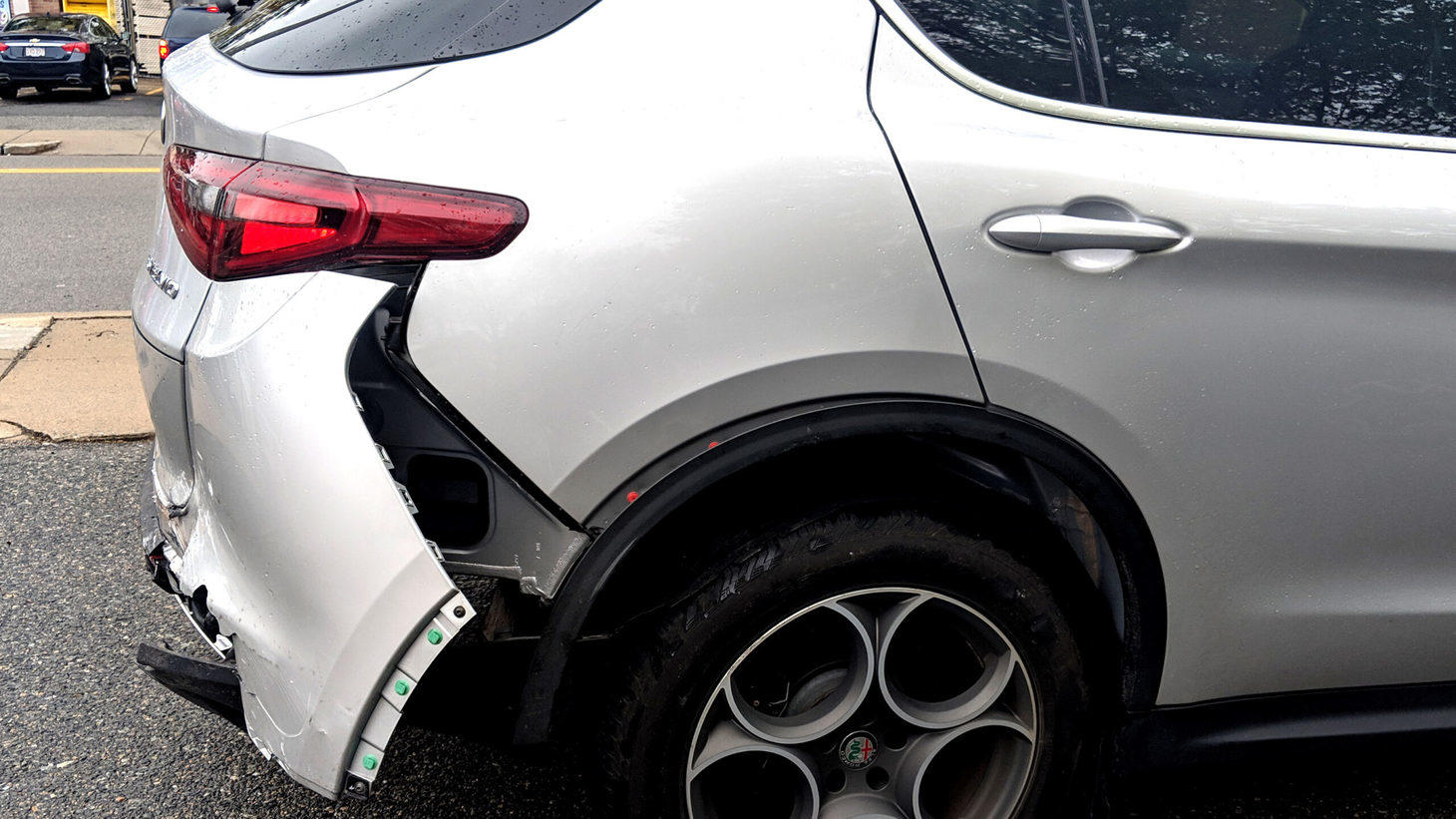
A growing number of cars are being totaled, but not for the reasons you might expect after a crash. The real cost comes later
Total loss frequency rose to 22.8%, up from 22.1% in 2024. ADAS and electronics have increased repair complexity. Aging U.S. vehicles drive up total loss valuations sharply. More crashes are leading to total losses, and it’s not because people are driving worse. A new industry report suggests that increasingly complex vehicle tech and aging fleets are quietly reshaping what happens after impact.
2026 Outlook/Predictions
Record Market Gains in 2025, Dollar Lower
The S&P 500 rose 16.4% in 2025, marking its third consecutive year of double-digit gains — only the sixth time that's occurred since the 1940s. Artificial intelligence drove the rally, with seven of the top 10 S&P performers riding the
Precious metals soared — gold rose 64%, and silver jumped 140% — while the dollar had its worst year since 2017.

5 Predictions for the Insurance Industry in 2026
The insurance industry’s old sense of steady certainty has slipped away. PwC’s “Insurance 2030” notes that “the stability that insurers have long relied on for predictable risk pricing and consistent growth is disappearing.”
The firm points to a rapid sequence of shocks—a pandemic, political unrest, supply-chain failures, global conflict, high inflation and extreme weather—observing that “only 20 years ago, most of these events would have seemed unlikely” and that experiencing them all within less than half a decade was “unthinkable.”
PwC refers to these long-running disruptions as STEEP forces—social, technological, economic, environmental and political factors—and warns that these influences are only increasing and “are leading to a fractured world in which insurers have to cover a greater array and frequency of intensifying risks,” PwC says.
Because of this, 2026 is shaping up to be a year where insurers must balance opportunity and risk in equal measure. Here are five trends that will take hold in the year ahead.

6 Insurtech trends for 2026
The sector is predicted to reach $23.5 billion in 2026, driven by a need to enhance customer experience, streamline operations and reduce costs
The global insurtech market reached roughly $20 billion in 2025 and is expected to peak at $23.5 billion in 2026, according to Fortune Business Insights.
By 2034, the sector is predicted to reach $132.71 billion at a compound annual growth rate of 24.1%. Meanwhile, North America dominated the global market share in 2025 at 47.9%.
“Insurtech is primarily driven by the adoption of technologies that enhance the customer experience, streamline operations and reduce costs,” Fortune Business Insights said. “Insurers are increasingly relying on AI, data analytics, cloud computing and automation to deliver more personalized efficient results. As a result of these factors, the markets has experienced tremendous growth, with more end users exploring the possibilities of enhanced insurtech solutions due to the proliferation of digital solutions and insurance services.”
At the same time, roughly half of all U.S. businesses use some form of AI but less than 5% have begun replacing jobs with the technology.
The vast majority (48%) say AI is being deployed to support existing teams, enhance productivity and fill gaps created by talent shortages rather than reduce headcount, while demanding new skills like data literacy, automation fluency and prompt engineering become baseline expectations across most functions.
Slideshow: Carrier Management’s 2025 Top Editor’s Picks
Happy New Year!
We are unlocking 10 feature articles that we were proud to publish in 2025—my Editor’s Picks for 2025.
(Free access links to our reader picks—the 10 most-read feature articles of 2025—are also available here.)
Highlighted in the accompanying slideshow, with free access links to the articles (embedded and pasted below), the Editor’s Picks collection offers deep dives into topics that include lessons from the 1980s liability crisis, the efforts of an intervenor to change the rate review process in California, personal reflect the California wildfires from an insurance journalist who lived through them, and a candid look at why telematics initiatives fail in commercial auto insurance.
InsurTech/M&A/Finance💰/Collaboration
AI insurer Nirvana raises $100m to see value surge to $1.5bn
Nirvana Insurance, an AI-native commercial insurer, has secured $100m in a pre-emptive extension to its Series D funding round, pushing its valuation to $1.5bn.
The round was led by Valor Equity Partners, with existing backers Lightspeed Venture Partners and General Catalyst increasing their stakes, according to FF News.
The investment comes only months after Nirvana’s Series C in the first quarter of 2025, during which time the company has almost doubled its valuation.
Nirvana said the new capital will be used to speed up development of what it describes as the first AI-powered operating system built specifically for insurance, while expanding its telematics-driven offering beyond its current products.