
News
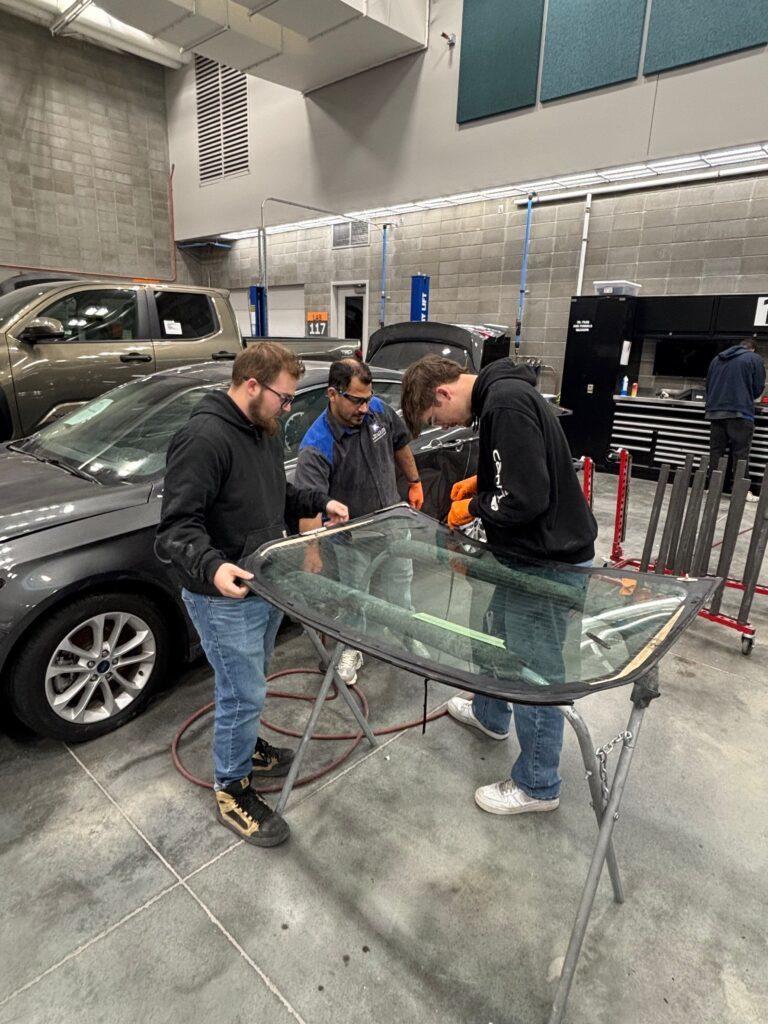
Ford, I-CAR, and 2 collision repair organizations partner to provide new vehicles to schools
A new vehicle donation program aims to provide collision repair programs with newer model vehicles for students to work on, as schools and instructors often face budgetary limitations.
The program was created in partnership between the Collision Repair Education Foundation (CREF), Ford Motor Co., the Collision Engineering Career Alliance (Collision Engineering), and I-CAR to facilitate vehicle donations nationwide, providing students with a clearer understanding of the complexity of modern vehicle technology.
The vehicles will serve as valuable training tools by allowing students to gain hands-on experience with modern automotive systems and prepare for real-world repair scenarios, according to a press release.
“We are extremely grateful to our industry partners who are committed to increasing access to the latest vehicle technology and repair procedures to build a stable, skilled, and supported workforce by aligning education with the needs of industry,” said Mary Mahoney, chair of the Collision Engineering Career Alliance board, in the release. “Our strategic partners help scale our national impact and drive our mission to provide a strong pipeline of skilled technicians who are confident in the shop and connected to their future in collision repair.”
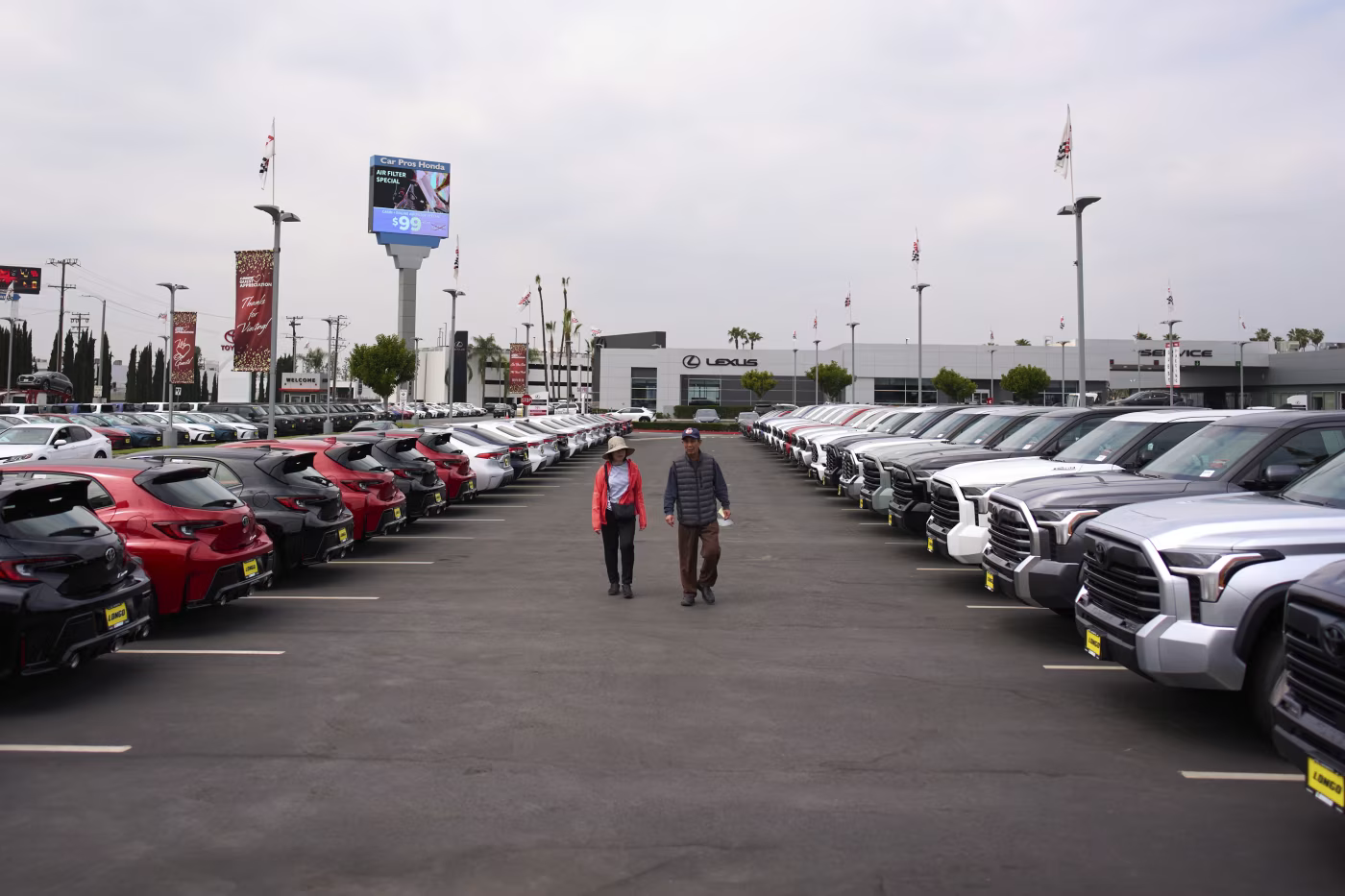
Car Payments Now Average More Than $750 a Month. Enter the 100-Month Car Loan
The price of new cars and trucks in the U.S. has increased 33% since 2020, and consumers are piling on interest as they stretch out loan terms to eight, nine and nearly 10 years
David Kelleher, who runs a Dodge and Jeep dealership in Glen Mills, Pa., 27 miles west of Philadelphia, said many American families can’t comfortably take on a new-car payment these days.
“We don’t have $300 monthly payments any longer in new vehicles,” he said. “It’s a thing of the past.”
The average price of a new car broke the $50,000 barrier this fall, according to Kelley Blue Book. That is up from less than $38,000 in early 2020 before the pandemic hit. As sticker prices marched higher, so did monthly payments. For a few years, car shoppers were undeterred. Many needed new vehicles after putting off buying during Covid when supply chains were upended and dealer lots were empty. Others, feeling flush, opted for luxury vehicles at much higher price points.
Fast forward to November of this year and the average monthly payment for a new car was estimated to be $760, according to J.D. Power, an industry-research firm. The hefty cumulative inflation is starting to weigh on consumers, and now some Americans are falling behind on their car payments.
Research
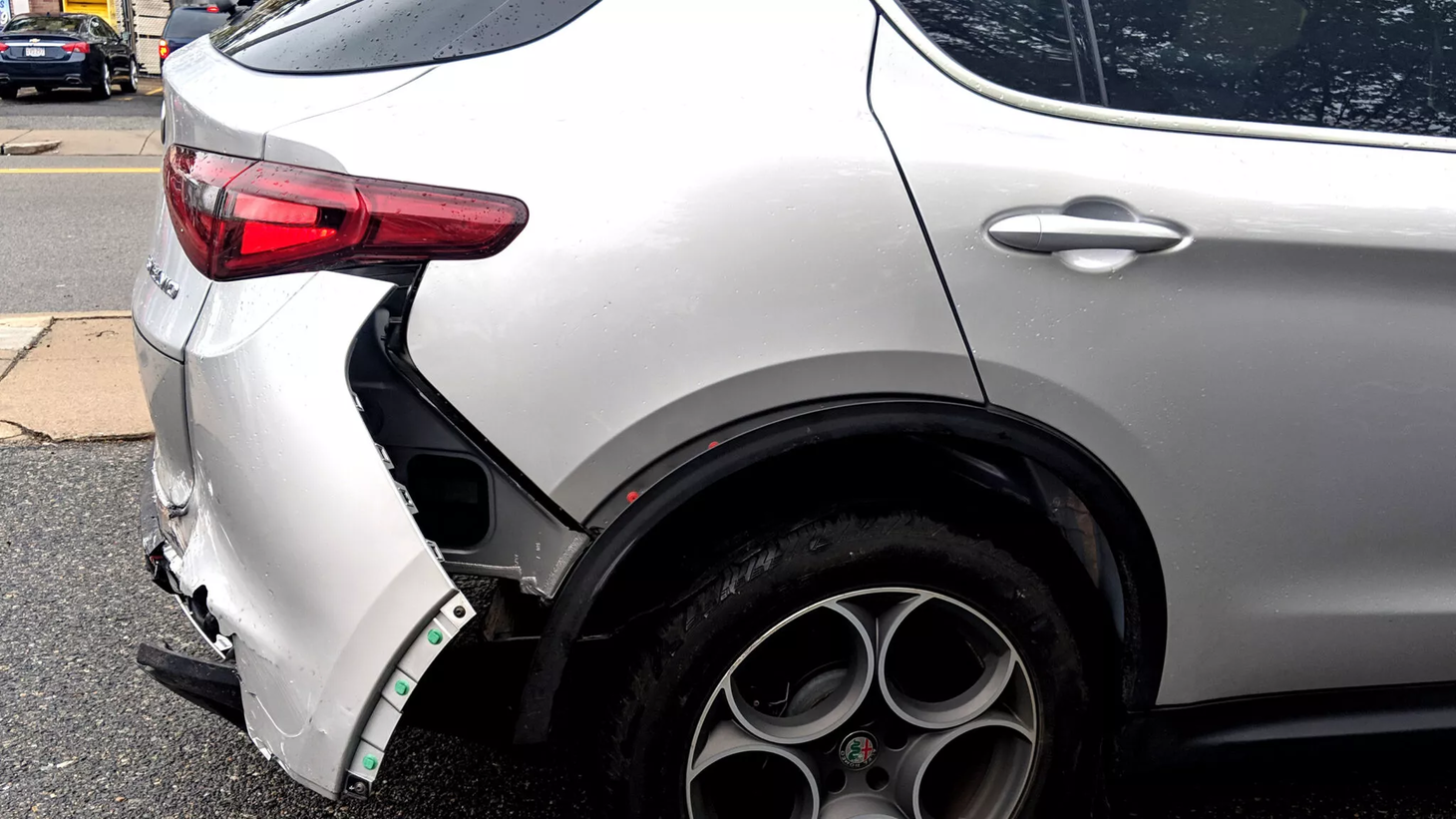
Why 1 In 4 Cars Is Totaled After A Crash Now (And It’s Not The Damage)
A growing number of cars are being totaled, but not for the reasons you might expect after a crash. The real cost comes later
- Total loss frequency rose to 22.8%, up from 22.1% in 2024.
- ADAS and electronics have increased repair complexity.
- Aging U.S. vehicles drive up total loss valuations sharply.
More crashes are leading to total losses, and it’s not because people are driving worse. A new industry report suggests that increasingly complex vehicle tech and aging fleets are quietly reshaping what happens after impact.
According to CCC’s final Crash Course report for the year, the industry is facing a structural rise in total loss frequency, shaped by long-term changes in both vehicle design and consumer behavior.
More: State Farm Accused Of Lowballing 37,000 Drivers With Mysterious Total Loss Algorithm
Nearly one in four cars that get into a crash ends up being declared a total loss, and the numbers are trending higher. That’s the main takeaway from the study conducted by CCC, which tracks collision repair and claims data across the industry.
According to CCC’s final Crash Course report for the year, the industry is facing a structural rise in total loss frequency, shaped by long-term changes in both vehicle design and consumer behavior.
More: State Farm Accused Of Lowballing 37,000 Drivers With Mysterious Total Loss Algorithm
Nearly one in four cars that get into a crash ends up being declared a total loss, and the numbers are trending higher. That’s the main takeaway from the study conducted by CCC, which tracks collision repair and claims data across the industry.
It reports that total loss frequency increased from 22.1 percent in 2024 to 22.8 percent in 2025, a 0.7-point jump. The cause isn’t poor driving or unattended autonomous driving aids either.
More uninsured drivers, more unfixed damage: Soaring car-insurance prices have pushed Americans into risky trade-offs
Here's why car-insurance prices will continue to weigh heavily on drivers, likely prompting them to make more high-stakes bets next year
As rising auto-insurance costs collide with a broader affordability crisis, many drivers are shouldering more obligation and more risk when buying protection for the roads.
For more than a year, Kelly said a prayer every time she started her car.
She had to criss-cross Houston for work and there was no time to spare. When she buckled up in her Volvo sedan, she would say something like this:
"God, watch out for me right now because here I go again in this car that has no insurance. Please make sure that nobody hits me, make sure that I'm safe, and I appreciate it."
Since a September police ticket for driving without insurance - which is illegal in most states - Kelly's prayers have changed. Only slightly. Now she has bare minimum auto coverage, which might not cover her car in an accident.
Now she asks, "Please just make sure that I am aware of my surroundings and everyone is aware of me so that I can get there safely and nothing happens to me or my passengers or my vehicle because I can't afford it. I can't afford it, Lord.'"
Her prayers reflect the sharp end of a bigger dilemma many Americans face, as rising auto-insurance costs collide with a broader affordability crisis. Many drivers have chosen their path: They are shouldering more obligation and more risk when buying protection for the roads - all to manage their monthly costs.
Commentary/Opinion

Title: How AI Patent Trends by State Farm, USAA, and Allstate Signal Strategic Innovation for Property/Casualty Insurers
Executive Summary
Since 2014, the property and casualty (P/C) insurance sector has witnessed concentrated innovation in artificial intelligence (AI), with State Farm, USAA, and Allstate collectively accounting for 77 percent of AI-related patents filed by insurers. This patent activity offers an insightful lens into where the industry’s leading companies are directing their R&D efforts, particularly in claims processing, underwriting, customer service, and risk modeling. According to recent data from Evident, an AI benchmarking platform for financial services, the surge in generative AI patents, especially those focused on customer service and claims, reflects a significant shift toward leveraging advanced AI capabilities to enhance operational efficiency and customer engagement.
For insurance professionals, these developments underscore a critical inflection point. The balance between protecting proprietary AI innovations through patents and embracing open-source collaboration presents strategic decisions that will shape competitive advantage in the coming years. As generative and agentic AI evolve, insurers must choose whether to lead innovation by building defensible intellectual property portfolios or to participate more openly in the broader AI ecosystem.
Nicholas Lamparelli

WHY THE INSURANCE INDUSTRY HAS BASIS RISK BACKWARDS
Everyone in the insurance world knows parametric insurance has a "basis risk problem." The complaint is simple: the payout doesn't always match your actual losses.
A hurricane triggers your policy based on wind speed, but your building survives intact—you get paid anyway. Or worse: your factory floods, but the rainfall index doesn't hit the threshold—no payout, even though you're underwater.
The industry treats this as a design flaw. Billions are spent trying to "reduce basis risk"—better triggers, more sensors, fancier algorithms. Regulators worry about it. Academics write papers on it. Everyone agrees: if only we could make parametric insurance better predict actual losses, it would finally work properly.
But what if we're measuring parametric insurance against the wrong standard entirely?
The Trade-Off That Isn't
Here's the conventional wisdom: Parametric insurance is a trade-off. You accept imprecise loss compensation (basis risk) in exchange for speed and lower costs. Traditional indemnity insurance gives you accurate reimbursement but takes months of claims adjustment. Parametric gives you money in 72 hours but might not match your loss. Pick your poison.
This framing appears in every paper, every pitch deck, every regulatory discussion I've read. It's so ubiquitous that questioning it feels like questioning gravity.
But it's wrong.
What Parametric Insurance Actually Does
Parametric insurance doesn't exist to compensate your losses—imperfectly or otherwise. It exists to inject liquidity when you need it most.
Think about what actually happens after a disaster:
Augusto Hidalgo, Invulnet

'Inevitablism' in Insurance | Insurance Thought Leadership
I'm not here to scare anyone by saying, "Tech will replace all insurance professionals." That line is boring now.
What I want to talk about is something else: Tech may not replace your job immediately, but it is slowly replacing your worth in the system.
We are entering a phase where some changes in insurance are no longer a choice. They are inevitable. I call this "inevitablism" in insurance.
WHAT IS INEVITABLISM?
Inevitablism in insurance refers to the mindset that certain industry shifts — such as automation, AI adoption, data-driven decision-making, and modernization of legacy systems — are not optional but unavoidable.
It's the belief that these changes will happen regardless of current comfort, resistance, or preparedness, and that insurers must adapt rather than delay, because the future will arrive with to without them.
TECH VS TALENT: THE USAGE GAP
There is no shortage of talent in insurance. The real problem is how that talent is being used.
Across the industry, many bright professionals spend their day on low-value tasks:
- Moving data between systems
- Updating spreadsheets
- Chasing documents
- Sitting in the same recurring meeting.
They are capable of designing better products, rethinking portfolios, and solving complex risk problems. But because technology inside many insurers is underused or outdated, people become the "glue" holding legacy processes together.
And let's be honest — we all know insurance adopts technology at a speed of 0.1× compared with the rest of the world. When the world is moving toward no-code workflows, instant software creation, and autonomous systems, insurers are only now preparing to give GenAI controlled access to production environments.
The gap is not just between tech and customers; it is between tech and talent.
Instead of using technology to free people for higher-value work, we often use people to compensate for the lack of technology. That's where the fear of AI comes from. It's not just, "Will AI replace my work?" It's also, "Have we allowed our roles to become so basic that any decent system could replace them?"
THE AGE OF INNOVATION
We are already in a world shaped by Web 3.0, emerging platforms and decentralized technologies. Bitcoin's rise is just one signal of how digital value and infrastructure are shifting. On top of this, AI is accelerating innovation at a speed the industry has never seen before.
Manjunath Krishna is a property and casualty underwriting consultant at Accenture.
2026 Outlook/Predictions
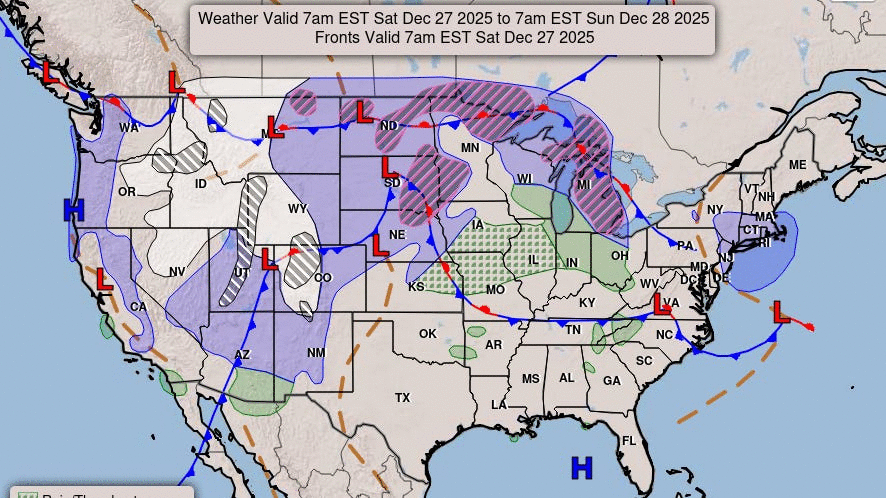
US weather forecast includes snow storms, sudden cold and bomb cyclone
The last days of 2025 include all sorts of potential bad weather: Blizzard conditions, a brewing bomb cyclone and "Blue Norther." Here's what to know.
More bad weather is on the way across the nation to close out 2025, with forecasters warning of blizzard conditions and a potential "bomb cyclone" that could make post-holiday travel hazardous as the New Year approaches.
A winter storm swept across parts of the Midwest, Northeast and Mid-Atlantic, snarling traffic heading home after the Christmas holiday. Some New Englanders woke up Dec. 27 to 4 to 8 inches of snow. A second storm is headed to some of the same areas within days, the National Weather Service said.
Meanwhile, a "Blue Norther," or a sudden cold snap that can plunge temperatures as much as 40 degrees or more within as little as a few minutes, will stretch through the central and southern Plains on Dec. 28, while a low pressure system hits the Midwest.
From sub-zero temperatures in Montana to thunderstorms and a blizzard across the Great Lakes, here's what we know about the foul weather in store:
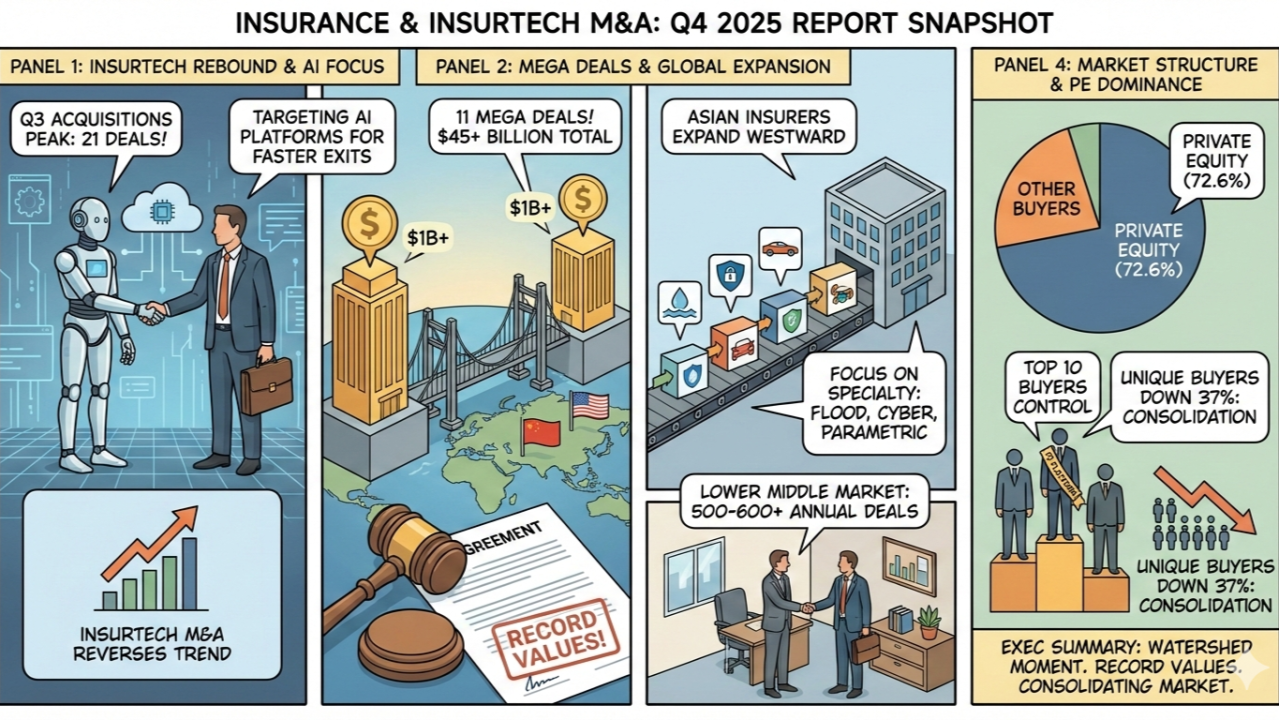
2025 Insurance & Insurtech M&A: What the Deal Count Misses
Q4 2025 insurance M&A didn’t slow down. It concentrated power.
Fewer deals captured ~70% of the total value. Seven $1B+ transactions rewired the industry in six months. Private equity backed ~73% of brokerage deals.
Insurtech didn’t disappear—it got acquired. The lower middle market didn’t fragment—it industrialized. If you’re still tracking deal count, you’re missing the point.
👉 I break down what actually happened in Q4—and what it means for brokers, carriers, PE, and founders heading into 2026.
Gilad Shai, a Managing Director at BMI Capital International LLC, leverages his 20+ years of professional experience in the insurance and technology sectors to create opportunities for growth and innovation.
J.D. Power-GlobalData Forecast December 2025
New-Vehicle Retail Sales Up 4.0% for Full Year 2025
December Retail Sales Still feeling Impacts of Tariff and EV Pull Ahead
The Total Sales Forecast, J.D. Power:
Total new-vehicle sales for December 2025, including retail and non-retail transactions, are projected to reach 1,454,000, a 7.5% decrease year over year, according to a joint forecast from J.D. Power and GlobalData. December 2025 has 26 selling days, one more than December 2024. Comparing the same sales volume without adjusting for the number of selling days translates to a decrease of 3.8% from 2024.
The seasonally adjusted annualized rate (SAAR) for total new-vehicle sales is expected to be 15.9 million units, down 1.1 million units from December 2024.
New-vehicle total sales for Q4 2025 sales are projected to reach 4,019,200 units, a 5.0% decrease from Q4 2024 when adjusting for the number of selling days.
New-vehicle total sales for the second half of 2025 are projected to reach 8,061,500 units, a decrease of 1.3% from a year ago when adjusting for the number of selling days.
New-vehicle total sales for full-year 2025 are projected to reach 16,275,300, an increase of 2.3% when adjusting for the number of selling days.
The Retail Sales Forecast
New-vehicle retail sales for December 2025 are projected to reach 1,222,800, a 7.4% decrease from December 2024. Comparing the same sales volume without adjusting for the number of selling days translates to a decrease of 3.7% from 2024.
New-vehicle retail sales for Q4 2025 sales are projected to reach 3,374,300 units, a 4.8% decrease from Q4 2024 when adjusting for the number of selling days.
New-vehicle retail sales for the second half of 2025 are projected to reach 6,905,900 units, an increase of 0.4% from a year ago when adjusting for the number of selling days.
New-vehicle retail sales for full-year 2025 are projected to reach 13,599,300, an increase of 4.0% when adjusting for the number of selling days.
Podcast Sponsor

Audio Version - 'Connected: The Podcast' --- Sponsored by Pulse Podcasts
** The ‘Connected’ Podcast by Alan Demers and Stephen Applebaum, is a condensed audio version of the day's ‘Connected' newsletter, a daily scan of all the happenings in the world of Insurance & InsurTech News**.
Pulse Podcasts: Introduce a new way for your audience to hear your voice! We are a podcast creation service that helps businesses turn their written content, like blog posts and news articles, into beautiful podcasts. Our platform writes the script, records the voices, and mixes the audio to create engaging content for your audience. It's affordable and has super-fast turnaround!
LISTEN AND SUBSCRIBE BELOW