
News
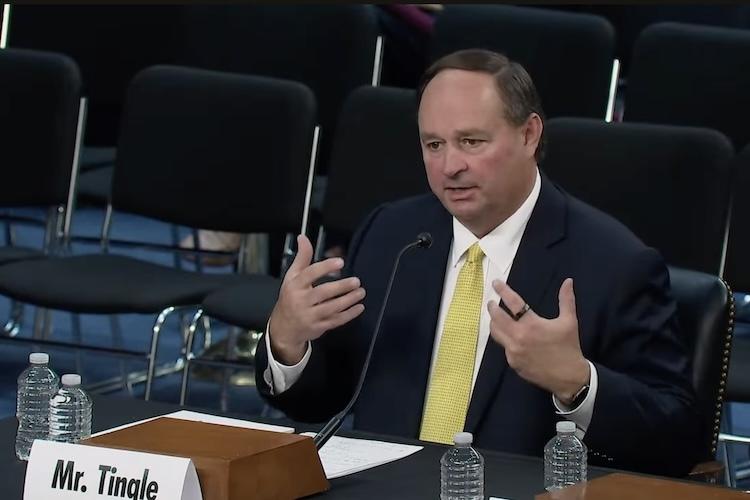
Brooks Tingle Tells Congress Incentives Can Drive Healthier Behavior
The John Hancock CEO points to decade-long Vitality data showing incentives and digital engagement can shift population-level health behavior.
Brooks Tingle, CEO of John Hancock Financial, told lawmakers in Washington, D.C. this week that well-designed incentives can meaningfully change health behavior, improve outcomes and help restrain healthcare costs—if the system focuses less on financing mechanics and more on prevention and engagement.
Tingle testified Dec. 17 before the Joint Economic Committee during a hearing titled “Stop Paying More for Less: Realigning Healthcare Incentives to Improve Outcomes and Reduce Costs.” The session examined how misaligned incentives contribute to rising healthcare spending without commensurate gains in population health
In response to questions from Committee Chairman David Schweikert, Tingle pointed to more than a decade of data from John Hancock’s Vitality program as evidence that behavior change at scale is achievable.
“The biggest pleasant surprise is that behavior change is achievable,” Tingle said, pushing back against skepticism that individuals are unwilling or unable to modify health habits. “Change is hard—but you can affect population-level behavior change through incentives, rewards and education.”

Palantir’s Strategic Foray into Insurance Signals Broader Ambitions
A significant new partnership has positioned Palantir Technologies at the heart of London's traditional insurance market, marking a pivotal expansion for the data analytics specialist. The collaboration with industry titans AIG, Blackstone, and Amwins demonstrates Palantir's push to make its artificial intelligence platform indispensable beyond government contracts and within intricate financial ecosystems. Market observers are now closely watching to see if this model can achieve widespread scalability.
The confirmation of this strategic move provided a clear boost to investor sentiment. Palantir's shares closed Friday's session with a gain of 4.28%, reaching €165.20. The stock continues to trade near its 52-week peak, sitting just over 8% below that high. With an increase of more than 125% since the start of the year, it remains one of the standout performers in the technology sector.
This optimism is fundamentally underpinned by robust financial growth. The company's most recent quarterly report revealed a year-over-year revenue surge of 63%. Despite this, the equity trades at a notable premium compared to many software industry peers—a point of division among analysts. Proponents argue the rapid growth and deepening integration into finance justify the valuation, while skeptics caution the stock is priced for perfection.

Lockton plans new global headquarters in Kansas - Business Insurance
Lockton said Friday it will build a new global headquarters complex in Leawood, Kansas, part of the Kansas City metropolitan area.
The brokerage, founded in Kansas City, Missouri, in 1966, said the office is scheduled to open in 2030. Lockton has been at its current headquarters, a 10-story office building in the city’s Country Club Plaza district, since 2000.
The 34-acre development at the new site is led by developer VanTrust Real Estate, with Lockton’s 12-story 444,000 square-foot office building the centerpiece, the brokerage said. Future phased expansion includes an additional eight-story, 258,000 square-foot building for Lockton.
In addition to Lockton’s offices, the site will feature a hotel, two multifamily residential buildings, a childcare center and retail/restaurant space, Lockton said.
The new location will accommodate the broker’s growth, according to Chairman and CEO Ron Lockton.
“To keep pace, we need a headquarters that supports our current growth and our plans for the future,” he said in a statement.
Lockton is the world’s ninth-largest brokerage, according to Business Insurance’s latest ranking, with nearly $4 billion in revenue and more than 13,000 staff and does business in over 155 countries.
Research

Average U.S. housing expense in 2025: 39% of income
Across the U.S., homeowners are spending an average of 39% of their income on housing, above the traditional 30% affordability benchmark.
In some Midwest and Southern markets, home prices are lower, although high poverty rates continue to challenge many of those communities.
A large share of the nation’s most affordable cities are in the Rust Belt, where housing stock tends to be older. According to a Redfin analysis of median-income homes and median sale prices from January through November 2025, every city in the top 50 most affordable markets has a median sale price of $300,000 or below, keeping monthly payments at least manageable for many households.
Topping the list is Bellefontaine Neighbors, Missouri, in the St. Louis metro area, where a household earning the median income of about $48,354 would spend just 16% of earnings on an average home costing roughly $101,106. That translates to a monthly mortgage payment of just $645. That said, Redfin noted that decades of economic disinvestment and discriminatory housing policies have kept prices low, and the city faces a 22.4% poverty rate.

Poorer Americans Dropped Federal Flood Insurance When Rates Rose
When the US Federal Emergency Management Agency overhauled rates for millions of homeowners in the National Flood Insurance Program (NFIP), in 2021, the goal was to end decades of underpricing and to align premiums with real flood risk, driven higher by climate change. Critics warned, however, that higher, more honest prices could push homeowners — particularly poorer ones — out of the program and potentially leave them without an emergency safety net.
A paper published Tuesday in the Journal of Catastrophe Risk and Resilience finds that those concerns have materialized. It estimates that Risk Rating 2.0, FEMA’s 2021 update, resulted in up to 13% of those facing the highest premium increases dropping their policies.

How drivers can avoid the most dangerous distractions
Poor weather conditions or unforeseen road hazards like wildlife may be unavoidable for today's drivers, but there are several proactive steps they can take to refrain from the most common cause of crashes: Distractions.
Distracted driving took the lives of more than 3,200 people in 2023, according to the National Highway Traffic Safety Administration, and the practice resulted in hundreds of thousands of injuries.
However, vehicle telematic data indicates that when insurers monitor policyholder driving behavior, and when those drivers know what to avoid, they tend to course-correct with safety in mind. Driver telematics led to a roughly 9% decrease in distracted driving in 2024, according to Cambridge Mobile Telematics, and this change in driver behavior likely avoided thousands of crashes and auto-related injuries.
AI in Insurance
What’s Holding AI Back in Insurance | Insurance Thought Leadership
Insurers adopt AI at breakneck speed, yet legacy technology barriers prevent most from achieving meaningful ROI. A platform-based approach is needed.
How quickly have enterprises across industries embraced AI? The answer depends on your view of its origins. Some people believe AI dates back to Alan Turing's* early theories of machine intelligence. Others see the Dartmouth Summer Research Project on AI in 1956 as its birth.
What is unarguable, however, is that AI has moved at breakneck speed since the launch of ChatGPT three years ago. A recent McKinsey survey revealed that 88% of organizations now use AI regularly. Yet there is a downside. Only one-third of respondents have scaled AI enterprise-wide, and fewer than half can tie any significant earnings before interest and taxes (EBIT) to their efforts.
What will it take for insurers to see real ROI from their AI investments? And how can carriers prepare for an agentic AI future? A look at past tech trends can show us quite a bit about what is to come.
2026 Outlook/Predictions

CCC report shows auto insurance market steadies in 2025, challenges persist
The auto physical damage (APD) market saw signs of stabilization in 2025 but not without challenges that are becoming permanent fixtures, CCC’s Q4 Crash Course report says.
“After several turbulent years marked by inflation spikes, supply chain disruption, and record vehicle complexity, the industry entered 2025 on firmer footing,” the report says.
For example, personal auto net combined operating ratio (NCOR) improved from 112.2% in 2022 to 104.9% in 2023 and 95.3% in 2024 and 2025, the report says. It adds this reflects strengthened underwriting performance.
“Even broader economic indicators trended in the right direction: Motor Vehicle Insurance CPI growth cooled dramatically, falling from 16.3% in late 2024 to 3.1% in 2025, easing some of the affordability concerns that have dominated insurer and policyholder conversations for the past several years,” the report says.
Rising total loss frequency has become a cost driver reshaping APD, the report says. The frequency grew from 22.1% to 22.8% in 2025 and was driven by increased age of vehicles, a decline in lower severity claims filings and the accumulation of advanced electronics.
InsurTech/M&A/Finance💰/Collaboration
Clearwater Analytics to Be Acquired for $8.4 Billion by Permira and Warburg Pincus, Supported by Francisco Partners and With Participation From Temasek
Clearwater Analytics (NYSE: CWAN) (“CWAN” or the “Company”), announced that it has entered into a definitive agreement to be acquired in a transaction valued at approximately $8.4 billion by a Permira and Warburg Pincus-led Investor Group (the “Investor Group”), with participation from Temasek. The Investor Group has key support from Francisco Partners.
After a thorough process including engaging with certain strategics and financial sponsors, the Special Committee of the CWAN Board of Directors, composed entirely of independent and disinterested directors, upon the advice of its independent outside legal counsel and financial advisor, unanimously recommended this transaction. The CWAN Board of Directors subsequently approved this transaction.
Under the terms of the agreement, CWAN stockholders will receive $24.55 per share in cash upon completion of the proposed transaction. The per share purchase price represents a premium of approximately 47 percent over CWAN’s undisturbed share price as of November 10, 2025, the last trading day prior to media reports regarding a potential transaction.
“This deal represents a great outcome for Clearwater Analytics and our stockholders,” said Sandeep Sahai, CEO, CWAN. “It also positions us well for our next chapter of growth. Operating as a private company will empower us to invest boldly as we integrate the platforms to deliver a next-generation front-to-back solution that natively addresses alternative assets, provides industry leading risk analytics, and delivers on agentic solutions powered by our unique and proprietary database. This will allow us to continue delighting our clients across global markets. We are thrilled to have the support of Permira and Warburg Pincus.”

Exclusive: AI Insurance Startup Nirvana Nearly Doubles Valuation To $1.5B with $100M Series D
Nirvana Insurance, an AI-based commercial insurance platform for the trucking industry, has raised a $100 million Series D round at a $1.5 billion valuation, it tells Crunchbase News exclusively. The raise comes just over nine months after the startup raised $80 million in a Series C round of funding at an $830 million valuation.
Valor Equity Partners led the latest financing, which the company described as “preemptive.” Previous lead backers Lightspeed Venture Partners and General Catalyst also doubled down “significantly.”
Put simply, Nirvana’s goal is to build “the world’s first AI-powered operating system for insurance.” The startup uses real-time driving telematics and 30 billion miles of truck-driving data to build and manage insurance policies for truckers.
CEO Rushil Goel started Nirvana in 2021 after spending years running product at Samsara, an AI-powered fleet management and safety platform.
There, he said, he saw firsthand how heavily safe and responsible trucking fleets “were penalized by the rising costs of one-size-fits-all insurance rates based on old industry data.”
“It was survival stakes,” he recalled. “Expensive policies literally drove some fleets out of business.”
Seasons Greetings

Season. Greetings
Happy Holidays to our readers, friends and family near and far!
May your holiday season be merry and bright and the new year full of comfort, joy, good health and success.
Alan Demers & Stephen Applebaum

State Auto brightened Christmas for years beginning in Great Depression
As the Great Depression wrought havoc on the global economy in 1931, one local company had an idea to brighten the spirits of central Ohioans.
State Automobile Mutual Insurance Company was established by Robert S. “Bob” Pein in 1921 in Columbus. Frustrated by high insurance rates and issues with claims at competitors, Pein wanted to create something different.
Ten years in, everyone was struggling. The Great Depression had taken hold and there was no end in sight. Bob Pein wanted to do something to brighten spirits during the Christmas season so, with assistant manager Herbert F. Green, he designed an elaborate Christmas display at their offices on East Broad Street at the corner of South Washington Avenue.
The first decorations consisted of nearly 400 cedar and pine trees and more than 1,500 lights. The Dispatch noted that the lights used more than 20,000 watts each hour, enough to light the average home for two years, indicating that even in the first year, the scale of the décor was pretty grand.
That first year they also hosted a performance by the boys’ choir from nearby Trinity Episcopal Church on Christmas Eve.
In 1970, the State Farm display featured a two-story golden halo surrounding a nativity scene of twenty-one life-size figures including angels, shepherds and wise men. The decorations were made by Gordon Keith Originals, located on South Wall Street.
By the next year, the 1932 display had grown to cover most of the building and the Christmas program included events on Christmas Eve and Christmas Day, plus music shared via loudspeaker every two hours through Dec. 26. They also broadcast the program over local radio station WCAH.
During the 1950s, the display included large-scale Nativity scenes, originally on the roof. Beginning in 1962, the scene featured life-size figures, some of which were repurposed department store mannequins designed by Gordon Keith, a local department store display designer. Keith also designed Lazarus’ Mr. Tree. The Nativity figures moved to the ground level, where passersby could view them more closely. READ ON