
Research
GenAI, Agentic AI Reshape Insurance Industry
Leading insurance enterprises are implementing generative AI and agentic AI throughout most of their operations, gaining a crucial competitive edge in speed, pricing, accuracy and customer experience, according to a new research report published today by *Information Services Group (ISG) (Nasdaq: III), a global AI-centered technology research and advisory firm.*
AI in insurance has quickly matured from experimental to production-ready across the insurance value chain. This trend points toward increasing efficiencies, autonomous operations, hyper personalized products and stronger relationships with policyholders.
The 2025 ISG Provider Lens® global Insurance Services — Strategic Capabilities (Insurance GenAI and Agentic AI Services) report finds that insurers are moving from manual, document-heavy workflows to automated processing of claims, quotes, policy documents and other elements of daily operations. AI is enabling new kinds of competitors while helping incumbent carriers strengthen customer relationships and more quickly respond to new market trends.
“The embedding of AI technology in the insurance industry has quickly matured from experiments to production-ready implementations across the insurance value chain: underwriting, claims, customer experience, fraud detection and risk management,” said Dennis Winkler, director, Insurance, at ISG. “This powerful trend points toward increasing efficiencies, autonomous operations, hyper personalized insurance products and stronger relationships with policyholders.”
Underwriting teams are using generative AI to extract structured and unstructured data from emails, PDFs and images to populate systems automatically, the report says. Models trained on historical data generate preliminary assessments that highlight gaps and improve risk assessment. This automation reduces manual review and shortens turnaround times as AI analyzes financial data, inspection findings and external data to form complete risk profiles.

Electric Vehicle Collision Claims Rebound as Expiring U.S. Government Tax Incentives Drive Record Sales | Mitchell
Mitchell, a leader in the development of innovative auto physical damage technology solutions, today announced the availability of its latest Plugged-In: EV Collision Insights report. The Q3 2025 edition highlights a dramatic reversal in U.S. collision claims frequency for repairable battery electric vehicles (BEVs), which dropped for the first time in Q2 before rebounding last quarter to an all-time high of 3.21% just as expiring government tax incentives prompted record-breaking sales. BEV claims also jumped to 4.91% in Canada, a year-over-year increase of 24%.
“We’re witnessing the immediate impact of policy changes on BEV adoption and collision claim trends in both the U.S. and Canada,” said Ryan Mandell, Mitchell’s vice president of strategy and market intelligence. “With recent political and trade developments producing uncertainty, many automakers are now diversifying their portfolios to accommodate more hybrid and gasoline-powered alternatives as they reassess their BEV investments and growth targets. This gradual, geographically uneven transition to widespread vehicle electrification will require auto insurers and collision repairers to adjust underwriting strategies, business processes and workforce training to support a wider mix of drivetrains.”**
The Q3 Plugged-In: EV Collision Insights report also reveals:
- Claims Severity: Average severity for repairable BEVs dropped to $6,185 in the U.S. and $6,954 (CAD) in Canada, a decrease of 2.4% and 1.5% respectively from Q2. In both countries, automobiles with an internal combustion engine (ICE) had the lowest average severity followed by mild hybrid electric vehicles (MHEVs) and plug-in hybrid electric vehicles (PHEVs).
- Claims Frequency by Region: Regions with the most BEVs per capita also continue to have the highest number of BEV collision claims. Last quarter, 8.74% of all repairable vehicle claims in British Columbia were for BEVs. Quebec came in a close second at 8.37% and California was third at 6.50%.
- Total Loss Market Values: Total loss market values averaged $29,827 for BEVs, a decrease of approximately 1% from Q2, compared with $13,979 for ICE automobiles. Parts Utilization: Without a robust alternate parts industry for BEVs, OEM parts are most frequently used in BEV collision repairs. On estimates, 85% of the parts dollars for repairable vehicles in Q3 were designated for OEM parts—a slight increase over the previous quarter—versus 62% for ICE alternatives.
Visit the Mitchell website to download the full report or access previous issues and subscribe to future publications from mitchell.com/plugged-in.
Collision Coverage Claims Were Down Over 11% in Second Quarter Compared to 2024 - CollisionWeek
While down, the rate of decline was lower than in the first quarter. Quarterly collision claim counts have been down versus the previous year for nine quarters.
The latest available Fast Track Monitoring system data from the Independent Statistical Service Inc. (ISS) showed that the year-over-year rate of decline in quarterly collision coverage claims slowed somewhat in the second quarter compared to the first quarter. Claims on a quarterly basis were down year-over-year for the ninth consecutive quarter. Losses were also down on a quarterly basis compared to the same quarter last year for the eighth month in a row.

Water damage tops small business insurance claims, Hartford insurer finds
Water leaks and frozen pipes tied with burglary and slip-and-fall incidents as the most common small business insurance claims in 2025, each accounting for 20% of filings with The Hartford, the insurer said Tuesday.
The Hartford-based company analyzed more than 1 million small business property and liability policies and found water and freezing damage represented about 22% of claims from 2020 to 2024. They cost an average of $34,600 to resolve, the fourth costliest type of claim.
Fire damage, while accounting for only 10% of claims, proved the costliest at $80,000 per claim — more than double the $35,000 average cost in 2015, according to the analysis.
The insurer’s 2025 report builds on a 2015 analysis, revealing notable shifts in small business risk over the decade. Water and freezing damage climbed from second place at 15% in 2015 to a three-way tie for first in 2025. Burglary and theft dropped from first place in 2015 but remained steady at 20% of claims.
Wind and hail damage held at 15% of claims in 2025, down from a three-way tie for second in 2015.
The most significant shift involved slip-and-fall incidents, which doubled from 10% of claims in 2015 to 20% in 2025. The average cost of those claims more than doubled as well, rising from $20,000 to $45,000.
The company attributed the increase in slip-and-fall claims partly to litigation and higher legal settlements.
JD Power: Full Digital Claims Process Drives High Customer Satisfaction
Receiving adequate digital updates is one of the top drivers of customer satisfaction with the digital insurance claims process, but insurers deliver on this key performance indicator just 22% of the time.
Customer satisfaction surges when the claims process is managed digitally, according to a new J.D. Power 2025 U.S. Claims Digital Experience Study. But most customers still find they need to go offline to manage key steps.
Announcements
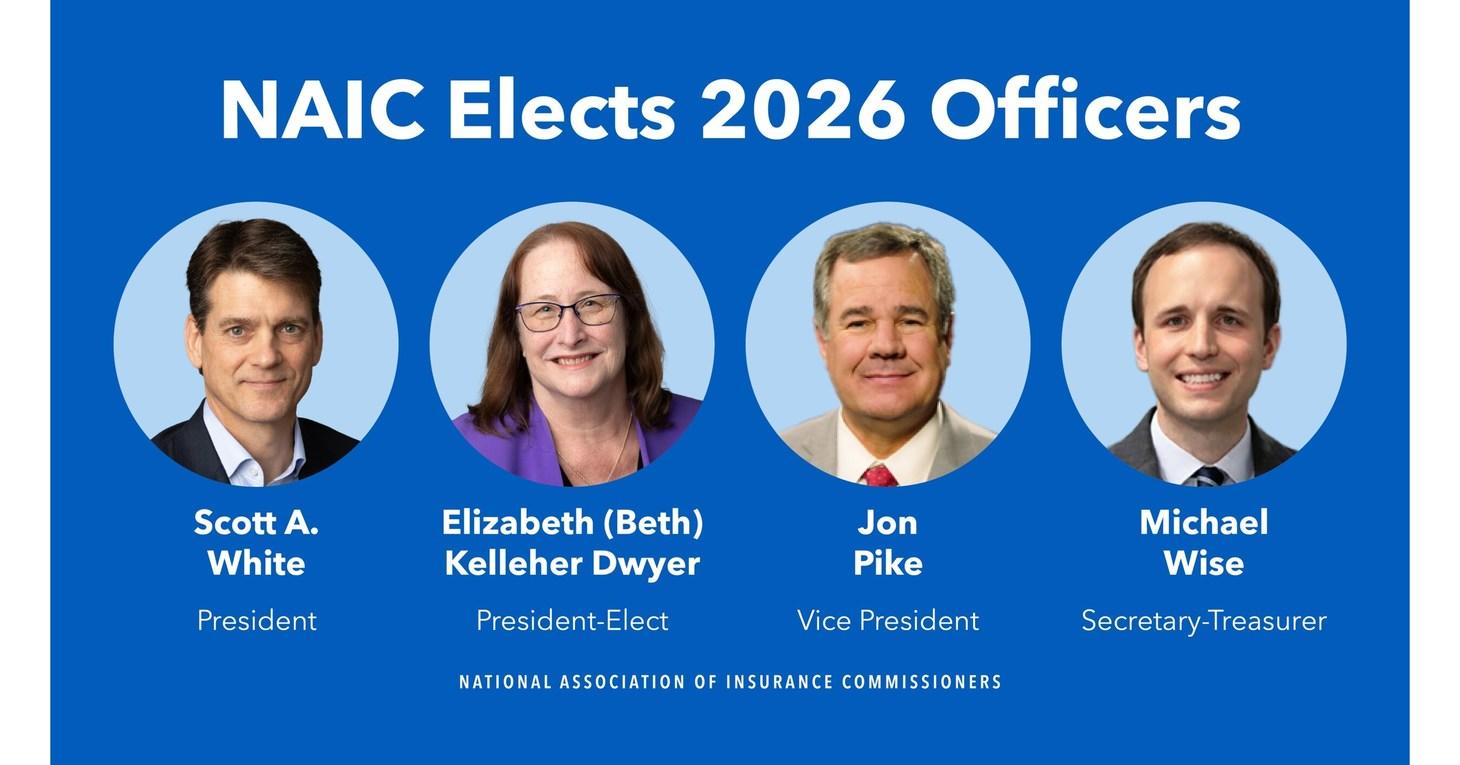
NAIC Officers Elected for 2026
On Dec. 11, during the conclusion of the National Association of Insurance Commissioners (NAIC) 2025 Fall National Meeting, its Members elected the following chief state insurance regulators to serve as officers in 2026:
President: Virginia Insurance Commissioner Scott A. White. Scott A. White was appointed Commissioner of the Virginia Bureau of Insurance effective January 1, 2018.
President-Elect: Rhode Island Department of Business Regulation Director Elizabeth (Beth) Kelleher Dwyer. Beth Kelleher Dwyer was appointed Superintendent of Insurance on January 11, 2016, and named Director of the Rhode Island Department of Business Regulation in May 2023.
Vice President: Utah Insurance Department Commissioner Jon Pike. Jon Pike was named Commissioner of the Utah Insurance Department effective January 5, 2021.
Secretary-Treasurer: South Carolina Department of Insurance Director Michael Wise. Michael Wise was appointed Director of the South Carolina Department of Insurance in May 2023.
The newly elected officers will assume their duties on Jan. 1, 2026.
Tesla partners with Lemonade for new insurance program
Tesla owners in California, Oregon, and Arizona can now use Lemonade Insurance, the firm that recently said it could cover Full Self-Driving miles for “almost free.”
Lemonade, which offered the new service through its app, has three distinct advantages, it says:
- Direct Connection for no telematics device needed
- Better customer service
- Smarter pricing
The company is known for offering unique, fee-based insurance rates through AI, and instead of keeping unclaimed premiums, it offers coverage through a flat free upfront. The leftover funds are donated to charities by its policyholders.
On Thursday, it announced that cars in three states would be able to be connected directly to the car through its smartphone app, enabling easier access to insurance factors through telematics.
AI in Insurance

Florida House Panel Passes Bill Requiring Human Touch on Claims Denials
[Ed. note: As carriers advance AI within the claim process to bring greater accuracy and efficiency, safeguards and human touch are top of mind. It is noteworthy however, that influences from healthcare and medical insurance are crossing into the P&C arena in support of wide-reaching regulation]
A Florida House subcommittee this week approved a bill that would mandate human involvement in property insurance claims denials, a sign of the times as insurers employ more artificial intelligence on multiple fronts.
House Bill 527 is sponsored by state Rep. Hillary Cassel, a policyholder attorney and the vice chair of the House Commerce Committee’s instrumental Insurance and Banking Subcommittee. It would require carriers to indentify the “human professional who made the decision to deny the claim or a portion of the claim.”
The bill, which passed the subcommittee Tuesday, also would make insurers include a statement that AI, algorithms or machine learning were not the sole basis for denying the clam.
Commentary/Opinion

Insurance Companies Are Making Record Profits off Climate Change Panic, Not Facts
The headlines are relentless, loudly proclaiming that climate-fueled extreme weather has caused an insurance crisis, reflected in dramatic rate increases for homeowners and businesses. Some warn that total economic collapse may soon follow.
But as is often the case when it comes to apocalyptic warnings related to climate change, real-world data don’t support the narrative.
In reality, the insurance industry, which provides coverage related to hurricanes, fires and other extreme events, is enjoying a streak of record profits.
Defenders of high premiums say it’s because it’s much more expensive to insure homes because of climate change.
But the recent spike in insurance prices is much more likely due, in significant part, to political requirements across the industry that financial companies consider “climate risk,” and the corresponding suite of risk modelers established to meet the newly created demand.
Premiums upfront
In 2009,** Warren Buffett of Berkshire Hathaway** explained how property/casualty insurers made money: “Insurers receive premiums upfront and pay claims later.” The accumulated premiums, which Buffett called “float,” result in a pile of money that companies invest to earn profits.
Buffett explained that because of vigorous competition among insurance companies, most do not make money from underwriting, they just seek to break even so they can then capitalize on the “float.”
That was then.
Predict & Prevent

From Claims to Prevention: How Smart Sensors Are Transforming Home Insurance : Risk & Insurance
Thanks to increasingly affordable smart sensors, insurers can help policyholders prevent costly and disruptive types of damage.
For decades, homeowners insurance has been defined by what happens after a loss. A pipe bursts, a washing machine hose fails, or a water heater leaks, and only then does protection come into play. However, thanks to increasingly affordable smart sensors and connected home technology, insurers can now help policyholders prevent many of the most costly and disruptive types of damage before they occur.
By educating clients about how these sensors and technological devices work, how they benefit homeowners, and how they fit into today’s more proactive approach to personal risk management, insurance agents can help homeowners make the shift from reactive response to proactive prevention.
The Rising Cost of Water Damage
Water damage remains one of the most frequent and expensive non-weather-related claims in personal lines. The average loss often exceeds $15,000, and incidents continue to rise as homes become more complex, featuring multiple bathrooms, second-floor laundry rooms, and smart appliances with built-in water lines.
Despite this growing risk, most homeowners don’t take preventive action until they’ve already experienced a loss. That creates an opening for agents to add value: not by selling another product, but by equipping clients with knowledge and tools that reduce their exposure.
Brian Mumper is an Innovation Principal at American Modern, a Munich Re company
InsurTech/M&A/Finance💰/Collaboration

Sector Snapshot: Insurtech Funding Is Way Down, But AI Is Still Driving Some Big Deals
For obvious reasons, insurance-related technology isn’t exactly one of the sexiest investment areas for VCs, which might explain why funding and deal count are both down this year, per a review of Crunchbase data.*
But insurance impacts everyone in one way or another, and the sector is also one of the areas that shows great promise for artificial intelligence. Indeed, many of the venture deals that have gone into the sector this year have been around AI and automation. Funded insurtech startups are using AI for functions such as streamlining underwriting, automating claims processing, improving risk assessment, and reducing manual work.
The broad trend: Even before the pandemic-fueled funding peaks, insurtech startups received more than double the amount of venture funding in 2019 than they have in more recent years. While investors haven’t given up on insurtech, funding to startups in the space is down in 2025 and deal count is at a multiyear record low.
The numbers: So far in 2025, global insurance-related startups have pulled in about $3.9 billion in seed-through growth-stage financing, per Crunchbase data — almost less than one-fourth of the 2021 peak dollars raised — with deal counts also on the decline. The lower deal count signals both potentially decreased investor interest in the space, as well as larger round sizes. MORE
Finys Partners with ManageMy to Support Digital Front Ends | Insurance Innovation Reporter
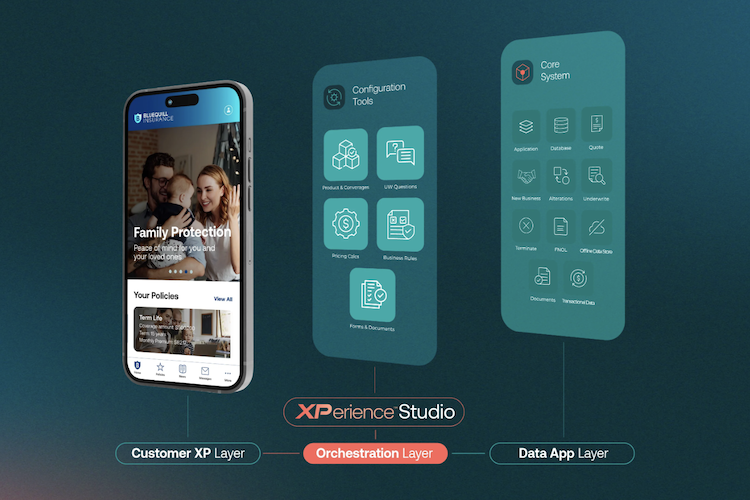
Finys (Troy, Mich.) has formed a strategic partnership with ManageMy (Charlotte, N.C.), a front-end platform that allows property/casualty insurers to configure and launch digital experiences for policyholders and agents. The collaboration enables carriers transitioning to the Finys Suite to use ManageMy as a digital front-end option integrated with their core system.
Josh Hall, Head of Sales and Business Development, ManageMy.
As insurers modernize from legacy platforms, maintaining a consistent user experience across channels is critical. The integration of ManageMy with the Finys Suite provides a unified experience across quoting, onboarding, servicing, and claims—even during phased migrations.
The Finys Suite offers end-to-end core capabilities in policy, billing, and claims administration. ManageMy extends that foundation with mobile-first, customizable digital workflows that support policyholder and agent engagement throughout a transformation effort.
Moving Confidently to Modern Systems
Tim Norman, Chief Growth Officer, Finys.
“We’re excited to partner with Finys to help insurers modernize faster while giving customers the intuitive digital experiences they expect,” says Josh Hall, Head of Sales and Business Development, ManageMy. “Together, we’re enabling carriers to move confidently to modern systems without disrupting the experience their policyholders depend on.”
“ManageMy is a valuable addition to the Finys partner ecosystem,” says Tim Norman, Chief Growth Officer, Finys. “Our mission has always been to empower our customers with more flexibility and choice in how they deliver great experiences. This partnership strengthens that commitment and helps our clients accelerate their modernization journey.”