
News
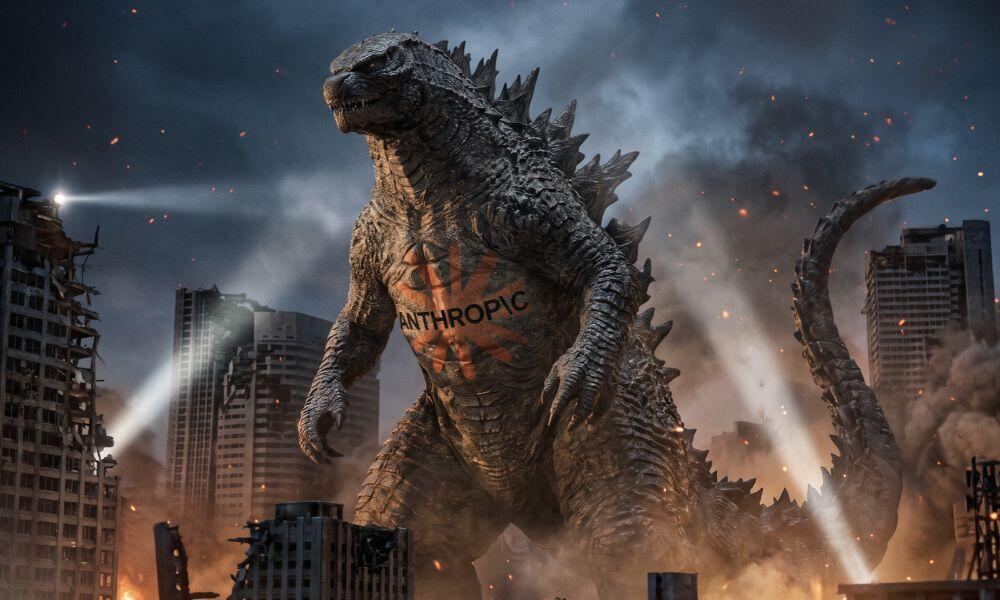
Anthropic IPO: AI catastrophe could exceed insurance capacity
Anthropic is asking investors to back its stock market debut. In the same document, it admits that if its AI ever caused a genuine catastrophe, the insurance industry might not be able to handle the bill.
The San Francisco company behind the Claude models filed its Form S-1 with the Securities and Exchange Commission on Monday. It plans to list on the Nasdaq Global Select Market under the ticker ANT. Anthropic has confirmed the filing, though it hasn’t yet settled on a share count or price range.
Underwriters will want to read one passage in the 94-page risk factors section really closely. Anthropic says the damage from a catastrophic AI-related incident could exceed what any single insurer, or possibly the market as a whole, has the capacity or the expertise to underwrite. It describes the market for AI-specific cover as nascent, and says it may not be able to buy protection for some AI liabilities on commercially reasonable terms, if it can buy it at all.
Financial Results

Cincinnati Financial Reports Third-Quarter 2026 Results
Insurance Operations Highlights
- 90.9% third-quarter 2026 property casualty combined ratio, increased from 88.2% for the third quarter of 2025.
- 2% growth in third-quarter net written premiums, including price increases, premium growth initiatives and a higher level of insured exposures.
- $315 million third-quarter 2026 property casualty new business written premiums, down 12%. Agencies appointed since the beginning of 2025 contributed $33 million or 10% of total new business written premiums.
- $31 million third-quarter 2026 life insurance subsidiary net income, up $3 million compared with the third quarter of 2025, and 2% growth in third-quarter 2026 term life insurance earned premiums.
Research

Property insurance market softens as casualty costs persist
Property insurance consumers worldwide are benefiting from increased insurer competition, abundant capacity and improved underwriting results, according to Gallagher's August 2026 Real Estate & Hospitality Global Market Update.
Meanwhile, casualty markets remain more challenging amid rising claims costs and litigation pressures.
The report finds that favorable property conditions are giving real estate owners and hospitality operators opportunities to reduce premiums, negotiate broader coverage and reconsider deductibles and long-term risk financing strategies. However, results vary by geography, asset class, catastrophe exposure and loss history, making effective risk management an important factor in renewal negotiations.
Casualty insurance presents a different picture. General liability pricing in the United States is generally increasing between 4% and 9%, with multifamily properties often experiencing higher increases. Although new capacity and greater competition have helped moderate upward pressure, claims costs remain a concern.

NAIC: Top home insurers by premiums, market share in 2025
Home insurance carriers are entering 2027 with stronger underwriting results despite persistent challenges involving natural catastrophes, affordability, rising replacement costs and regulatory uncertainty.
The homeowners segment recorded a $16.5 billion underwriting gain in 2025, its first annual underwriting profit in six years, according to AM Best. Improved pricing, more sophisticated catastrophe modeling and disciplined risk selection contributed to the turnaround. Average approved homeowners rate increases moderated from 13.5% in 2024 to 4.3% during the first half of 2026.
Hurricanes, wildfires, hailstorms and other severe weather events remain the industry's most unpredictable financial threats. Increasing losses from secondary perils, including severe convective storms, are complicating underwriting and exposure management, particularly in catastrophe-prone regions.
Climate/Resilience/Sustainability

FEMA Launches Direct-to-Consumer Flood Insurance Program - IA Magazine
On Tuesday, FEMA announced it has launched a nationwide Direct-to-Consumer (D2C) flood insurance program, allowing property owners to get an online National Flood Insurance Program (NFIP) quote and purchase a policy either directly through the NFIP or be referred to an agency.
FEMA strongly encourages agencies that sell flood insurance through the NFIP to sign up for the agency registry, an important component of the NFIP’s quoting and sales tool.
The Big “I” has long supported efforts to expand access to affordable flood insurance and close the nation’s significant flood insurance coverage gap. However, FEMA’s decision to begin selling NFIP policies directly to consumers raises legitimate questions about the federal government’s role in insurance distribution and could bypass agents and Write-Your-Own carriers.

CalChiefs and IBHS Live Burn Demonstration Will Show Why the First Five Feet Matter in Wildfire Resilience
The California Fire Chiefs Association (CalChiefs) Fire Marshal Section and the Insurance Institute for Business & Home Safety (IBHS) will host a live-fire demonstration to show how choices made around a home can influence its vulnerability to wildfire. The demonstration will compare two side-by-side structures exposed to controlled wildfire conditions. One structure will incorporate key elements of IBHS's voluntary, science-based Wildfire Prepared Home™ standard, including a 5-foot noncombustible zone. The other structure will include common vulnerabilities that can provide pathways for embers, flames and radiant heat to ignite a home.
"Wildfire resilience starts well before a fire reaches a community," said Chief Bernard Molloy II, president of CalChiefs. "This demonstration gives homeowners, fire service leaders, and community decision-makers a clear, real-world look at how practical mitigation choices can strengthen a home's ability to withstand wildfire. The goal is to turn awareness into action before the next fire occurs."
AI in Insurance

Kin Becomes First U.S. Home Insurer to Enable WebMCP for AI Shopping
Building on its recent announcement that AI shopping agents like Meta's Muse are welcome to shop on Kin.com, Kin is making its digital home insurance experience even easier for AI to shop. Kin, the direct-to-consumer provider of insurance and home finance solutions for homeowners, today announced that it has enabled WebMCP in its digital quoting experience. The new capability gives ChatGPT a faster and more efficient way to interact with Kin.com on a consumer's behalf.
Homeowners can go from their AI agent prompt to a customized Kin home insurance quote ready for purchase in minutes due to the data-informed Kin.com quoting process.
"We said that Kin will win the AI shopping experience, and we meant it," said Kin Founder and CEO Sean Harper. "People are going to increasingly ask AI to do the tedious work of shopping for them. We want someone to be able to tell ChatGPT, 'Help me shop for home insurance,' and make it incredibly easy for that AI agent to shop Kin."
Embedded Insurance

Slingshot Insurance raises $27 mn to expand AI-native embedded insurance
Slingshot Insurance, an AI-native insurer focused on embedded insurance, has emerged from stealth with $27 mn in seed financing co-led by Rally Ventures and Skyward Group. The oversubscribed funding round also attracted several property and casualty (P&C) insurance industry veterans, including Jim Hays, who will join the company’s board of directors.
The company was co-founded by Rally Ventures and Ethan Genteman, former Chief Actuarial Officer at Palomar Holdings, to address the operational and financial requirements of embedded insurance products.
The company uses AI-driven automation and integrated APIs to reduce administrative costs and accelerate embedded insurance product launches. Vertical Insure, an embedded insurance MGA serving more than 750,000 customers with an average premium of $25, has joined as an early customer and design partner.
Announcements
Brown & Brown launches connected intelligence ecosystem to improve insurance decisions
Brown & Brown has announced the launch of COMPASS, a connected intelligence ecosystem that brings together the company’s data, analytics, specialised knowledge and AI-enabled capabilities to help customers better understand risk and make more informed insurance decisions.
Brown & Brown noted that many AI solutions on the market adapt a general-purpose model to a single workflow, whereas COMPASS was built around the data, decisions and experience that drive the insurance business.
Steve Hearn, President of Brown & Brown Retail, said, “Insurance organisations have access to more data and technology than ever before, but the industry’s greatest opportunity is to connect those capabilities around the decisions customers and insurance professionals make every day.
Ebix Expands Insurance Compliance Platform with AI-Powered Financial Prequalification and Integration Hub
Ebix today announced two new capabilities for Ebix COI, its next-generation certificate of insurance management platform: Financial Lens, an AI-powered financial prequalification solution, and Integration Hub.
Financial Lens draws on established, proven technology trusted by banking and insurance organizations globally to help construction teams assess subcontractor financial stability alongside insurance compliance. Integration Hub connects compliance data to the systems construction teams already use. Together, they support more informed subcontractor qualification, reduce administrative work, and strengthen risk management across the project lifecycle.
Commentary/Opinion

Buy or Build? Yes. | Insurance Thought Leadership
One of my takeaways from ITC Vegas this fall was that a lot of vendors are playing defense. A lot of carriers are looking at what AI can do now and asking some version of the same question: Hold on a minute, the world changed, so should we just build everything ourselves?
It's a fair question. The barriers to building have come down a lot in the last year, and the benefits of owning your own technology are real. When a convincing demo takes a couple of engineers instead of a sales cycle, the old reasons to buy start to look pretty thin.
I suppose I'm not the most neutral person to ask. I've spent the last decade building and running Clearcover, an AI-native carrier, and now Dearborn Labs, an AI-native software development firm built specifically for insurance; if anyone was going to tell you to build everything, it would probably be me. But when people ask me whether to buy or build, my answer is...yes. We have components of our system that we bought and didn't build, and we're fine with that. We build more than we buy, though, and more every day.
Is "yes" a dodge? Maybe a little. Mostly it's that buy vs. build was never one decision. Every carrier already runs a mix of both, workflow by workflow. And even the build half of my answer comes with an asterisk.
Kyle Nakatsuji is the founder and CEO of Clearcover