
News
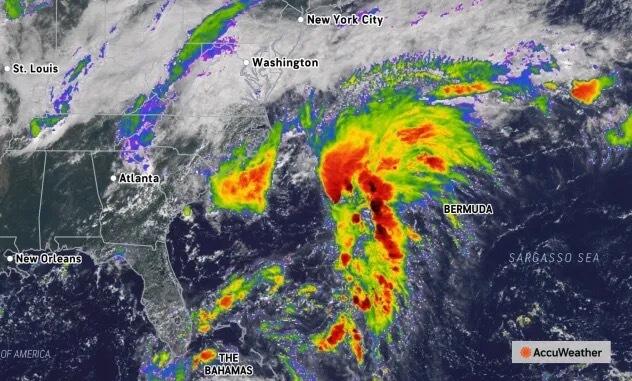
Significant September nor’easter: Upcoming storm surge, beach erosion and power outages
A storm is forecast to take shape and evolve into a powerful nor'easter in the Atlantic waters off the northeastern United States by this weekend. How strong the storm becomes and how close to the coast the storm gets will determine which areas are likely to experience the worst damage from storm surge, beach erosion and wind from North Carolina to Maine.
This will be a long-duration storm for many areas along the mid-Atlantic and New England coasts, with impacts beginning along the central Atlantic coast at midweek, spreading to New England on Friday and lasting through the weekend in some areas.

Mexico's coast bracing for impacts from major Hurricane Polo
Category 4 Hurricane Polo continued to churn off of Mexico's Pacific coast on Wednesday, September 23, after a remarkable period of intensification that briefly took the storm to Category 5 strength. Forecasters are focused on heavy rainfall and flooding in Mexico while watching for possible coastal effects in Southern California, including large waves and dangerous ocean conditions.
Polo's maximum sustained winds, recorded Tuesday, September 22, reached 180 mph, making it one of the strongest Pacific hurricanes on record behind Hurricane Patricia, which produced winds of 215 mph in 2015. By Wednesday morning, the National Hurricane Center reported Polo had weakened slightly to a Category 4 hurricane, with winds around 150 mph — just shy of the 157 mph threshold to be declared a Category 5.
Climate/Resilience/Sustainability

IBHS Research Reveals Critical Links in Asphalt Shingle Wind Performance After 10 Years of Aging
New research from the Insurance Institute for Business & Home Safety (IBHS) shows that asphalt shingle products respond to years of exposure to real-world weather conditions with considerable variability, leading to significant differences in wind performance over time.
Findings from the long-running **IBHS Roof Materials Aging Farm* program reveal that the uncertainty and variability between asphalt shingle product performance underscores the importance of knowing which product is installed on a roof for effective risk assessment.
"Through our Roof Aging Farm program, we're learning how roofing materials perform throughout their service life, not just when they are new," said Jake Sorber, IBHS research project scientist and engineer. "These findings reinforce the importance of identifying products that can maintain durability and wind performance over time and across different climate regions."
IBHS scientists also found that unsealing of shingles remains the single greatest driver of wind vulnerability.
Research
Insurance Technology Leaders Unite Around Data, Truth, and Trust at ACORD Connect 2026
ACORD, the standards-setting body for the insurance industry, brought together insurance technology leaders at Mohegan Sun in Connecticut to discuss data, truth & trust in insurance. This marks the first time that ACORD Connect has been held in person since 2019.
In his opening remarks, John Kellington, President & CEO of ACORD, emphasized the necessity of collaboration in advancing digital data exchange: "As AI, automation, and digital ecosystems continue to evolve, the need for quality, consumable data becomes more important, and the trust in that data can only be built through collaboration, innovation, and standards."
- Only 7% of attendees said they were fully confident in the quality of data within their organization, while - 42% said they were somewhat confident.
- 65% said most of their data is AI-ready, but there are areas that need to be improved.
- More than half of respondents said complexity and variety of data is the greatest barrier to data trust in their organization today.
- 54% said "architecture and systems that allow for scalable, reliable, trustworthy data outcomes." This was deemed more important than both "upskilling and training teams" and "data governance and compliance processes."
AI in Insurance
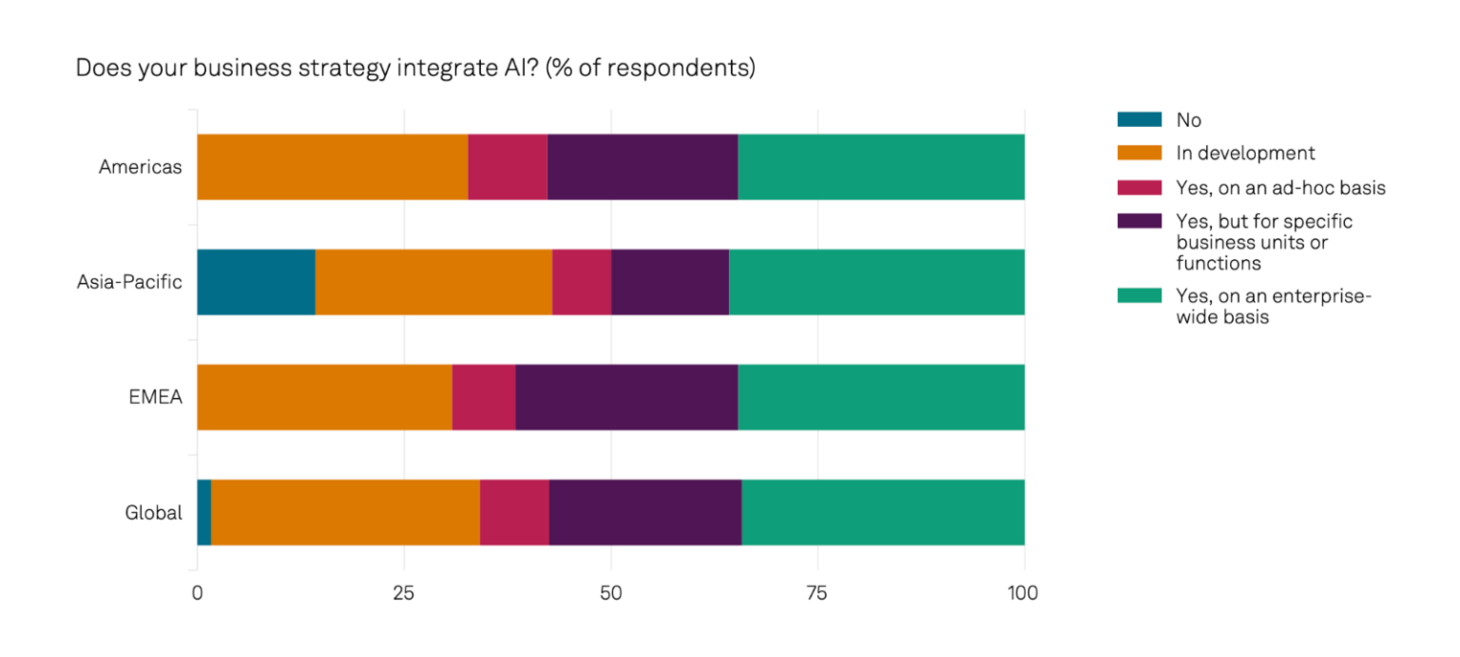
AI operational benefits arriving before financial gains for re/insurers: S&P
A new S&P survey found that most re/insurers have moved past the conceptual stage of AI adoption and into operational integration, though only around one-third say their AI strategy is fully integrated, with the rest still working toward enterprise-wide rollout.
“AI is increasingly transforming the insurance industry across multiple dimensions, with widespread deployment growing rapidly, driven by optimism that the technology can improve business performance,” S&P explained.
The rating agency’s survey of 121 entities globally, representing around 38% of the total assets of the re/insurers it rates, shows a shift from localised experimentation toward formal strategic integration, including at some of the largest multiline insurers and reinsurers.
S&P observed that AI is increasingly used to improve customer experience, underwriting and risk management, and claims processing, with benefits appearing earlier and more visibly than financial gains
Bevaya Benchmark: Insurance-Trained AI Beats Frontier Models on Loss Runs, Insurance's Hardest Documents
Across 346 real loss runs, every leading general-purpose AI model scored between 78% and 85% field accuracy, from the most expensive configurations available to the least. Bevaya's insurance-trained InsurGPT™ loss run model scored 93.1%. The difference is the training, not a newer or larger model.
NEW YORK, Sept. 23, 2026 /PRNewswire/ -- Bevaya, the AI Agent platform built for insurance, today announced benchmark results comparing insurance-trained and general-purpose AI on the industry's hardest documents, loss runs. Bevaya's InsurGPT™ loss run model proved both more accurate and faster than the strongest general-purpose model tested, the combination insurers need to move submissions and claims through without a person opening every file.

AI Apocalypse? Don't Get Distracted
While we've suddenly landed in the middle of a debate about whether AI may be about to obliterate the human race, I hark back to a profile I did for the Wall Street Journal about a brilliant AI and robotics researcher from Carnegie Mellon named Hans Moravec.
The focus was his provocative idea that humans would be able to download their brains — their entire consciousness, their full personality, an exact replica of them — into computers, which could then teleport to any spot in the universe or spawn an infinite number of what Moravec called "mind children."
The memorable headline was:
Good News: You Can Live Forever; Bad News: No Sex
I asked Moravec how long it would take for his vision to be realized. "Oh, a long time," he said. "Maybe 25 years."
That was 35 years ago.
So I'm not going to worry much for years about all the talk of impending doom. Timelines on sci-fi-like change tend to be way, way off. But, under the radar, there are plenty of AI issues that should be major concerns right now, including for insurers.
Let's have a look.
I'll start with Bill Gates's recent manifesto, which, among other potential dangers from AI, called out the prospect that AI will supercharge the work of malign actors, perhaps leading to bioterrorism, massive cyberattacks, and more. While we can discuss the potential long-term threats to humanity from AI, these are the kinds of threats I think we need to focus on today. These threats are already being pursued, whether by individuals looking to extort massive amounts of money or by nations looking for weapons in an increasingly belligerent world, and AI clearly provides exponentially more computing capability.
Paul Carroll, Editor-in-Chief, Insurance Thought Leadership
Announcements
BriteCore Introduces AI Copilots, Underwriting Workbench,
BriteCore, the leading cloud-native, AI-embedded core platform for property and casualty (P&C) insurers, today introduced its latest generation of platform innovations designed to help insurers accelerate underwriting, claims, and policy operations while preparing their organizations for the next generation of enterprise AI.
The latest release introduces three new AI Copilots and expanded intelligent guidance capabilities, a modern Underwriting Workbench, and the Open Agentic Core, an enterprise architecture that enables insurers to securely connect AI agents interacting directly with the BriteCore policy administration system through natural language. Together, these innovations continue BriteCore's commitment to helping insurers increase operational efficiency, improve employee productivity, and deliver exceptional customer experiences.
"AI is rapidly evolving from simply generating content to becoming an active participant in core insurance operations," said Ray Villeneuve, CEO of BriteCore.
Commentary/Opinion
CFA Urges States to Follow Texas's Lead and Ban Price Optimization in Insurance
Price optimization is a type of surveillance pricing in which insurance companies vary policyholders’ premiums based on their expected “willingness to pay.
The Consumer Federation of America urged Insurance Commissioners to ban the harmful practice of price optimization in insurance.
Price optimization is a type of surveillance pricing in which insurance companies vary policyholders’ premiums based on their expected “willingness to pay." It leads to higher premiums for loyal customers and those without the time, access to choices, or wherewithal to effectively shop around, irrespective of their risk. It is particularly insidious when it is used in personal lines insurance, given that auto insurance is a government mandated purchase for the vast majority of Americans and homeowners insurance is mandatory for anyone with a mortgage.
Price optimization is a type of surveillance pricing2 in which insurance companies vary policyholders’ premiums based on their expected “willingness to pay,” also referred to as elasticity of demand. That is, the actuarially derived premium for any given customer will be increased or decreased according to an algorithmic estimate of how high their premium can go before they shop for a better deal. At its core, price optimization charges different premiums to customers with similar or even identical risk profiles according to factors that are not related to the risk of loss.
Reinsurance Survey Sees P&C Lagging L&H for Capital Allocation
Fitch Ratings-London-22 September 2026: Reinsurance market participants favour life and health (L&H) for capital allocation over the softer property and casualty (P&C) segment, according to Fitch Ratings’ online survey carried out during the market’s annual gathering at the Rendez-Vous de Septembre in Monte Carlo. Over 90% of respondents ranked either L&H, financial solutions, or speciality as their highest-priority business line for capital allocation, and fewer than 10% selected property and property cat.
These allocation preferences come as capital supply continues to outpace demand. Fitch believes this factor will extend the buyer-friendly P&C market conditions, and increase pressure on reinsurers to achieve the best risk-adjusted returns with the lowest capital intensity.
L&H, led by longevity, was the highest-ranked business line for 42% of the 93 reinsurers, insurers, brokers and other market participants. Financial solutions (28%) was the next most popular business line, followed by specialty (21%). Just 8% selected property and property cat and only 1% chose US casualty.
InsurTech/M&A/Finance💰/Collaboration

Soteris raises $8m seed to fix hidden P&C profit leaks
Soteris, a YC-backed machine learning company serving the property and casualty insurance sector, has come out of stealth with a new AI-driven product designed to boost profitability for carriers and managing general agents.
The round was led by Spider Capital, with additional backing from Intact Private Capital, Amplify Partners, DCVC, the Webb Investment Network and Overlook Ventures.
Soteris’s original offering, which has been helping carriers and MGAs sharpen their loss ratios since 2020, has already scored more than 100 million policy submissions covering upwards of $180bn in premiums, growth the company attributes to founder-led sales rather than marketing spend. Its newly unveiled AI profit optimisation tool goes a step further, aiming squarely at insurers’ bottom lines by identifying individual policies that quietly drag down profitability, something that has traditionally been near-impossible to spot.