
News
Aon estimates hundreds of millions in losses from wave of European severe storms
Severe convective storm systems swept across Europe in recent days, unleashing damaging winds, large hail and torrential rainfall that caused localised flash flooding.The storms are expected to result in aggregate economic and insured losses of hundreds of millions of euros, according to Aon.
The severe weather affected parts of Western, Central and Northern Europe, with notable tornado impacts in France and Germany.
Providing some meteorological background for the event, Aon explained that between August 19–21, a broad severe-weather setup spanning from Spain to Ukraine and Belarus brought widespread thunderstorms, with the highest risk from the Balearic Sea to northern Italy prompting an ESTOFEX Level 3 warning.
Strong winds were the main hazard, including several tornadoes in Germany and wind damage across Czechia, Slovakia, Austria and Poland. Heavy rain caused localised flash flooding in central Czechia, while large hail reached 7 cm in southern France.
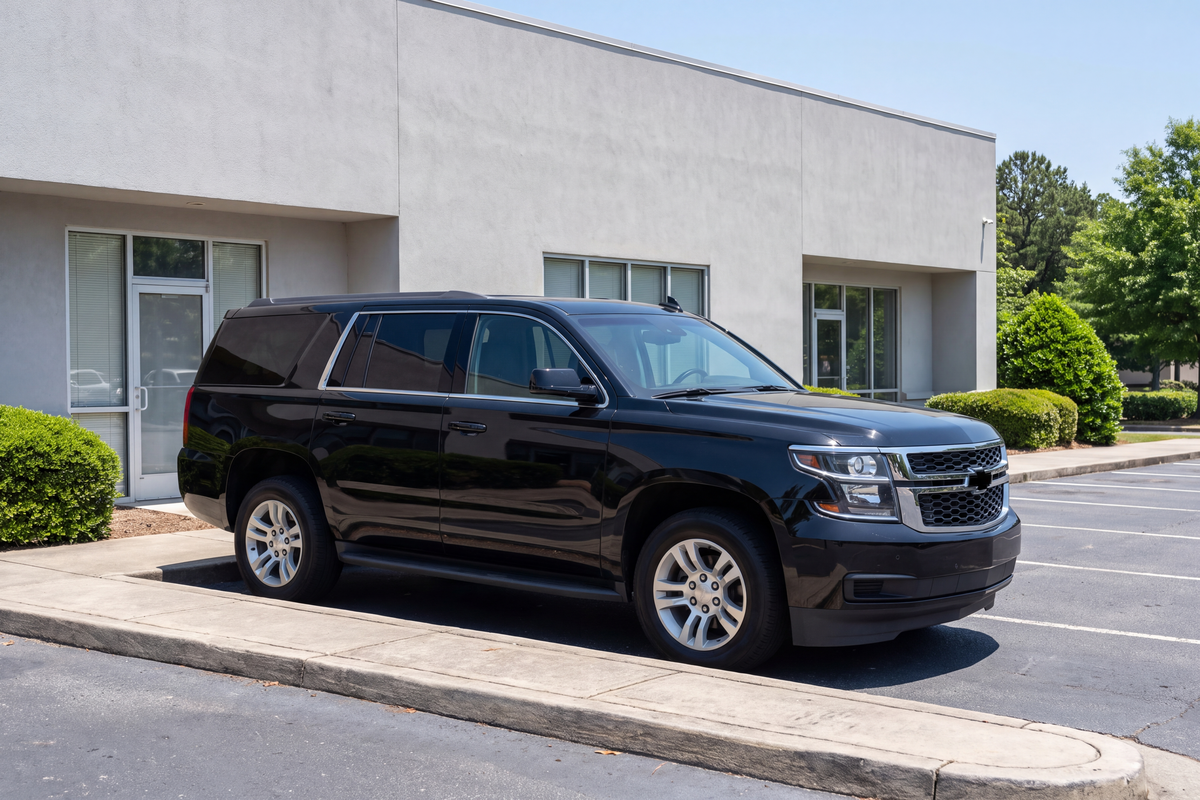
Allstate class action alleges company knowingly underpaid rental car costs
A new class action lawsuit claims Allstate booked rental cars for drivers its policyholders hit during accidents then reimbursed them for less than those rentals cost.
On Aug. 21, 2026, Jose Arce and Daniel Jackson filed a class action lawsuit against Allstate Property and Casualty Insurance Co. in the U.S. District Court for the Northern District of Illinois.
The complaint alleges Allstate booked rental cars for drivers its policyholders hit during an accident then reimbursed the drivers for less than those rentals cost. The allegations
Neither plaintiff held an Allstate policy, according to the proposed class action. It alleges an Allstate-insured driver hit each plaintiff and carried 100% of the fault, making Allstate responsible for repairs and a temporary replacement car through its preferred vendor, Enterprise.
AI in Insurance

Agentic AI Meets the Core System Nobody Wants to Touch |
A practical boundary is emerging in many carrier AI pilots.
Agents summarize submissions, triage claims correspondence and answer service questions, while the policy administration system remains largely off limits. That boundary deserves examination because it marks the point where the theoretical case for agents in insurance collides with the practical one—and because wrapping intelligence around a core system rather than immediately migrating off it changes what an IT organization must govern.
The theoretical case is strong. Insurance runs on codified rules, structured transactions and documents in predictable forms—the conditions under which agents can perform well. The economics point in the same direction. BCG estimates that core IT modernization can cost between 2 and 4 percent of non-life gross written premium in capital expenditure.
McKinsey’s April 2026 analysis is more specific about where agentic AI may provide leverage. It estimates typical productivity improvements of 20 to 50 percent in discovery and reverse engineering and 15 to 90 percent in testing and reconciliation.

U.S. AI Insurance Experience Study - JD Power
- AI usage split evenly between insurer-provided tools and third-party apps and websites for research and policy shopping tasks
- 42% of customers purchased a policy based on using AI-assisted tools to research products and coverage
- Top reasons for avoiding AI include lack of familiarity, habit and lack of trust
Nearly one-third (29%) of auto and home insurance customers are using artificial intelligence (AI) tools to research products and coverage, service their accounts, understand coverage before submitting a claim or shop for a quote or new policy, according to a new JD Power study. The inaugural JD Power U.S. AI Insurance Experience Study,SM released today, evaluates AI use among auto and home insurance customers and finds that the technology is playing a significant role in policy selection and overall customer experience interacting with insurers.
“Just as we’ve seen with the internet and mobile apps, AI is rapidly becoming a critical conduit to key policy shopping, research and account management decisions among auto and home insurance customers,” said Tony Soloman, director, insurance intelligence at JD Power. “This is a multidimensional challenge and opportunity for insurers. First, the tools they provide on their websites and mobile apps need to deliver a comprehensive, helpful user experience. In addition, insurers need to recognize that many customers are using third-party AI chatbots and apps to conduct research and compare policies, so it is critical to stay on top of how their data and content are being ingested and interpreted by the major large language models.”

Insurance AI's Next Phase: Beyond Incremental Efficiency | William Blair
The insurance industry has spent the past several years deploying AI to make existing processes faster and cheaper. Automating software testing workflows, surfacing policy data for call center representatives, and summarizing claims documents—these initiatives deliver measurable ROI, and many carriers are operationalizing them at scale.
As AI becomes more widely used, however, a more important question is emerging: will insurers simply improve existing processes, or will they redesign them entirely?
The Limits of Process Automation as a Moat
The current wave of insurance AI is largely focused on workflow enhancement. Carriers are deploying large language models to streamline underwriting submissions, extract information from claims, and reduce administrative burden across business functions. The efficiency gains are real; the problem is that they are widely replicable.
Announcements

Hippo to Expand Homeowners Insurance Footprint in Next Phase of Profitable Growth
Holdings Inc. (NYSE: HIPO), a technology-native insurance group, today announced that its Hippo Homeowners Insurance Program will expand its availability into 14 additional states through relationships with national distribution partners, increasing the number of states where the program is available from 8 to 22 states in the fourth quarter.
The expansion will give Hippo more opportunities to reach homeowners through established national channels. This reflects an industry trend in insurance toward pairing technology-enabled underwriting and risk selection with established distribution networks, enabling targeted growth as market and risk conditions change.
Stronger underwriting capabilities support targeted expansion
This marks the next phase of Hippo's homeowners strategy, building on stronger underwriting, pricing and technology capabilities that have supported Hippo's profitable growth.

Marsh unveils $10bn property insurance exchange for digital infrastructure risks
Marsh has introduced a property insurance exchange aimed at covering the operational risks linked to digital infrastructure projects including data centres and related critical support systems.
Called Stratus, the group said it will offer access to as much as $10bn in property insurance capacity on a single-placement basis through the global property risk transfer market for the worldwide exposures of US-domiciled companies.
Structured as an insurance exchange, the facility will involve 30 participants from traditional and alternative capital providers, each assessing risks individually to determine the appropriate level of support for a placement.
Marsh said this framework is intended to give providers a more organised trading setting in which to assess, quantify and diversify risk, while also dealing with aggregation concerns that can emerge once digital infrastructure projects move into their operational phase.
Commentary/Opinion

Examining Trust: It’s Not All About the Lawyers
According to a recent Wall Street Journal analysis, personal auto insurance policyholders have a "near-flip-of-a-coin" chance of being paid on liability
Executive Summary
Industry veterans who care about the level of trust in the P/C insurance industry analyze changes in claims operations, agent-customer relationships, underwriting decisions and communication practices that might be weighing on customers. “Some of it is on us,” says one, dismissing the idea that billboard attorneys are causing ill will. The actions of opportunistic lawyers may not explain rising levels of auto liability claims being closed without payment, another observes. Part of a series
Ouch. ARTICLE
Telematics, Driving & Insurance

IIHS Says Drivers Use Phones Before Crashing More Than Police Report
Our phone addiction is here to stay it seems, and it's, quite predictably, leading to crashes. A new IIHS study says that the number of crashes involving phone use is at least seven times greater than what appears in police reports, compared to telematics data.
Similar to another study that found that drivers are more likely to use their phones while speeding, the study used anonymized data from insurance companies' safe driving programs, where drivers allow their driving to be electronically monitored for potential discounts. IIHS worked with Cambridge Mobile Telematics to analyze data from four states between 2021 and 2024, linking crashes reported by telematics with their associated police reports.
Police cited phone use as a factor in 1% of the roughly 17,000 crashes within the data sample. Telematics tell a different story, snitching on phone use within 30 seconds of the crash in 7% of single-vehicle crashes and 8% of crashes involving two vehicles. The study also counts cell phone use as not just calling or texting, but also "manipulation," which is any tapping or swiping on the screen, or "passive use," which is simply having the phone unlocked.
There were 15,301 reported two-vehicle crashes within the data, and 1,543 involving a single vehicle.
Research

Product Units in Recalls Surge 346% in the H1 2025 as Regulatory Scrutiny Intensifies
Recalled units across five industries jumped to 941.2 million in H1 2026 from 211.3 million in H1 2025, putting 2026 on pace to top 1 billion units for the first time since 2022, according to Sedgwick.
Product recalls across five major industries surged to 941.2 million units affected in the first half of 2026 from 211.3 million a year earlier, putting the year on pace to top 1 billion recalled units for the first time since 2022, according to Sedgwick’s Product Safety and Recall Index, reported Risk & Insurance.
The big picture: The number of recall events stayed roughly flat, but the volume of units affected spiked sharply, signaling that individual recalls are growing far larger in scale. Sedgwick ties the shifting recall environment to a changing regulatory backdrop, including trade disruptions, new tariffs, and evolving enforcement priorities at federal agencies.
By the numbers:
- Pharmaceutical recall units rose 914.0% to 471.6 million, an 18-year high.
- Medical device recall units climbed 516.8% to 313.1 million, a five-year high.
- USDA food recall volume jumped 2,432.1% to 37.2 million pounds, a decade high.
- Consumer product recalls hit 289 events, the highest half-year total in 29 years.
- Automotive recall units rose 111.6% to 23.5 million, even as event counts fell to a six-year low.
People

Mercury Announces the Passing of Founder and Chairman George Joseph
Mercury General Corporation (NYSE: MCY) (the "Company") today announced the passing of George Joseph, the Company's founder and longtime Chairman. He was 104 years old.
Joseph founded Mercury, and the Company sold its first policy in 1962. He believed Mercury could innovate using more mathematics, actuarial discipline and data to create fairer and more equitable rates for a broader range of drivers.
He served as chairman from the Company's founding and led Mercury as Chief Executive Officer ("CEO") for 45 years, through 2006. Even after stepping down as CEO, he remained deeply engaged in the Company as its Executive Chairman.
George Joseph was raised in Beckley, West Virginia, during the Great Depression, the son of Lebanese immigrants. In 1941, Joseph volunteered for military service and served as a B-17 navigator during World War II and flew 50 missions. He later attended Harvard College on the GI Bill and graduated in 1949 with a degree in math and physics.
Under Joseph's leadership as CEO, Mercury grew from a small California insurer with six employees and 90 agents into the largest independent agency writer of private passenger automobile insurance in California. During his tenure as CEO, the Company completed a public offering in 1985, expanded beyond California beginning in 1989, and was listed on the New York Stock Exchange in 1996. The Company's written premiums grew to just over $1 billion in 1997 and broke the $3 billion mark in 2006.
Joseph was also recognized during his career for his contributions to the insurance industry, including being named "Company Person of the Year" by the Professional Insurance Agents Association in 1987. Mercury also earned repeated national recognition, including multiple appearances on Forbes' list of America's Most Trustworthy Companies.
Recommended Events
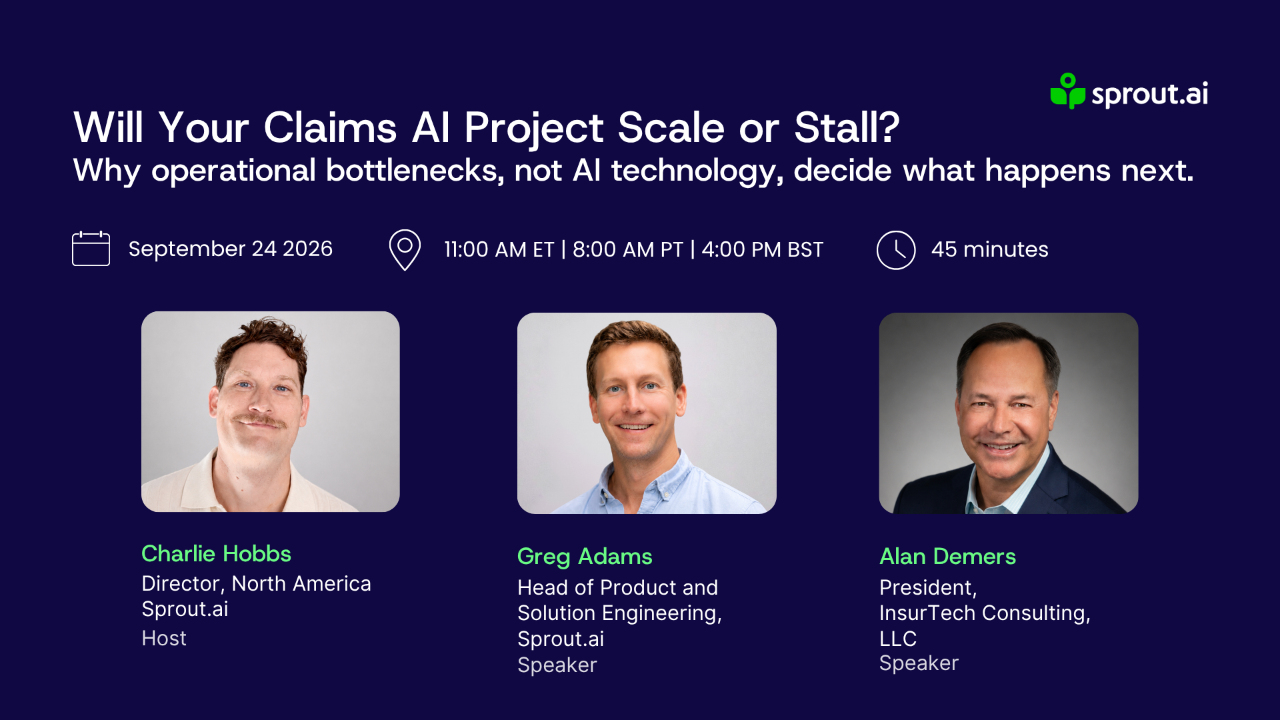
Will Your Claims AI Project Scale or Stall? Why operational bottlenecks, not AI technology, decide what happens next
AI readiness isn’t the same as being ready to make AI work.
In my experience, the technology is rarely the biggest blocker. It’s the operational constraints that cause claims AI pilots to stall and prevent teams from scaling into production.
That’s what I’ll be exploring with Sprout.ai in our upcoming webinar:
Assess Your Claims Operation Live: The 7-Point AI Readiness Check
📅 Thursday, September 24 🕓 4:00–4:45 PM
We’ll explore seven dimensions of AI readiness, use live self-scoring to assess your own operation, and look at three anonymised client examples across P&C, Life/LTC and specialty MGA.
Most importantly, you’ll leave knowing which gap to address first and what good looks like.
I’ll be joining Charlie Hobbs, Director, North America GTM, and Greg Adams, Head of Product & Solution Engineering at Sprout.ai.