
Climate/Resilience/Sustainability

Global insured cat losses fall 56% in first half: Aon
Global insured natural catastrophe losses fell 56% to an estimated $47 billion in the first half of 2026, down from $108 billion in the first half of 2025, Aon said Wednesday.
Insured losses were 4% above the 21st-century first-half average despite the sharp decline from the record first half of 2025, the broker said in its first-half Global Catastrophe Recap.
U.S. natural catastrophes generated about $36 billion in insured losses, 26% above the long-term regional average since 2000, driven mainly by severe convective storms, the report said. Overall, U.S. catastrophes accounted for about 77% of the global insured losses during the period.
At least 13 events, 11 of which occurred in the U.S., generated insured losses of at least $1 billion in the first half, Aon said. Outside the U.S., Windstorm Kristin in Portugal and Spain also exceeded that threshold.
Severe convective storms remained the costliest insured peril globally, generating about $31 billion in insured losses, including $27 billion in the U.S.
Climate Risk Isn't Stopping Home Buyers: Realtor.com® Finds $11.2 Trillion in Homes Exposed
Home shoppers in some of the country's priciest markets continue to consider high-risk homes over lower-risk alternatives nearby, according to a Realtor.com® report released today.
Some 23.1% of U.S. homes, representing $11.2 trillion in value, face severe or extreme risk from wind, flood or wildfire, and buyer demand in some of the most exposed markets remains just as strong, or stronger, than in lower-risk areas nearby.
"Price is still the biggest motivator for a lot of home shoppers, even in places where climate risk is well known," said Jiayi Xu, Economist at Realtor.com®. "But that doesn't mean the risk disappears. It shows up later, in insurance premiums, HOA fees and financing, often after the sale is already done."

Private flood capacity is growing – so why aren’t more customers buying? | Insurance Business
Potential reform of the National Flood Insurance Program (NFIP) could create one of the biggest growth opportunities the US private flood market has seen, but Hiscox specialists say the main constraint isn't capacity. It's persuading homeowners and businesses to buy coverage.
The eventual shape of reform remains unclear, but possible outcomes could include the NFIP closing to new business, becoming more clearly defined as a market of last resort, or pursuing some form of depopulation or policy transfer.
Even without sweeping reform, the private market has been expanding as insurers use more granular catastrophe models, property-level data and digital distribution to compete with the federal program. But Tom King (pictured on the right), flood line underwriter at Hiscox, said the market's immediate challenge isn't finding enough capital.
"The barrier to scale is demand and purchase rather than capacity,” he said.
Claims
Sedgwick launches concierge-level service for heavy equipment repairs
Sedgwick, the world's leading risk and claims administration partner, today announced the launch of its heavy equipment direct repair program, providing carriers a seamless, end-to-end solution for managing heavy equipment repairs nationwide. The launch of the service is building on the largest private passenger direct repair network in the U.S., Sedgwick expands concierge-level service for heavy equipment claims.
The program builds on Sedgwick's position as the provider of the largest private passenger direct repair network in the U.S., with more than 3400+ contracted body shops. Carriers can now access a network of 250 certified heavy equipment repair facilities serving 18-wheelers, refrigerated trucks, extended-height vans, and other specialized vehicles, with the same concierge-level service delivered across Sedgwick's auto repair network.
"Managing heavy equipment repairs can be complex, but Sedgwick's direct repair program puts carriers in the driver's seat," said Chris Bakes, Managing Director of Auto Solutions, Sedgwick. "Our certified technicians, nationwide coverage, and digital tools allow carriers to deliver fast, reliable service while controlling costs and keeping their customers informed at every step."
Research

Retention Success Happens Beyond Renewal, Says Liberty Mutual Study
After several years of hard market conditions, independent insurance agencies are placing renewed emphasis on keeping the clients they already have—and the agencies making the most progress are not relying on renewal conversations alone, according to recent findings from Liberty Mutual.
The “2026 Independent Agency Growth Study” from Liberty Mutual’s Agent for the Future, which surveyed nearly 1,200 U.S.-based independent agency principals and staff, found that 98% of agents say retention is very important to agency success, ranking ahead of every other priority, including acquiring new business.
While the average agency retention rate hovers around 84%, only 18% of agencies reported retention increases of 5% or more over the past year. The agencies that have increased retention are finding success by building repeatable processes around communication, policy reviews, client education and risk guidance throughout the customer life cycle.
News
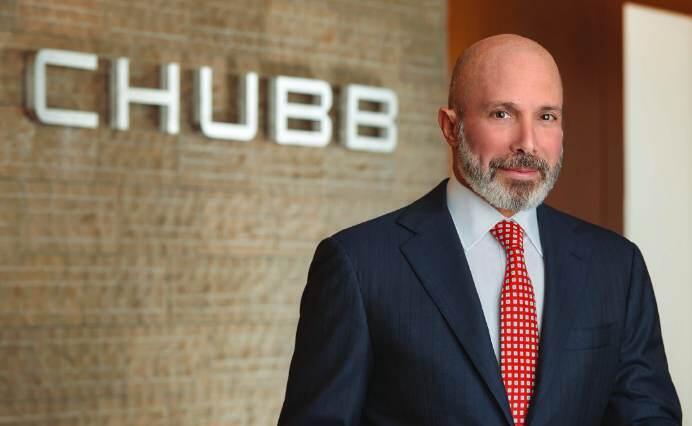
Chubb CEO says AI token costs are minor relative to efficiency gains
Evan Greenberg, Chairman and Chief Executive Officer (CEO) of global insurer Chubb, said the company’s AI token costs represent only a minor fraction of the efficiencies and improvements it gains.
Evan Greenberg, ChubbDuring Chubb Limited’s Q2 2026 earnings call, Greenberg was asked how the company can balance the rising costs of technology deployment with its ability to capture savings and improve margins.
The question comes as businesses grapple with rising artificial intelligence (AI) costs, with a recent J.P. Morgan analysis stating that these expenses are being driven by the price of AI “tokens”, prompting companies to reassess whether productivity gains outweigh the expense.
However, Greenberg said Chubb’s experience has been different, with the insurer finding that the costs associated with AI token usage remain small relative to the efficiencies, insights, and improvements generated by the technology.
“That token usage is really about the vast token usage among tech companies. AI and tech companies use vast amounts in model development. That comment is not really applying to general businesses,” said Greenberg.
[Ed.note: see next article, "What is a token?"]

What is a token - and why does it matter to your brokerage's AI budget?
[Ed. note: Article published on June 22, 2026 provides a clear definition of AT tokens and what they mean to insurance/technology]
A token is roughly three-quarters of a word. The sentence "the policy excludes flood damage" contains six words and approximately eight tokens. Every time you send a message to an AI - and every time it responds - the platform counts up the tokens on both sides and charges you accordingly.
That's it. Tokens are units of text, and AI is billed by the unit.
The reason it matters is that for most of the past three years, businesses didn't pay per token - they paid a flat monthly subscription. A broker could run an entire policy wording through ChatGPT a hundred times and pay the same $20 a month as someone who used it twice. That model is ending. Anthropic, OpenAI and others are now moving enterprise customers to usage-based billing, which means the token count is no longer academic. It's a line on someone's budget.
Awards
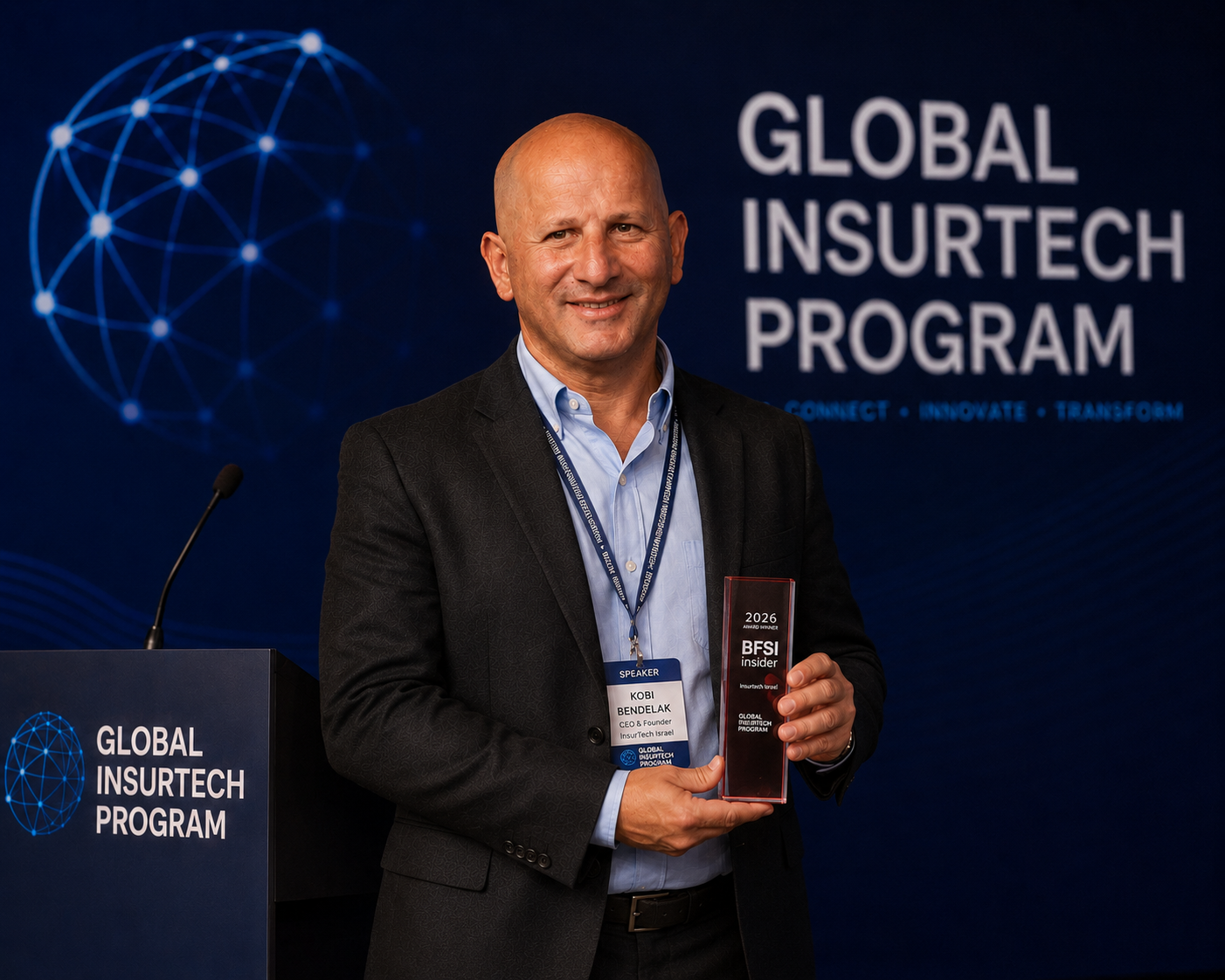
InsurTech Israel Recognized as the Best InsurTech Accelerator in the World
[Ed. note: Well-deserved congratulations to Kobi Bendelak, InsurTech Israel. Kobi's enthusiasm to modernize insurance is admired and appreciated by his many U.S. based partners along with those worldwide as the Global InsurTech Program expands]
InsurTech Israel and the Global InsurTech Program have been recognized by BFSI Insider as the Best InsurTech Accelerator in the World for 2026, marking international recognition for a model that was built in Israel and has evolved into a global insurance innovation platform.
The programs connect innovative startups and technologies with leading insurance companies and industry organizations, with a clear focus on turning innovation into practical solutions, business opportunities, and collaborations that create real impact across the global insurance industry.
A key part of the programs’ success is the long-term collaboration with leading partners in Israel, including Migdal Insurance, Direct Insurance, AIG Israel, Milliman, Sapiens, PassportCard, Gross Orad Schlimoff Law Firm, and Aon Reinsurance Israel. These partners play an active role in the ecosystem, working with startups and helping connect Israeli innovation with the needs and opportunities of the global insurance industry.
“This award is first and foremost a shared achievement with our partners,” said Kobi Bendelak, Founder and CEO of InsurTech Israel. “The companies that have worked alongside us in Israel and around the world are an integral part of what we have built. Together, we have created an ecosystem that connects Israeli innovation with the global insurance industry — not just to talk about innovation, but to create business, implement new technologies, and change the way the insurance industry operates.”
AI in Insurance

Klaimee lands $5.5m to insure autonomous AI agents
Klaimee, a Y Combinator-backed InsurTech that provides insurance-backed performance warranties for AI agents, has secured $5.5m in seed funding.
The round was led by FundersClub’s Alexander Mittal, with participation from ex/ante, Pioneer Fund, Multimodal Ventures, Kima Ventures, Rebel Fund, Robinhood Ventures, Y Combinator and a group of angel investors.
The company was founded to answer a question it believes the market has yet to resolve: who bears the cost when an AI agent makes a mistake? As AI agents evolve beyond copilots into systems that take actions, advise customers, manage sensitive information and operate within enterprise workflows, they introduce failure modes that conventional software never faced.
According to the firm, existing Technology E&O and Cyber policies are ill-suited to these risks, having been designed around deterministic software, data breaches and services delivered by humans. Klaimee’s view is that autonomous agents require cover built specifically for them.

Why insurers are still in the first inning with AI
For all the attention artificial intelligence has received over the past few years, the insurance industry is still much earlier in the adoption curve than many people realize.
Generative AI made AI feel accessible. Vibe coding made it feel easy. Suddenly, almost anyone could build a prototype, generate a workflow, create a chatbot, summarize a document or automate a simple task. That was an important shift. It lowered the barrier to experimentation and helped insurance leaders see what might be possible.
But in my estimate, only about 20% of large insurers have truly adopted AI in the way that matters. Overall, the industry is still a long way from being truly agentic. In fact, when it comes to AI, insurers are just rounding out of the first inning.
That will change quickly. I predict 70% to 80% of large insurers will have moved beyond experimentation and into meaningful production deployments within the next 18 months. The reason is simple: watching and waiting no longer works.
Rafael Broshi
Commentary/Opinion

Let’s Talk About Insurance Distribution Before ChatGPT Disrupts It
I am sorry for the innovation cheerleaders and the black-swan hunters who have flooded my LinkedIn feed with predictions—and outright celebrations—of the incoming extinction of human agents and brokers for the past five months.
What does Matteo Carbone really think about ChatGPT disrupting insurance agents and brokers?
The director of the IoT Insurance Observatory, well-known to more than 100,000 LinkedIn followers for weighing in on a variety of insurance and technology topics, shared his opinions on this question on the social platform recently.
I believe ChatGPT-driven insurance apps, or similar AI-native journeys, will not make a dent in the insurance distribution landscape.
Just for the record: I have called out the supposed disruption by autonomous cars, OEMs and the tech giants for 10 years: MORE
InsurTech/M&A/Finance💰/Collaboration
Francisco Partners Closes $21 Billion Across Flagship and Agility Funds
Francisco Partners (“FP”), a leading global investment firm that specializes in partnering with technology companies, today announced the closing of $21 billion in capital commitments across its Francisco Partners VIII, L.P. flagship fund and Francisco Partners Agility IV, L.P., its middle-market fund. FP exceeded its initial targets of $14.0 billion and $3.5 billion, respectively.
This milestone builds on Francisco Partners' longstanding track record of performance, underscored by its distinction as the only firm to rank among the top three performers in each of the past six HEC-Dow Jones Large Buyout Performance Rankings.
“In our business, long-term success is created through a series of relationships built on years of trust and collaboration," said Dipanjan (“DJ”) Deb, Co-Founder and CEO of Francisco Partners. "We want to thank our investors for their support, our management teams for their dedication and performance, our friends and partners throughout the technology ecosystem, our lenders and banks for their partnership, and the team at FP for their pursuit of excellence.”

What's the next chapter for insurtech?
Insurance has already solved the problem it spent the last decade obsessing over: proving that new technology can work. The harder problem, according to senior leaders at Lloyd's and The Hartford, is scaling it - turning a strong pilot into something embedded across an entire market. That shift, from proof of concept to proof of adoption, is what's actually driving the next phase of insurtech.
But insurers have also become far more selective about which technologies they adopt, and that selectivity - not the pace of invention - is now the defining constraint on the industry's innovation cycle.
Matt Scott, The Hartford's head of property and casualty innovation and risk services, said risk mitigation represents one of the clearest opportunities for insurers to deliver additional value to customers. "Today we have technologies, data sources and analytics where we can identify risks earlier, provide insights sooner and work with them to prevent or reduce losses before they occur," Scott said. "That's a better outcome for our customers." Businesses are increasingly looking for insurance partners that can help them strengthen resilience, he added, making prevention a more meaningful part of the carrier-policyholder relationship.