
News
100 Million Americans Are Under a Heat Dome: Protect Your Home From Extreme Heat in 2026
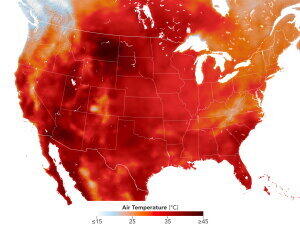
A record-breaking heat dome is looming over the United States this week. It’s driving temperatures up to dangerously high levels for more than 100 million people across the country, especially in the Mountain West and Upper Midwest.
Temperatures soared in the Western U.S. on July 12, 2026, as shown in this map of modeled air temperatures from the GEOS (Goddard Earth Observing System). Numerous weather stations in Montana, Utah, and Wyoming recorded their highest temperatures since record-keeping began.
This ridge of high pressure traps heat and humidity over a sprawling region, functioning much like a lid on a pot. The resulting heat wave has been intense and prolonged, and overnight temperatures don’t provide much relief.
In the West, the heat hit its peak over the weekend as it set record highs of 111 degrees in Billings, Montana, and 109 degrees in Salt Lake City. The extreme temperatures are projected to ease in the region as the heat dome shifts farther east, but residents of the Southeast U.S. in particular will need to prepare for a scorching weekend, as National Weather Service heat risk maps show.
USMCA Talks and Tariff Expiration Converge Next Week With Collision Parts Pricing in Play - Autobody News
The Section 122 surcharge expires July 24 as USMCA Round 3 reopens the content rules governing duty-free parts treatment.
Two trade deadlines land within days of each other next week, and both will shape the tariff treatment of imported auto parts that collision repair shops use daily. Bilateral negotiations between the United States and Mexico resume the week of July 20 in Mexico City for a third round of talks tied to the USMCA joint review, and the Section 122 import surcharge expires by statute on July 24.
AUTO CONTENT RULES AT CENTER OF USMCA ROUND 3
The July 20 round follows the United States' decision not to renew the USMCA in its current form at the agreement's mandatory six-year joint review on July 1. U.S. negotiators have proposed raising the regional value content threshold for vehicles from 75% to 82% and adding a requirement that at least 50% of a vehicle's content originate specifically in the United States, according to The Globe and Mail. No U.S.-specific content threshold exists under the current agreement.

AssuranceAmerica auto insurance data breach hits nearly 7M people
AssuranceAmerica's data breach exposed driver's license numbers and insurance details of nearly 7 million people after an employee was targeted.
AssuranceAmerica, an auto insurance provider that works through a network of independent agents, has disclosed a data breach affecting nearly 7 million people. The exposed information includes driver's license numbers and other personal details tied to auto insurance customers.
The company said it detected suspicious activity on March 17, 2026, after malicious activity targeted one of its employees one day earlier. Investigators later found that an unauthorized third party accessed parts of AssuranceAmerica's IT environment and copied certain data files.
According to an Indiana Attorney General breach listing, the incident affected 6,998,886 people. A California Attorney General notice also says AssuranceAmerica began notifying affected individuals after completing its file review on June 15, 2026.
Climate/Resilience/Sustainability
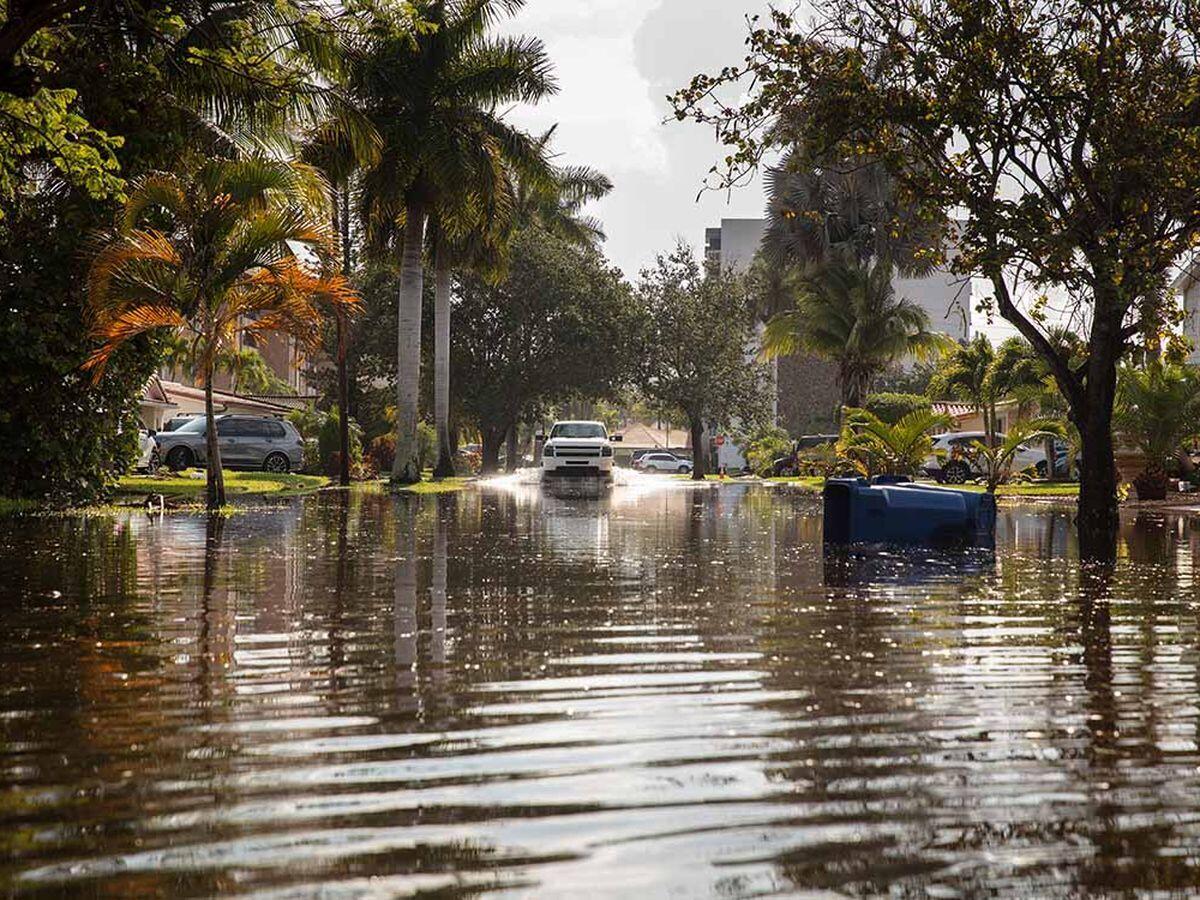
FEMA Just Redrew the Map: Is Your House Now in a Flood Zone?
For almost 20 years, homeowners in Harris County, Texas, have used the same federal flood maps to determine whether their homes were at risk.
Then came Hurricane Harvey in 2017, and about 70% of the flooded homes — an estimated 110,000 — found themselves outside the official high-risk zones. This meant most people whose homes flooded had never been warned, and most lacked flood insurance.
Since then, the federal government — specifically the Federal Emergency Management Agency (FEMA) — has been playing catch-up.
The latest draft flood maps for Harris County, released earlier this year, would expand the 100-year floodplain by about 50,000 acres, a 33% increase. This change would put more than 170,000 properties, worth around $50 billion, into high-risk areas for the first time.
This means homeowners with federally backed mortgages in these areas will eventually have to buy flood insurance, even if they never needed it before.
Is Harris County an exception or a sign of what’s to come?
About 10 million high-risk flood properties are missing from FEMA’s official maps across the country, according to a report by First Street Foundation. The maps homeowners use to check their risk are often based on outdated rainfall data, and updates happen slowly, one county at a time, with no set national schedule.
Financial Results
June 2026 Monthly Release
The Allstate Corporation (NYSE: ALL) today announced estimated catastrophe losses for the month of June of $563 million or $445 million, after-tax. Total catastrophe losses for the second quarter were $1.72 billion or $1.36 billion, after-tax.
Announcements

Liberate Launches Voice FNOL Accelerator on Guidewire Marketplace
Liberate (San Francisco) has made its Voice First Notice of Loss Accelerator for Guidewire ClaimCenter available on Guidewire (San Mateo, Calif.) Marketplace.
The accelerator enables carriers using Guidewire ClaimCenter to automate 24/7 claims intake through AI-powered voice agents, according to a Liberate statement. The prebuilt integration connects Liberate’s voice agents to Guidewire Cloud, allowing claim information captured by phone to flow into ClaimCenter.
Liberate says the accelerator is designed to reduce reliance on manual FNOL intake, where call center staff often capture information by phone and rekey it into claims systems. The company says the current model can create inconsistent intake quality, processing delays and higher operating costs.
“The current FNOL model deployed by carriers is diminishing the opportunity to open new claims and driving razor-thin margins for carriers across the industry,” comments Amrish Singh, CEO, Liberate. “Too much reliance is placed on outdated, manual processes. When automation is used, the handoffs to human agents are disruptive to the caller experience. Our voice FNOL agents are built specifically for the insurance industry, battle-tested to meet the demands of carriers, and we’re excited to be deploying them through Guidewire Marketplace.”
AI in Insurance

Insurers face hidden AI liability as agent risks multiply |
More than 90% of insurers' AI agent exposure may sit inside conventional policies never designed for the technology, a new industry report has found.
The finding comes from Underwriting the Agent Economy, a study by the Artificial Intelligence Underwriting Company (AIUC). Researchers from Anthropic and OpenAI were among its co-authors, alongside experts from insurers, brokers, universities and research groups. AIUC is a San Francisco-based firm that certifies and insures AI agents.
The report found that exposure was concentrated in cyber, directors and officers, commercial general liability, and technology errors and omissions policies. Such "silent" cover refers to risks that are neither expressly included nor excluded. Insurers may face liability for losses they never priced or anticipated.
Claims
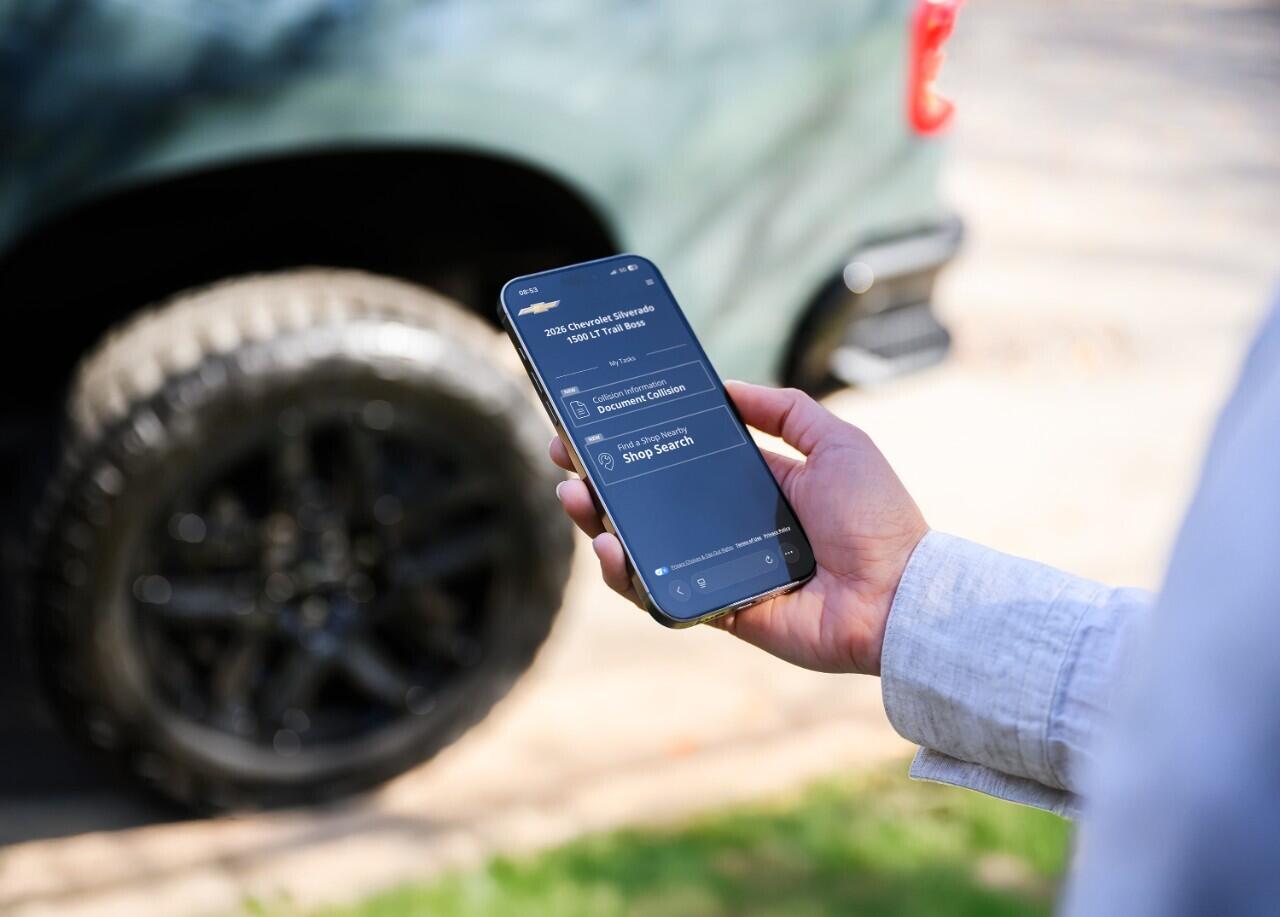
GM patent describes system that would collect driver insurance, vehicle information post-collision
According to several national media outlets, a newly published General Motors patent describes an in-vehicle system that would reportedly collect and exchange driver and vehicle information data post-collision between the involved vehicles.
A Justia Patents search reveals that the patent is for a system that “includes a collision detection verification module in electrical communication with a plurality of sensors and a vehicle database.”
“The collision detection module detects whether a collision event has occurred between the first vehicle and the second vehicle based on the sensed vehicle data acquired, broadcasts a first collision message when the collision event has occurred, and exchanges, with the second vehicle, a first collision report for a second collision report based on the first collision message,” Justia states. “The first collision report includes a first driver insurance information associated with the first vehicle and the second collision report includes a second driver insurance information associated with the second vehicle.”
It goes on to state that vehicular safety technologies advancements in recent years “have increasingly focused on improving the ability of vehicles to prevent and mitigate collisions.”
“
State News

Consumer claims GEICO, LexisNexis mishandled disputed claims data
Identity-theft documents allegedly failed to clear claims data used in underwriting
A consumer alleges disputed identity-theft claims remained in CLUE data after she asked GEICO and LexisNexis to correct her records.
The lawsuit, filed on July 14, 2026, in the US District Court for the Southern District of Ohio, involves claims information insurers use to assess risk and set auto premiums. It is based on a newly filed complaint, and the court has not decided whether any of the allegations are true.
According to the filing, an unknown person used the consumer’s personal information to open a GEICO auto insurance policy in New Jersey in August 2023. Four claims were later recorded under the policy, with about $95,003 claimed across the claims and related subclaims.
The consumer says she did not open or approve the policy, receive any benefit from it, or have any connection to the vehicles or driver listed in the records. She is suing GEICO Choice Insurance Company, Government Employees Insurance Company and LexisNexis Risk Solutions Inc.
Autonomous Driving/Insurance
Self-Driving Cars Could Fail to Make Auto Insurance Cheaper
Automakers developing self-driving cars are betting on car insurance discounts becoming one of their chief selling points.
While the technology and the laws around it remain divisive, consumers excited about self-driving capabilities boast about safety gains and time back in the car for work or entertainment. And if reduced crash risk could also slash their insurance bills? Even better.
Experts say that insurance companies will likely face pressure to offer more affordable car insurance if self-driving cars prove to be safer and lower insurers' costs. However, cheaper insurance is not guaranteed, and there are several reasons why self-driving technology may ultimately fail to deliver significant savings.
The self-driving mode must be engaged to save
Early versions of self-driving cars require owners to drive part of the time. Insurance discounts may only apply when self-driving modes are active, meaning the savings potential is limited.
InsurTech/M&A/Finance💰/Collaboration

Insurtech Cover Genius raises $100 mn at $1.9 bn valuation to expand embedded protection
Insurtech Cover Genius, the global infrastructure for embedded protection, raised $100 mn from Vista Credit Partners, the credit arm of Vista Equity Partners, in a financing round that values the embedded protection company at $1.9 bn.
The new capital gives Cover Genius more room to expand its B2B2C insurance platform, deepen relationships with large digital partners and invest in AI-driven product and claims systems.
According to Beinsure, the transaction puts the company among the better-capitalised players in embedded insurance at a time when merchants want insurance products built directly into checkout, booking and account flows.
Cover Genius connects more than 200 partners with over 50 global insurance carriers. Its platform protects more than 70 mn customers at the point of sale across travel, retail, ticketing and logistics.
The company’s model differs from traditional insurance distribution. Cover Genius adjusts product design, pricing and presentation in real time based on each merchant’s customer journey and geographic mix.
Angus McDonald, Co-Founder and CEO of Cover Genius, said the company has spent more than a decade building the trust layer used by large digital companies to protect customers.
He said the new capital will help Cover Genius move faster with partners, expand its AI capabilities and support customers across more parts of their digital journeys.
Recommended Events
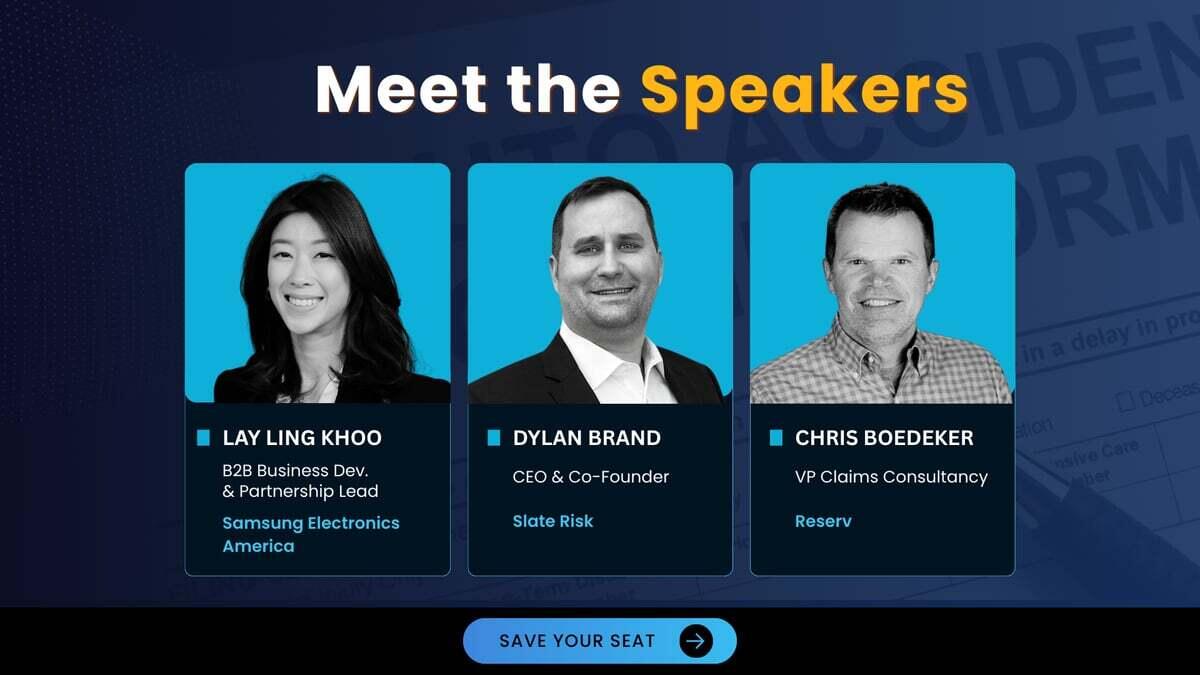
Auto Claims Under Pressure | Samsung & ITNY Webinar
Join Samsung and InsurTech NY to discuss what can be learned from underperforming auto books and the claims environments behind them.
Auto claims are putting real pressure on insurance teams.
When a book becomes unprofitable, the causes are rarely simple. Loss trends, field documentation, claims workflows, repair costs, vendor management, and operational visibility all start to matter quickly.
Join InsurTech NY and Samsung Electronics America for a practical webinar on what insurers can learn from auto books under pressure, and how teams can improve outcomes in the office and in the field.
This session is built for claims, operations, underwriting, portfolio, and transformation leaders working through auto books under pressure.
We’ll focus on what messy claims and strained loss ratios can reveal, and how better field visibility, workflows, documentation, and mobile tools can help teams respond faster.
July 23, 2026, 1:00 PM ET - Free